033 | My Worst Car Luck 😬 An Old Snowstorm Nightmare & a Dead Battery That Stranded Me
About this episode
A snowstorm detour turns into a traction nightmare: the host talks about winter tire swaps, chain-ready tires, and CHP checkpoints, then describes using differential lock to inch through a jam before deciding it wasn’t safe to turn back. Later, a separate “dead battery” strand leads to a delayed tow, jump-starting, and unstable voltage that points toward alternator/battery confusion—plus warning lights, tire recommendations, and clutch/maintenance questions on a used Z.
Car breakdown stories, car battery failure, driving in snow, and real car problems—this episode covers it all. Chris shares two real-life car disasters, including a dangerous snowstorm drive years ago and a recent dead battery that caused his car to die unexpectedly. If you’ve ever dealt with car trouble, electrical issues, or being stranded on the road, this episode breaks down what went wrong and what you can learn from it.
First, a snowstorm nightmare from years ago—driving through dangerous mountain conditions, zero visibility, and traffic chaos while trying to stay in control.
Then, a modern-day breakdown—dashboard warning lights, electrical issues, and a dead battery that leaves Chris stranded just miles from work, followed by a frustrating tow truck experience.
📢 Start Your Podcast
Want to start your own podcast without the technical headache?
Chris handles everything with Podtastic Audio—so you can just hit record.
👉 Podcasting Made Easy - Podtastic Audio
https://forms.gle/D5StymABrWqTEFZW9
🔗 Follow Along & Connect
Stay connected for more car stories, behind-the-scenes content, and podcast updates:
🚗 Cool Cars with Chris
- 🌐 Website: https://coolcarswithchris.com/
- 📸 Instagram: https://www.instagram.com/cool_cars_with_chris619/
- ▶️ YouTube: https://www.youtube.com/@CoolCarswithChris619
🎙️ Featuring Courage
- 📸 Instagram: https://www.instagram.com/thedrivendad22/
- ▶️ YouTube: https://www.youtube.com/@TheDriveNDad22
00:00 – 🎙️ Intro & Story Time Begins
00:30 – 🚗💥 Car Disasters & What This Episode Is About
01:30 – 🌍 Is This Podcast Really “World Famous”?
03:30 – 🌴❄️ Driving in Snow vs Southern California
05:00 – 🛞 Tire Chains, Winter Driving & Safety Tips
07:50 – 🌨️😬 Snowstorm Nightmare Story (Years Ago)
10:00 – 🚧 Stuck in Traffic as Cars Crash Around Me
12:30 – ⚠️ Why Snow Driving Is So Dangerous
13:15 – 😳 New Car Problems Start…
14:30 – ⚡ Dashboard Lights & Electrical Issues
15:30 – 🚗💀 Car Dies Near Work (Worst Timing)
16:40 – 😤 The 3-Hour Tow Truck Nightmare
18:00 – 🔋 Battery vs Alternator (What Went Wrong?)
20:30 – 😅 The Fix: It Was Just the Battery
22:00 – 🛞 Tire Wear & Hidden Used Car History
25:00 – ⚙️ Clutch Concerns & What to Watch For
29:30 – 🧪 How to Tell If Your Clutch Is Slipping
32:00 – 🚦 Driving Stick Shift in Traffic (Pros & Cons)
35:00 – 🧠 Teaching Someone to Drive Manual
37:00 – 💸 Dealership Warranties: Worth It or Not?
41:00 – 🎲 Car Repairs vs Gambling on Problems
43:00 – 🔋⚡ Why Car Batteries Cause Weird Issues
46:00 – 🔊 Performance Mods, Intake Sounds & Driving Feel
50:00 – 🏎️ Driving a Sports Car Daily (Real Talk)
55:00 – 🧠 Final Thoughts & Car Ownership Lessons
1:00:00 – 🎬 Wrap Up & Outro
This episode dives into real car problems like car battery failure, driving in snow, and what happens when your car dies unexpectedly, along with practical tips on diagnosing issues, avoiding breakdowns, and handling common car maintenance mistakes.
#CarProblems #CarBreakdown #CarBatteryFailure #CarDies #DrivingInSnow #CarMaintenance #AutoRepair #ManualTransmission #UsedCarProblems #CarPodcast
summer tires
"I can't imagine what it'd be like owning a fun, like sports car or sports type car in these cold, crazy climates like New York or Minnesota... having to like swap out your tires with like summer tires or winter tire..."
Summer tires are made for warm weather. In cold weather they can get stiff and lose grip, so they’re not great for snow or ice.
Summer tires are designed to work best in warm weather. They use rubber compounds that stay grippy when it’s hot, but they don’t perform as well in cold temperatures or snow.
winter tire
"having to like swap out your tires with like summer tires or winter tire or even just park your car in like a storage shed for the winter."
Winter tires are made to grip better when it’s cold and when roads are icy or snowy. They stay softer in the cold so the tire can bite instead of sliding.
Winter tires are built for cold temperatures and snow/ice. Their rubber stays flexible in the cold, and the tread pattern is designed to bite and evacuate slush better than all-season tires.
all season tires
"even if you do have like all season tires, like you, you slow down a lot when you get like really heavy rain."
All-season tires are meant to be used year-round. They’re okay in many conditions, but they usually don’t do as well as winter tires when it’s icy or snowy.
All-season tires are a compromise tire meant to work across a range of temperatures. They’re generally safer than summer tires in cooler weather, but they typically can’t match winter tires’ grip on snow and ice.
tires that are rated for chains
"if there's snow involved or like, you know, any potential icing or anything, like you definitely need to have tires that are rated for chains or one of the, have you ever put chains on tires before?"
In some places you’re allowed (or required) to use tire chains for snow. But not every tire is built to handle chains safely, so you need tires that are approved for them.
Some tires are specifically rated/approved to use snow chains. That matters because chain clearance and tire construction vary—using chains on the wrong tire can damage the tire or suspension and can be unsafe.
put chains on tires
"have you ever put chains on tires before? I was, I was literally going to ask you that too. I... we were going to go up to Idlewild... where it snowed..."
Tire chains are like extra traction for snowy or icy roads. They help the tires grip, but you have to put them on correctly and usually drive slower than normal.
Putting chains on tires means fitting metal traction devices to the tire tread for better grip on snow or ice. Chains increase traction by biting into snow/ice, but they can be noisy and have speed limits, and they require correct fitment.
tire chains
"that you might need chains. And though I was all excited, I think I'm, I don't remember if I actually practiced or not put them on... I ended up actually just returning them to Walmart the day after."
Tire chains are metal (or cable) grips you put on your tires for snow and ice. They help your tires grab the road so you don’t slip as easily.
Tire chains are link-style traction devices you mount around your tires to improve grip on snow or ice. They increase traction by biting into packed snow and icy surfaces, which can help you climb hills and maintain control when roads are slick.
mountain pass driving in winter
"...it had snowed enough over the last like couple of days that all of the snow still stuck on the mountain. So I missed that opportunity to install chains... If you go out east towards desert... it goes up that mountain pass and then drops back down. And it does get over 4,000 feet, I think it does snow from time to time up there."
Driving over a mountain pass in winter can be dangerous because it can snow or stay icy even when the weather looks okay. The road can be slippery, so you may need extra traction like chains.
Mountain pass driving in winter is higher-risk because elevation and weather can change quickly, and snow can remain packed on the road even after a “nice” day. That combination can reduce tire traction and make it harder to climb, brake, and steer safely.
CHP checkpoints
"They get a lot of returns for those things. I think you have to have them. CHP makes you show them, I believe with some checkpoints as you get through, you have to show you have them... And if not, they, they'll turn you around and make you go home basically."
CHP is the California Highway Patrol. A checkpoint is where they stop cars to check you have the required winter gear, like chains, before continuing.
CHP checkpoints refer to California Highway Patrol enforcement points where officers may verify you’re carrying required winter traction equipment. If you don’t have the required items, they can turn you around or require you to go back to obtain them.

Tesla Semi
"...me basically. I have never put chains on either a semi truck or a car of any kind. I've done all of my d..."
The Tesla Semi is a large electric truck used to move freight. Instead of using diesel fuel, it runs on electricity. The speaker is talking about their experience with trucks and whether they’ve used things like chains.
The Tesla Semi is an all-electric heavy-duty semi truck built for long-haul freight. It’s significant because it represents a shift from diesel trucking to electric power at a large scale, which changes how fleets plan charging and operations. In the podcast, it’s mentioned in the context of the speaker’s experience with driving and equipment like chains.
differential lock
"And I'm like stuck in traffic, trying to just like, I put the differential lock on the truck to lock all the differential, keep it locked, everything, almost like a four-wheel drive to kind of get me moving."
A differential lock is a setting that makes the wheels on an axle turn together. On slippery roads, it helps prevent one wheel from just spinning in place.
A differential lock forces the front and/or rear wheels to rotate at the same speed, instead of letting the differential vary wheel speed. That helps when one wheel loses traction (like on snow), because the locked axle can keep driving rather than spinning the slipping wheel.
four-wheel drive
"And I'm like stuck in traffic, trying to just like, I put the differential lock on the truck to lock all the differential, keep it locked, everything, almost like a four-wheel drive to kind of get me moving."
Four-wheel drive means power goes to all four wheels. That usually helps you move more easily on slippery ground like snow.
Four-wheel drive (4WD) sends engine power to both the front and rear axles, improving traction on low-grip surfaces like snow, ice, or mud. Many 4WD systems also include low-range gearing and traction aids, but the key benefit is distributing torque to more wheels.
traction
"They might deliver, but there's a problem. The tanks are empty. It's very light. No traction, snow on the roads. Like, I don't like have it safe to go back that way."
Traction is tire grip. On snow, the tires can’t grab as well, so the truck can’t move or steer as easily.
Traction is how well the tires can grip the road surface without slipping. In snow, traction drops because the tire can’t bite into the surface, so the vehicle may struggle to accelerate, climb hills, or maintain control.
coil overs
"We know there's been stuff done to the car. We know it's got coil overs. We know it's got bigger brakes in an upgrade."
Coilovers are upgraded suspension parts that let you adjust how high or low the car sits. They can improve handling, but they need to be set up correctly so the car drives straight and feels right.
Coilovers are adjustable suspension components that combine a coil spring and shock absorber. Enthusiasts upgrade them to fine-tune ride height and handling, but they can also change ride quality and require correct setup/alignment.
bigger brakes
"We know it's got coil overs. We know it's got bigger brakes in an upgrade. We know it's got the slaughter rotors."
“Bigger brakes” means the car has been upgraded to stop better—often with larger brake rotors and stronger brake parts. It can help the brakes feel more consistent, especially when you drive hard.
“Bigger brakes” usually means an upgraded brake kit with larger rotors and/or calipers than stock. The goal is stronger braking and better heat handling, which can matter for spirited driving or repeated stops.
slaughter rotors
"We know it's got bigger brakes in an upgrade. We know it's got the slaughter rotors. We know, you know, it's got an intake."
“Slaughter rotors” sounds like a mis-heard name for an upgraded brake rotor. Brake rotors can be upgraded with different designs to help the brakes work better and stay cooler.
“Slaughter rotors” appears to be a transcription error for a rotor type or brand. In brake upgrades, rotors are often upgraded by material and design (for example, drilled/slotted or performance rotor models) to improve heat management and braking feel.
intake
"We know it's got the slaughter rotors. We know, you know, it's got an intake. We know it's got, we know it's got stuff, but it's not really reported."
An intake is the part that brings air into the engine. Upgrading it can change how the engine breathes, which may improve response, but it should be set up correctly with the rest of the car.
An intake upgrade changes the path and sometimes the airflow characteristics between the airbox and the engine. Enthusiasts do this to improve airflow and throttle response, but it can also affect engine tuning and drivability if not matched properly.
transmission fluid
"Like the clutch, you know, transmission fluid, right? Like I have no idea."
Transmission fluid is the fluid that keeps the transmission parts moving smoothly. If it’s old or low, shifting can feel off and the transmission can wear faster.
Transmission fluid lubricates internal transmission components and helps manage heat. On many cars, checking and servicing it on schedule is important for smooth shifting and long-term wear.
brake fluid
"I topped the oil, I did the oil change and, and topped off the, you know, brake fluid for the, for the clutch and things like that."
Brake fluid is the fluid that helps your brake pedal push the brakes. Some cars use the same kind of hydraulic fluid for the clutch, so topping it off can affect clutch operation too.
Brake fluid is the hydraulic fluid that transfers force from the brake pedal to the brake calipers. The speaker also mentions topping brake fluid for the clutch, which suggests a hydraulic clutch system where the clutch shares a fluid reservoir or uses the same hydraulic fluid type.
downshift
"And I noticed as I shifted, you downshift"
A downshift is when you shift into a lower gear. It usually makes the engine rev higher, and if something’s wrong, the shift can feel rough or inconsistent.
A downshift is when you move to a lower gear to increase engine speed for acceleration or to maintain control. How a downshift feels can reveal issues with clutch engagement, synchronization, or drivetrain condition.
aftermarket radio
"Maybe it's just, you know, it's an aftermarket radio. Maybe [877.0s] it's a glitch, whatever."
An aftermarket radio is a stereo that wasn’t installed by the car’s manufacturer. If it’s wired incorrectly or doesn’t match the car’s electrical setup, it can cause weird electrical behavior.
An aftermarket radio is a non-factory head unit installed by a third party. Because it may tap into the car’s wiring and power/ground circuits, electrical glitches—like resets or loss of function—can sometimes be related to installation or compatibility issues.
check engine lights
"And then I noticed that I got the check engine lights pop up on the dash. [883.2s] And they were, one said ABS, another one said like traction control or something popped up"
That “check engine” light means the car’s computer noticed something wrong. A mechanic can plug in a tool to read the exact code and figure out what’s causing it.
The “check engine” light is the dashboard warning that the car’s engine-management system has detected a fault. When it comes on, it usually means the car has stored a diagnostic trouble code that a scan tool can read to pinpoint the issue.
ABS
"And they were, one said ABS, another one said like traction control or something popped up, [889.4s] but they both went on at the same time as I shifted."
ABS is the system that helps your brakes not lock up. That way you can usually keep steering even when you brake hard.
ABS stands for Anti-lock Braking System. It prevents the wheels from locking up during hard braking by modulating brake pressure, which helps maintain steering control.
reboot
"So that's why theory was like any electronic, you think like, you know, [953.9s] just reboot it. The computer's not working right. Just turn it off, turn it back on."
A reboot is basically turning the car’s electronics off and back on again. Sometimes that clears a temporary glitch, but if something is actually broken, it won’t help.
In car diagnostics, “rebooting” usually means turning the car off and back on to reset electronic control units (ECUs). If a module is stuck due to a temporary glitch, a power cycle can clear the fault state—though it won’t fix a real hardware problem.
push button
"I was getting like, it was trying to turn on its push button. [968.4s] It was trying to start, but like it go from the auxiliary mode to trying to start and then like"
Push-button start is the system where you press a button instead of turning a key. If the car doesn’t have enough power or something’s wrong, it may try to start but won’t actually run.
A push-button start uses a keyless system and the car’s start/stop electronics to initiate engine starting. If the system can’t get enough power or detects a fault, it may attempt to start (or change modes) but fail to crank the engine.
auxiliary mode
"It was trying to start, but like it go from the auxiliary mode to trying to start and then like [972.9s] nothing, just die."
Aux mode powers things like the radio and screens without starting the engine. If the car gets to aux but can’t start, it usually means there’s a problem with the starting/power system.
Auxiliary mode (often called ACC) powers some electronics without fully starting the engine. If the car can reach auxiliary mode but won’t complete the start sequence, it often points to a power/starting-system issue rather than a purely “radio” problem.
tow truck
"but so I had a tow truck come by, by the way, took forever. It took literally for freaking ever."
A tow truck is a truck that comes to pick up a car that won’t start. It’s used when the car can’t be driven, like when the battery is dead.
A tow truck is a specialized vehicle used to move a car that can’t be driven safely or at all. In this story, it’s used because the car is dead and the driver needs help getting it to a repair location.
battery jumper
"He gets his little battery jumper out, jumps the car. The car did turn on."
A battery jumper is a device that gives your car’s battery a quick boost. It can help the car start when the battery is too dead to start it normally.
A battery jumper (jump starter) provides a temporary electrical boost so the engine can start. It’s commonly used when a car’s battery is too weak to crank the engine on its own.
voltage
"But I did notice that the volts was like dancing. The voltage was dancing. And then as I gave it some throttle, the volts would like, you know, go up or whatever"
Voltage is basically how strong the car’s electrical power is. If it’s “dancing” or changing a lot while the car is running, it can mean the charging system isn’t working correctly.
Voltage is the electrical system’s measured power level, typically around 12–14 volts in a running car. When the host says the volts were “dancing,” it suggests unstable charging—often pointing to a failing charging component rather than a simple dead battery.
alternator
"But I wasn't showing any codes on the car. No like check engine lines, nothing like that. He says it's probably a alternator or something or whatever."
The alternator is what keeps your car’s battery charged while the engine is running. If the car’s electrical power seems unstable, the alternator could be failing.
The alternator is the engine-driven generator that keeps the battery charged and powers the car’s electrical systems while you drive. If voltage is unstable after a jump start, an alternator problem is a common suspect.
aftermarket tow hook
"And by the way, my car has got an aftermarket tow hook on the front of it. And the guy said, Hey, does this work?"
A tow hook is a strong metal point on the car that a tow truck can grab to pull or move the car. “Aftermarket” just means it was added or upgraded with a non-factory part.
A tow hook is a reinforced point on the front (or rear) of a car used to attach a tow strap or tow line. An aftermarket tow hook is an aftermarket part—often stronger or more convenient than the factory option—so the tow truck can secure the vehicle quickly and safely.
towed
"I never, but I know what I had my other car. I had it towed. I think it kind of took a while. He had to put like special blocks on the thing because it was so low."
Towing is how a tow truck moves your car when it can’t drive. The method matters because some cars need special handling to prevent damage.
Towing moves a disabled car using a tow truck, often with specific procedures to avoid damaging the drivetrain or suspension. How it’s towed matters—some cars require flatbed towing, while others can be towed with wheels on the ground.
special blocks
"He had to put like special blocks on the thing because it was so low. This car feels lower than the other car."
Those special blocks are used to give extra clearance so a low car doesn’t scrape while it’s being loaded onto the tow truck.
Special blocks are used during towing to protect low vehicles from scraping the tow truck ramp or underbody. They help manage clearance so the car can be loaded safely.
electrical issue check
"pep boys and said, Hey, listen, it's electrical issue check. They have a, they would, I guess they would check it all, not just the battery, but they check everything electronically in the car."
An electrical check is a diagnostic process to figure out what’s wrong with the car’s power and electronics. It’s more than just swapping the battery—it looks for the real cause.
An “electrical issue check” typically means diagnosing the car’s electrical systems using onboard diagnostics and testing more than just the battery. Modern cars rely on multiple modules, so a battery problem can be mistaken for alternator or other electrical faults.
codes
"I throw in codes at me and throw in lights at me like a Christmas tree. And I'm like, I don't know what's going to happen next."
When the car’s computer finds a problem, it stores a “code” that points to what system is having trouble. A mechanic can read those codes to diagnose the issue faster.
“Codes” refer to diagnostic trouble codes stored by the car’s computer when it detects a fault. They help technicians pinpoint which system is malfunctioning instead of guessing.
dead battery
"But you know, so, so they, they fixed the, the fixed the battery, but they said they had to keep it overnight because it was close to closing time."
A dead battery is when your car doesn’t have enough power to start. It’s especially common in cold weather, and you may need a shop to test it and replace it.
A dead battery means the car’s 12-volt electrical system doesn’t have enough stored power to start the engine or run key electronics. In cold weather and after short trips, batteries can lose charge quickly, which can leave you stranded until the battery is replaced or recharged.
front tires
"And it was just a battery. They said, but they did say I needed new front tires on the car."
Front tires help your car steer and stop. If they’re worn out, the car can feel less grippy—especially in rain or snow.
Front tires are the tires on the steering axle, so they strongly affect grip, steering feel, and braking performance. If a shop says the front tires need replacement, it usually means tread wear is high or the tires are no longer safe in wet/snow conditions.
oil change
"It's like when you do your oil change and they say you need all these other things. You're like, no, no, no, no. Just put that dirty air filter right back"
An oil change is when the shop replaces the engine’s oil. It helps keep the engine running smoothly, and sometimes shops suggest extra services at the same time.
An oil change is the scheduled replacement of engine oil to remove contaminants and maintain proper lubrication. Shops often bundle it with other recommended services, so the speaker is comparing “just do the main job” (battery) versus “add-ons” (other maintenance items).
air filter
"Just put that dirty air filter right back and I will, let's do the oil change right now."
The air filter keeps dirt out of the air your engine uses. If it’s dirty, the engine can breathe less easily, so it’s sometimes replaced during maintenance.
An air filter cleans the air entering the engine so dust and debris don’t get into the combustion process. A dirty or clogged air filter can reduce airflow and may hurt efficiency and performance, which is why shops sometimes recommend replacing it during service visits.
Discount Tire
"Let me take it over to discount tire. Cause I've gotten many, many of tires at discount tire, probably like three or four"
Discount Tire is a store where you can buy new tires and get them installed. People often go there when their tires are worn out.
Discount Tire is a tire retailer known for selling and servicing tires, including mounting, balancing, and tire replacement. When someone says they’ll take worn tires there, it typically means they’re shopping for replacement tires and having them installed.
rear wheel drive cars
"that's actually interesting. Cause a lot of times, especially with rear wheel drive cars, it's the, it's the rear tires that in, but not if they've been changed already, like in sets."
On rear-wheel-drive cars, the back tires do more of the work. That can make them wear faster than the front tires, depending on driving and alignment.
Rear-wheel-drive (RWD) cars send power to the rear axle, which can change how tires wear compared with front-wheel-drive cars. In many RWD setups, the rear tires often wear faster because they handle more traction and drivetrain load.
offset tires
"Well, the tires are offset. So they're different sizes. So you can't rotate them. You can't like a normal car, you can rotate your tires around, you know, you can't do that online."
“Offset” here means the tires are different sizes front-to-rear (and/or left-to-right), often due to the car’s drivetrain layout or fitment choices. When sizes differ, you can’t rotate them like a typical set because the car may require specific tire sizes at specific corners.
tire rotation
"Well, the tires are offset. So they're different sizes. So you can't rotate them. You can't like a normal car, you can rotate your tires around, you know, you can't do that online."
Tire rotation means swapping where each tire sits on the car. It helps the tires wear more evenly so you don’t replace them as soon.
Tire rotation is the practice of moving tires from one position on the car to another (like front-to-rear) to even out wear. It helps tires last longer because different positions experience different loads and slip angles.
directional
"just leave them, just check them, leave them, not much you can do. You might be able to go side to side, but if they're directional, no, you can't do that."
Some tires are made to spin in only one direction. If you flip them the wrong way, the tread won’t work as intended, so rotation options are limited.
Directional tires are designed to roll in only one direction, typically indicated by arrows on the sidewall. Because the tread pattern is meant to face a specific way, you can’t swap them left-to-right or front-to-rear like non-directional tires without violating the intended rotation direction.
clutch fluid
"But so I'm kind of thinking... I keep checking the reservoir for the clutch fluid. It's not low. It's not leaking. Nothing like that would be the first thing that you would see."
Clutch fluid is the fluid that helps the clutch work properly on cars that use a hydraulic system. Checking it is a quick way to see if the clutch problem could be caused by low fluid or a leak.
Clutch fluid is the hydraulic fluid used to move the clutch’s internal components on a hydraulic clutch system. If the fluid level drops or there’s a leak, the clutch can start engaging differently (often feeling off, spongy, or inconsistent).
slave cylinder
"Like if things are dropping, the, the, the slave cylinder would start leaking and you would see something to kind of sign."
The slave cylinder is a small hydraulic part that helps push the clutch to disengage and engage. If it starts leaking, the clutch can start acting weird because the system can’t build pressure.
The slave cylinder is the hydraulic actuator that pushes the clutch mechanism when you press the pedal. If it leaks, you can lose hydraulic pressure, which often changes clutch feel and engagement behavior.
grab point
"And then your grab point is like somewhere kind of like above medium or above halfway or so is when you know that it's engaged."
The grab point is where the clutch starts to bite and the car begins to move. If it happens higher up on the pedal than usual, or feels inconsistent, something about the clutch system may be changing.
The grab point is the part of the clutch pedal travel where the clutch starts transferring torque—when the car “catches” and begins moving or accelerating. A grab point that shifts upward (or becomes non-linear) can indicate clutch wear, air in the hydraulic system, or a hydraulic/mechanical issue.
engaged
"And then your grab point is like somewhere kind of like above medium or above halfway or so is when you know that it's engaged."
Here, “engaged” means the clutch is actually connecting the engine to the transmission. Until it’s engaged, the car may feel like nothing is happening when you release the pedal.
In a clutch context, “engaged” means the clutch plates are connected enough to transfer engine torque to the transmission. When the speaker says engagement happens above halfway, they’re describing how far the pedal must move before the drivetrain actually starts coupling.

Nissan 300ZX
"[1643.4s] and I, I remember with the, with my 300ZX, there was a point where, [1649.4s] and I don't know if it's after, because I did actually have a slave, my slave cylinder go out on"
The Nissan 300ZX is a popular older sports car. Here it matters because the clutch system can fail in a way that makes the clutch pedal act weird or not return properly.
The Nissan 300ZX is a classic Z-car sports coupe known for its performance and driver-focused feel. In this story, it’s specifically relevant because the speaker mentions a clutch hydraulic failure involving the slave cylinder, which can make the clutch pedal behave abnormally.
clutch pedal
"[1709.8s] there was a point where like the clutch started to like, it was, it would fully let out before the [1715.2s] clutch was all the way up. And there was something that they, that they ended up doing that adjusted"
The clutch pedal is the part you push with your foot to operate the clutch. If the pedal travel isn’t set right after a repair, the clutch can engage/disengage at the wrong time, so the car may feel like it’s not shifting or stopping normally.
The clutch pedal is the driver interface for the hydraulic clutch system. When the pedal travel or engagement point is off, the clutch may not fully disengage or may engage too late/early, which can require pedal adjustment or bleeding/setting procedures after repairs.
clutch adjustment procedure
"[1715.2s] clutch was all the way up. And there was something that they, that they ended up doing that adjusted [1720.8s] the pedal so that it actually worked the way that it was supposed to. Because there was a, [1725.3s] there was a certain point after we like fixed it, where I would almost have to like put my foot"
After clutch hydraulic work, a clutch adjustment procedure may be needed to set the engagement point and pedal travel so the clutch fully disengages and then fully engages. This can involve adjusting pedal position/linkage and/or performing the correct hydraulic setup so the pedal movement matches what the clutch needs.
clutch slipping
"I did some, you know, googling some research on the, on how to test out if C for clutch is slipping or not. And so the test that I found... you run at 2500 RPM or so and then you floor it and see if the RPMs jump before you move."
A slipping clutch means the engine is revving, but the car isn’t getting the power. It can feel like the car hesitates or doesn’t accelerate right away.
Clutch slipping is when a manual-transmission clutch doesn’t fully lock the engine to the gearbox. Instead of transferring torque smoothly, the engine revs rise without the car accelerating as expected, which can also overheat the clutch.
RPM
"run at 2500 RPM or so and then you floor it and see if the RPMs jump before you move... when the RPMs went, the car moved all whole time."
RPM tells you how fast the engine is spinning. If the RPM jumps but the car doesn’t move much, it can point to a driveline problem like a slipping clutch.
RPM (revolutions per minute) measures how fast the engine crankshaft is spinning. In clutch diagnostics, watching RPM behavior under load helps reveal whether the clutch is transferring power to the drivetrain.
floor it
"and then you floor it and see if the RPMs jump before you move... And then you, and then you floor it. Yes. Yeah. Okay."
“Floor it” means you push the gas pedal all the way down quickly. The idea is to stress the drivetrain so you can tell if the clutch is transferring power.
“Floor it” means rapidly pressing the accelerator pedal to wide-open throttle. In this context, it’s used to apply a sudden torque load so a slipping clutch would show up as RPM rising before vehicle movement.
clutch in
"obviously clutch in, you put, you put it into like a really high gear either fifth or sixth and you slowly let it out."
Clutch in means pressing the clutch pedal down. It disconnects the engine from the transmission so you can test how the car responds when you let the clutch back up.
Clutch in means fully depressing the clutch pedal to disengage the engine from the transmission. The transcript describes using clutch-in/out behavior in high gears to check whether the car stalls or takes too long to respond.
clutch slippage
"But it was something about like the ratio of like a higher gear that if, you know, if you'd slowly let out the clutch and the car isn't reacting to that properly, that that's also a sign of like you probably got some clutch slippage at some point."
In a manual car, the clutch is what connects the engine to the wheels. If it “slips,” the engine can rev, but the car doesn’t move forward like it should.
Clutch slippage happens when a manual car’s clutch doesn’t fully engage, so the engine revs rise but the car doesn’t accelerate as expected. It can show up during slow clutch release or when trying to pull away in a higher gear.
transmission slipping
"if you transmission slipping, it was, you know, the RPMs are going, but you're not really moving. That's kind of a sign your transmission might be slipping or whatever."
If the transmission is slipping, the engine can rev but the car doesn’t accelerate normally. It’s like the power isn’t getting to the wheels the way it should.
Transmission slipping is when the transmission isn’t transferring engine power efficiently to the drivetrain. A common clue is that RPMs increase while the car speed barely changes, especially when you’re trying to accelerate in a gear.
rain
"although I didn't like driving the rain today... try and figure... where are the wipers at?... I hadn't drive in a downpour"
Rain makes driving harder because you can’t see as well and it takes longer to stop. That’s why wipers need to work properly.
Rain increases stopping distance and reduces visibility, so drivetrain and control issues feel more dramatic. It also makes it more important that the car’s wipers and related controls work correctly.
wipers
"figure out where all the knobs were for like the, you know, driving... where are the wipers at? Like wiper blades... where are the sensors?"
Wipers keep your windshield clear when it’s raining. Some cars can even sense rain and change how fast they wipe.
Wipers are the windshield-clearing system used to maintain visibility in wet weather. In modern cars, they may be paired with rain-sensing controls that adjust wiping speed automatically.
wiper blades
"try and figure, well, where are the wipers at? Like wiper blades, where are you on this thing? You know, like, where are the sensors?"
Wiper blades are the rubber strips that wipe your windshield. If they’re worn out, they won’t clear rain well, and driving gets much harder.
Wiper blades are the rubber components that contact the windshield and clear water and debris. Worn blades can smear or skip, which matters a lot when visibility drops in rain or downpours.
manual transmission
"like usually in a stick, if you get too low, it'll, it'll like start to do that jumpy jump... But it does stall on you."
A manual transmission is a car where you choose the gears yourself. You use the clutch to control how the car moves, so it can stall or feel jerky if you’re not smooth.
A manual transmission requires the driver to use the clutch and shift gears to control how power flows to the wheels. Because the driver manages the clutch/gear engagement, behavior like creeping, stalling, and “jumpy” takeoffs is more noticeable than in an automatic.
creep at a stop (manual)
"I'm just going to like let this thing go almost as if I was in an automatic just like cruising. But I, I mean, I obviously wasn't touching the brake pedal... But if I did, then it definitely would stall."
In a manual car, you can sometimes let the clutch out just a little so the car moves slowly on its own. It helps you avoid stalling, but on a hill it can be tricky.
“Creeping” in a manual car is the slow forward movement that can happen when the clutch is partially engaged and the driver isn’t fully braking. It’s often used to keep the car from stalling in traffic, but it can also lead to stalling if you’re too low on clutch engagement or on an incline.
space cushion / following distance
"because you obviously kind of give your, give yourself a little bit more of a gap in between the cars so that like you can adjust to it, like without having to use the brake... only you can control is a space right in front of you."
The “space cushion” idea is about maintaining enough following distance so you can react without braking hard or constantly adjusting. The driver can only control the gap in front of them, so leaving room reduces the chance of being forced into abrupt clutch/brake actions—especially in a manual car.
rolling back on a hill at a stop (manual)
"being that in a stick shift with a clutch, it could be questionable on a hill... I got a light and there's a car around my bumper... this thing's going to roll back... it was spot where it was like a light and a little bit of a hill."
If you stop on a hill in a manual car, it can start to roll backward when you’re not holding it perfectly. You have to use the clutch and gas carefully to keep it from rolling.
On a manual car, stopping on an incline can cause “rollback,” where the car moves backward when you’re holding the clutch/foot position. Drivers often manage this with careful clutch control and throttle to prevent rollback and avoid stalling.
stick shift
"a stick shift, you know, without like, you don't let the window, I'm in a stick shift or hitting the guy. But if people don't know what a stick shift is or how they work drive,"
A stick shift means a manual transmission. You use the clutch and the gear stick to choose the right gear while driving.
A stick shift is a manual transmission, where the driver uses a clutch pedal and a gear lever to select gears. It’s different from an automatic because the driver controls gear changes rather than the car doing it for you.

Hyundai Accent
"Because like, I mean, you can, and the cheapest one I found, I think it was a Hyundai. The accent was like, still they want like five grand for these things."
The Hyundai Accent is a small, affordable car. Here it’s brought up because it can be found with a manual transmission for less money than many other options.
The Hyundai Accent is a compact, budget-friendly car that’s often available with a manual transmission in certain model years. In this episode, it’s mentioned as an example of a relatively cheap stick-shift option.

Ford Fiesta
"I did find a Ford Fiesta and it was like 3,500 bucks. I think about the cheapest one I saw. Stick shift."
The Ford Fiesta is a small car that you could often get with a manual transmission. That’s why it comes up as a possible “learn stick” car.
The Ford Fiesta is a small car that was commonly sold with a manual transmission, making it a popular choice for learning to drive stick. In the segment, it’s cited as one of the cheaper manual options found online.
beater car
"So I'm thinking like, there's got to be like a, a beater car, like a stick shift beater car around town that you can like pick up for like, I'm hoping like a thousand bucks or less that you can like pick up and just teach someone to drive a stick shift on."
A “beater car” is an inexpensive older car you don’t mind treating a little carelessly. The point here is to learn driving stick without spending a lot of money.
A “beater car” is a low-cost, older vehicle you don’t mind using roughly or potentially damaging. In this context, it’s the idea of finding a cheap manual car so someone can learn without worrying about expensive repairs.
warranty work
"And then, and then you take it in for a warranty work. Oh, we don't cover that. What do you mean cover that?"
A warranty is supposed to help pay for certain repairs. But sometimes the dealer says the problem isn’t covered, especially if you changed the car or the issue relates to something excluded in the warranty terms.
“Warranty work” is service performed under a manufacturer or dealer warranty, where the warranty covers the cost of diagnosing and repairing covered issues. In practice, warranties often exclude certain parts, modifications, or damage types, so some repairs get denied after inspection.
fine print
"What do you mean cover that? See the fine print right there? We don't cover that and that little bolt there."
“Fine print” is the small details in the warranty paperwork. Those details can decide whether your repair is covered or not.
“Fine print” refers to the detailed warranty exclusions and conditions written in the contract. Those clauses often determine what parts are covered, what types of damage are excluded, and whether modifications void coverage for related components.
modified car
"Or the big one, especially the modified car. Oh, he got a modified car. Yeah, those, those wheels aren't stock. We can't touch those."
A modified car means you added or changed parts from how it left the factory. Dealers may refuse warranty repairs if they think the changes caused the problem or if the warranty doesn’t cover modified parts.
A “modified car” is one that has been changed from factory configuration with aftermarket parts or non-standard setups. Dealerships commonly deny warranty claims when the modification could have contributed to the issue or when the warranty excludes coverage for non-OEM components.
vinyl overlays over my headlights
"And that's, that's because of that, that whole thing with the, I talked about a while ago where I had the, because I have the vinyl, the vinyl overlays over my headlights."
Vinyl overlays over headlights are aftermarket protective films applied to the headlight lens. They can affect how a dealer inspects the headlamp assembly, and removing them may be required before deeper diagnostics are allowed.
condensation
"I went to the dealer asking him about some condensation I was noticing on like one of my left headlights"
Condensation in a headlight means water vapor got trapped inside the light. It often points to a seal or moisture problem that may need fixing.
Headlight condensation is moisture trapped inside the headlamp housing, usually from a seal leak or venting issue. It can reduce light output and may indicate that the headlamp assembly needs inspection or resealing.

Hyundai Veloster
"I don't have anybody that I used to have a guy that I knew that was actually a technician there that, you know, I could, he had a modified Veloster in."
The Hyundai Veloster is a small hatchback. Here it’s brought up because the technician had a modified one, which connects to the episode’s point about warranty coverage and dealer rules.
The Hyundai Veloster is a compact hatchback known for its distinctive three-door layout (two doors on one side and one on the other). In this story, it’s mentioned as the modified car owned by a technician, illustrating how dealership warranty coverage can get complicated when cars aren’t stock.
out-the-door
"Just, just give me the car and the tax registration and that's it out the door. Done."
Out-the-door price is the total cost of the car when you’re done with taxes and fees. It’s the number you actually hand over to buy the car.
“Out-the-door” (OTD) price is the total amount you pay to buy the car, including the negotiated price plus taxes, registration, and dealer fees. It’s a key figure because it lets you compare offers on the same basis.
bumper-to-bumper
"And they give you a 30, where is it? Three year, no, 36 months... or whatever is the bumper to bumper they give you? Yeah, the three year 30. Yeah."
“Bumper-to-bumper” means the warranty covers a lot of different parts of the car, not only the engine and transmission. It’s broader than a powertrain-only warranty.
“Bumper-to-bumper” is a warranty marketing term meaning the coverage is broad across most vehicle systems, not just the drivetrain. It’s commonly contrasted with a powertrain warranty, which is more limited.
upselling
"He's trying to sell me like the next like 100,000 or 50,000 beyond that for like 5, 10 grand more... Oh, you can take, it's a cover services cover. They try upselling you..."
Upselling is when the salesperson tries to add extra coverage or add-ons that cost more. Sometimes it’s helpful, but sometimes it’s just extra expense.
Upselling is when a dealer tries to sell you an additional product or plan—often a warranty extension or service contract—beyond what’s already included. In car buying, it can add significant cost for coverage you may or may not use.
vehicle service contract
"Oh, you can take, it's a cover services cover... You know what? If something happens, it happens, but... I'm not going to pay for it. It's basically you're almost paying for the damage to happen in advance."
A vehicle service contract is an extra plan you buy to help pay for repairs later. It’s not always the same as the warranty that comes with the car, and it can have limits on what’s covered.
A vehicle service contract is an optional, paid plan that covers repairs for a set period or mileage, often sold by dealers after purchase. It’s similar to a warranty but is frequently structured as a separate contract with its own exclusions and claim rules.
air freshener
"Oh, the first one where it's like, I think it just changed out of an air filter. Sorry. It was a air freshener. It was a air freshener."
An air freshener is something that makes the car smell better. Here, the speaker is basically saying they misspoke and meant the air filter.
An air freshener is a scent product, not related to engine airflow. In the transcript, the speaker corrects a mix-up between “air freshener” and “air filter,” which is a common confusion when talking quickly.
burble
"I love the way it sounds, the power, you know, the rush. This, it does have little burbles too. When you let go of the throttle, it does burble. Your car does the burble."
A “burble” is that little rumbling/popping sound you hear when you let off the gas or shift. It’s caused by the engine and exhaust reacting to the change in throttle.
A “burble” is the popping/rumbling exhaust sound some cars make when you lift off the throttle or change gears. It happens when unburned fuel and/or exhaust gases ignite in the exhaust system, creating that characteristic choppy note.
throttle
"This, it does have little burbles too. When you let go of the throttle, it does burble. Your car does the burble. I noticed the pops too, but, but this one does, doesn't quite do the pops, but does, I noticed it does the burbles."
Here, “throttle” means the gas pedal input to the engine. When you lift off it, the engine changes how it burns fuel, which can change the exhaust sound.
In this context, “throttle” means the driver’s input that controls engine airflow (via the throttle body or electronic throttle). Lifting off the throttle changes engine fueling and ignition behavior, which is why it can trigger burbles and pops.
rev match
"You go for like third to second, you know, and don't like kind of try to rev match or kind of just like put it in gear and let it out."
“Rev matching” means timing the engine speed when you downshift so the car doesn’t jerk. It helps the shift feel smoother.
“Rev matching” is adjusting engine RPM to match the transmission speed when downshifting. Doing it smoothly reduces drivetrain shock and helps prevent harshness, while skipping it can make the car feel more abrupt during gear changes.
decibel meter test
"I want to see if I can test to see how loud the car is. Like do an actual, like meter test on the car to see if it's like, because I think the cops, yeah, I think it's 96 decibels."
A “decibel meter test” is a way to measure how loud the exhaust is. If it’s above a legal limit, you can get a ticket.
A “decibel meter test” measures sound level in decibels (dB) to estimate whether a car’s exhaust is too loud. Many jurisdictions use dB readings (often with a specified test method and tolerance range) to issue noise-related tickets.
state ref
"And so every once in a while you get somebody, oh dude, have you gotten state ref yet? It's like, no, I haven't, I haven't gotten state ref yet, but my, my method with that is just, dude, I got the two modes."
“State ref” is slang for a state inspection you might need if your car’s modifications don’t match legal rules. In this story, it’s about making sure the exhaust setup is compliant.
“State ref” refers to a state vehicle inspection program (commonly for emissions and equipment compliance) where modified cars may need to be checked. The context here is stock-exhaust compliance after being pulled over, implying the car’s exhaust setup must meet legal requirements.
active exhaust
"And so I think they, they, there was something with the actuator that I think they broke, but the, the in obviously has like, you know, different modes. And so you can create custom modes in it. And one mode is like full in mode, like, you know, is the loudest it can be in the rules. No. So I, I'll, I'll, I'll, I do drive probably majority of the time in either sport or in mode, but whenever I'm on a long, like highway drive, I put it in my custom in mode where it's everything is pretty much in like, it's sport plus, except for suspension and then the valves are closed."
Active exhaust is an exhaust system with valves that can open or close. When the valves are open it’s louder; when they’re closed it’s quieter.
An active exhaust uses electronically controlled valves to change how much exhaust flow is allowed. That lets the car switch between quieter and louder sound levels (and sometimes different throttle/exhaust behavior) depending on driving mode.
valvetronic exhaust
"I did have like one of those valvetronic exhausts on, on the FX, but it actually didn't really work properly because I think like the dealer, like the, the installer that I had do it, I think they messed up something with the valve when they installed it. And so it never, it never felt, it never sounded like it was actually opening."
A valvetronic exhaust uses a valve mechanism to control how loud the exhaust is. If the valve or its motor isn’t installed correctly, it may never open, so the car stays quiet even in “loud” mode.
A valvetronic exhaust is an exhaust system that uses electronically actuated valves to vary exhaust flow and sound. If the valve, actuator, or installation is wrong, the valves may not open when commanded, so the exhaust never reaches its intended loud mode.
actuator
"I think they, they, there was something with the actuator that I think they broke, but the, the in obviously has like, you know, different modes."
An actuator is the part that does the physical moving. In this case, it’s what moves the exhaust valve so the exhaust can switch between quiet and loud.
An actuator is the motor or mechanical device that physically moves a component when the car’s electronics command it. In an exhaust-valve setup, a failed or damaged actuator can prevent the valve from opening, so the exhaust won’t change modes correctly.
custom modes
"And so you can create custom modes in it. And one mode is like full in mode, like, you know, is the loudest it can be in the rules. No. So I, I'll, I'll, I'll, I do drive probably majority of the time in either sport or in mode, but whenever I'm on a long, like highway drive, I put it in my custom in mode where it's everything is pretty much in like, it's sport plus, except for suspension and then the valves are closed."
Custom modes are settings you can choose so the car behaves the way you want. You can pick things like how responsive the throttle feels and whether the exhaust stays quiet or loud.
Custom modes let you tailor how multiple subsystems behave at once—such as throttle response, suspension settings, and exhaust valve position. The speaker’s example is a highway-focused setup that keeps the car’s response “sport plus” while closing the exhaust valves for quieter cruising.
red line
"like here and here and yeah. Red line is a fun of it. That makes it fun."
Red line is the engine’s “too fast” RPM limit. Revving near it can sound exciting, but you don’t want to stay there for too long.
Red line is the top safe engine speed range (RPM limit) where the manufacturer warns against sustained operation. The speaker treats it as fun because revving near the red line increases engine noise and responsiveness, but it’s still something you generally avoid for long periods.
gears
"my favorite thing in the car is I'm getting on the freeway and I'm like, I'm going through the gears and I can third gear, get on the freeway..."
Gears are the transmission’s different speed settings. Shifting changes how fast the engine spins for a given road speed, which affects both acceleration and sound.
Gears are the different ratios in the transmission that control how engine RPM relates to vehicle speed. The speaker’s “going through the gears” and shifting between specific gears is a technique to keep the engine in the right RPM range for acceleration and sound.
transmission went out
"And always I knew that because the transmission went out and it was the gear not making any noise. Fourth."
“Transmission went out” means the gearbox isn’t working right anymore. In this case, one gear still seems to work, but the speaker says the inside of the transmission was damaged, which can cause weird noises or loss of power.
When someone says the “transmission went out,” they mean the gearbox has failed or is no longer transferring power correctly. The transcript describes a specific symptom—one gear (fourth) working silently while other gears make noise—suggesting internal damage to gear sets or synchronizers.
track tires
"but you know, you can go with like maybe a beefier suspension and do a little bit more with the arrow, like get some track tires and have it be a cool little track toy here and there."
Track tires are special tires meant for hard driving. They usually grip more and work best when they get hot, so they’re better for track days than normal street tires.
Track tires are performance-focused tires designed for higher grip and more consistent behavior during spirited driving or track sessions. They typically use stickier rubber compounds and are tuned for temperature and load, unlike all-season or touring tires.
beefier suspension
"but you know, you can go with like maybe a beefier suspension and do a little bit more with the arrow, like get some track tires and have it be a cool little track toy here and there."
“Beefier suspension” means upgrading the suspension so the car handles better when you drive it hard. It can make the car feel more stable and reduce body movement in corners.
A “beefier suspension” means upgrading suspension components to better handle track loads and improve control. Common changes include stiffer springs, performance shocks/struts, and sometimes adjustable setups to tune ride height and damping.

Hyundai Elantra
"...me of the, the, the kind of leagues that like the Elantra in the street leagues that they get, that they ra..."
The Elantra is a compact four-door car made by Hyundai. It’s meant for normal daily driving, like commuting and errands. The speaker is mentioning it as a car they’ve seen in street or racing-related settings.
The Hyundai Elantra is a compact sedan known for offering a good mix of everyday comfort, efficiency, and value. It comes up in car talk because it’s a common model people compare when shopping for a practical daily driver. In the podcast, it’s referenced as being involved in “street leagues,” suggesting it’s seen in performance or enthusiast circles.
R and D based on that build
"And they have a lot of parts that are now getting R and D based on that build."
R&D here means they’re experimenting with parts and setups on a race car to learn what works. Then they use that knowledge to build better versions later.
R&D (research and development) in this context means using a race car project to test parts, calibrations, and setups, then learning from results to improve future builds. It’s a feedback loop between track testing and engineering changes.
hybrid turbos
"like having like a full on built motor with, you know, hybrid turbos and, and, you know, forged internals and, and everything."
“Hybrid turbos” means a turbo setup built from mixed or custom parts. It’s done to get better boost response and power than a basic off-the-shelf turbo.
“Hybrid turbos” usually refers to turbocharger setups that combine components from different turbo models (or use custom parts) to achieve a specific balance of spool-up and peak boost. The goal is often to improve response compared with a larger turbo while still supporting higher top-end power.
forged internals
"like having like a full on built motor with, you know, hybrid turbos and, and, you know, forged internals and, and, everything."
“Forged internals” means the inside engine parts are made stronger. People do this for high-power builds so the engine can handle more stress without failing.
“Forged internals” refers to engine components (commonly pistons, connecting rods, and sometimes crankshaft parts) made using forging, which typically improves strength and durability. In high-boost or high-RPM builds, forged parts help the engine survive higher cylinder pressures than many stock cast components.

Chevrolet Corvette
"...hat Camaro at some point. I got some other, other Corvette dude, you know, upgrade to the, to the big daddy...."
The Corvette is Chevrolet’s performance sports car. It’s made to be fast and handle well, and it’s generally seen as a step up from more basic sports cars. The speaker is mentioning it as a bigger, more serious upgrade.
The Chevrolet Corvette is a high-performance sports car designed for serious driving, with a long history of strong engine and handling packages. It’s often discussed because it represents the “top tier” end of Chevrolet’s performance lineup and has a big enthusiast following. In the podcast, it’s referenced as an upgrade path from the Camaro—“big daddy” style.
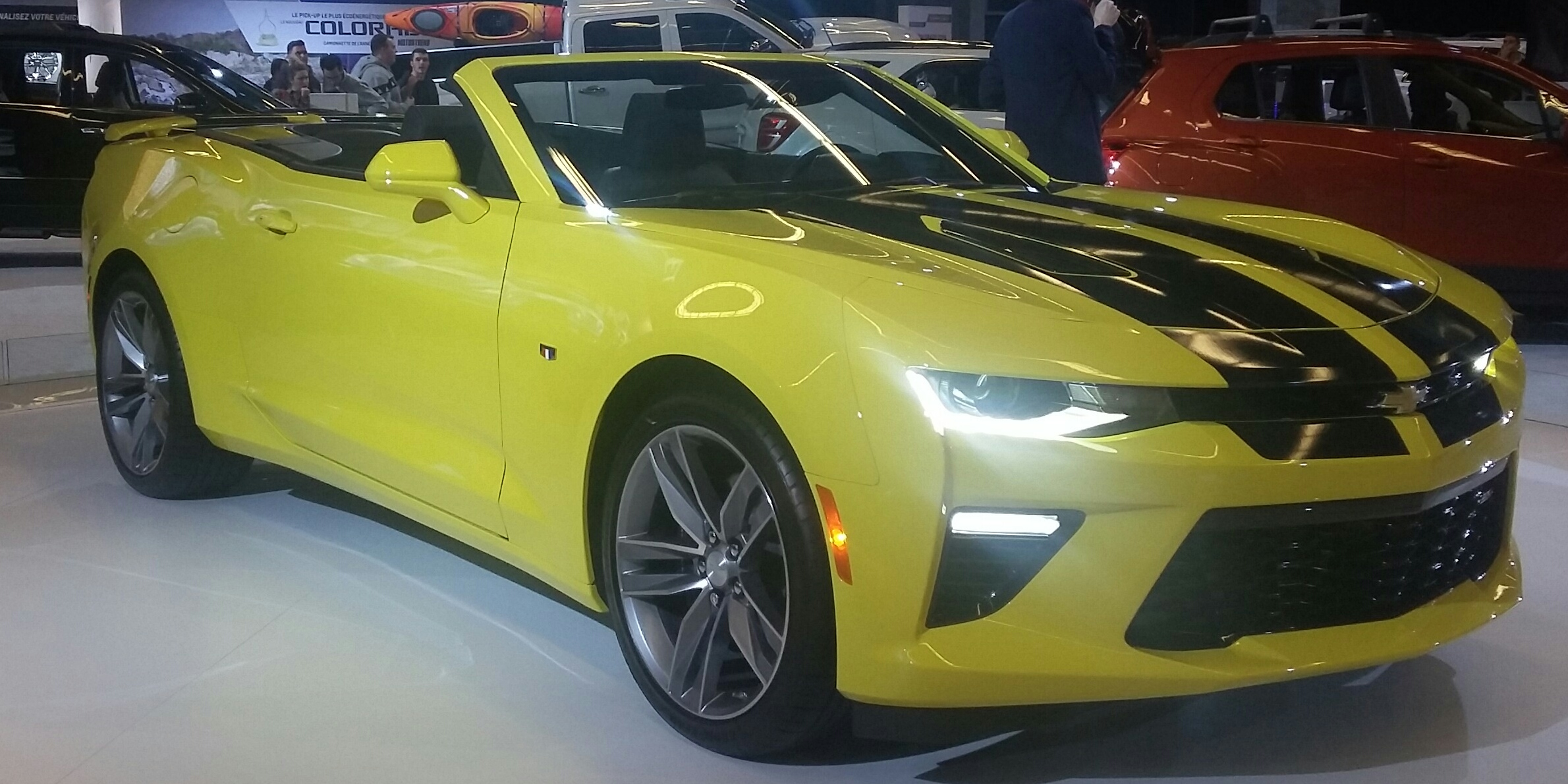
Chevrolet Camaro
"...r stuff I got to do, but I still got to have that Camaro at some point. I got some other, other Corvette d..."
The Camaro is a sporty car made by Chevrolet, usually with a two-door body style. People talk about it because it’s built to feel quick and fun to drive. The speaker is basically saying they want one someday.
The Chevrolet Camaro is a sporty American coupe/convertible known for its performance-focused engines and classic muscle-car styling. It often comes up in car discussions because it’s a popular choice for people who want a fun, driver-oriented car with strong aftermarket support. In this podcast context, it’s mentioned as a desired vehicle the speaker wants to own at some point.
back seats
"“...I just kind of like that little bit of extra bit of practicality you get from having some back seats. That's why I have the truck for that.”"
Back seats are the seats behind the driver. He’s saying having them makes a vehicle more useful for carrying people, while his fun car is more about just one person.
“Back seats” refers to the rear passenger area, which affects how many people you can carry and how practical a car is for family or group trips. In this segment, the host contrasts using a truck for practicality versus a fun car that’s more single-driver focused.
grocery Gator
"“...it's not like, I mean, and it's a grocery Gator, I guess too.”"
He’s jokingly calling it a “grocery hauler,” meaning a car you use for errands and carrying everyday items. He’s contrasting that with a fun car that isn’t meant to haul much.
“Grocery Gator” is a humorous nickname for a vehicle you use mainly for errands and hauling groceries or other everyday items. Here it’s used to contrast the Nissan Z’s fun-driver purpose with the more utilitarian role of a car that’s better for carrying lots of stuff.
Request an Explanation
Heard something you'd like explained? We'll add it to this episode.
Sign in to request explanations for terms you heard.
Want to learn more?
Browse our glossary for plain-English explanations of automotive terms, jargon, and concepts.
Help improve this episode
See something that's not quite right? Our annotations are AI-generated and can sometimes miss the mark. Click the flag icon on any annotation to suggest a correction.