
FORD, HYUNDAI & KIA Can't Lower Prices FAST ENOUGH | Episode 1063
About this episode
April sales data paints a rough picture for several brands, with Ford, Hyundai, Kia, and others leaning harder on incentives to keep metal moving. The hosts contrast Ford’s employee-pricing push with Kia’s heavy cash offers and Hyundai’s uneven inventory, where pricier models dominate while cheaper options are scarce. Hybrids stand out as a bright spot, especially for Hyundai and Kia, even as the broader market remains expensive and affordability stays tight.
Ford, Hyundai and Kia can't lower prices fast enough
"Happy Friday, everyone. Ford, Hyundai and Kia can't lower prices fast enough. We're going to break into the latest data here in just a moment before we do."
They’re talking about how Ford, Hyundai, and Kia are struggling to cut prices quickly. The show is about what that means for car shoppers and sales.
The hosts open with a market-price pressure storyline focused on Ford, Hyundai, and Kia. The episode frames it as a problem of lowering prices quickly enough relative to demand and competition.
Honda
"You can see some of the particular hybrid"
Honda is mentioned because its sales numbers changed noticeably. The hosts use it to show the market isn’t as strong as it was before.
Honda is referenced with a specific sales change (a 16% drop in “accurate” sales, likely a transcription error for a sales metric). It’s used to illustrate how the market is cooling after earlier demand spikes.
Toyota
"Dad, the headline here in automotive news reads Toyota, Honda, Hyundai, Kia, Mazda, sales decline again as market resettles from pre-tariff boost."
Toyota is one of the brands in a headline about car sales dropping. It’s mentioned as part of the overall market trend.
Toyota is included in the headline about sales declining again. The mention is part of a broader comparison across multiple automakers rather than a deep dive into Toyota specifically.
pre-tariff boost
"Dad, the headline here in automotive news reads Toyota, Honda, Hyundai, Kia, Mazda, sales decline again as market resettles from pre-tariff boost."
This means people bought more cars before tariffs were expected to raise prices. After the tariffs start, that “rush” ends and sales can drop.
“Pre-tariff boost” refers to demand that increases before tariffs take effect—often because buyers and businesses rush purchases to avoid higher costs. Once the tariff period starts, sales can fall as that front-loaded demand disappears.
Lexus
"Let's see. We have a 20% over at Lexus. That's fascinating to see Lexus sales down 20% year over year."
They call out Lexus because its sales dropped a lot compared to last year. It’s an example of how different brands are being affected.
Lexus is mentioned with a specific year-over-year sales change (“down 20% year over year”). This is used as an example of how luxury and mainstream segments are reacting differently.
year over year
"You can see some of the particular hybrid"
“Year over year” means “compared to last year.” It helps you see if sales are up or down compared with the same time period.
“Year over year” compares performance in a given month/period to the same period one year earlier. It’s commonly used in auto sales reporting to show whether sales are improving or worsening versus the prior year.
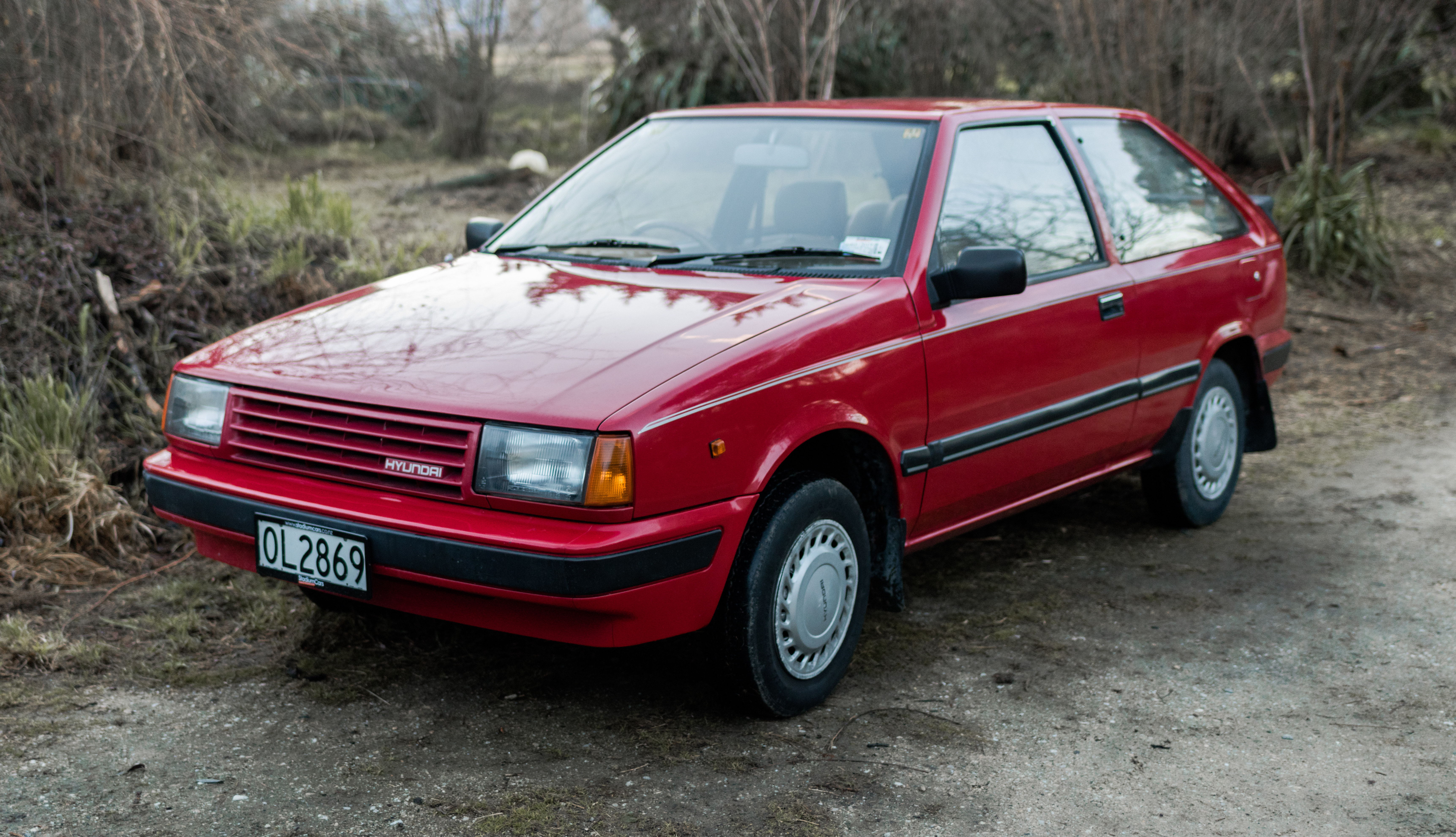
Hyundai
"Deliveries last month dropped 1.7% at Hyundai and 2.8% over at Kia... Hyundai's Corlite truck sales were mixed. Kona, Santa Cruz and Santa Fe all fell by double digits."
They’re talking about how Hyundai cars are selling lately. They break it down by different models and also by EVs and hybrid versions.
The hosts are discussing Hyundai’s sales performance and how different models (like Kona, Santa Cruz, Santa Fe, Palisade, and Ioniq) are moving the numbers. They also mention Hyundai’s electrified-vehicle mix, including EVs and hybrids.

Kia
"Deliveries last month dropped 1.7% at Hyundai and 2.8% over at Kia... to see all these various brands showing a decline in sales."
They’re talking about Kia’s sales dropping compared to last year. It’s used as a comparison to show the whole market is struggling.
The hosts cite Kia’s delivery/sales decline and discuss how the broader market is affecting Kia along with other brands. In this segment, Kia is part of the comparison set against Ford and Hyundai.
interest rate
"he said the incentives, at least interest rate wise, were particularly strong."
The interest rate is what you pay for borrowing money to buy the car. A lower rate usually makes the payment smaller and can help sales.
Interest rate is the cost of borrowing money for a vehicle loan, expressed as a percentage. Lower interest rates can reduce monthly payments and make financing more attractive, which is why the hosts discuss it alongside sales.
incentives
"he said the incentives, at least interest rate wise, were particularly strong. But it doesn't seem to have matched sales or driven sales enough"
Incentives are deals that make it cheaper or easier to buy a car. Here they’re talking about financing offers that can lower the interest rate.
In this context, incentives are marketing offers used to stimulate purchases—often including price discounts and financing support. The hosts specifically mention incentives “interest rate wise,” meaning lower borrowing costs can be part of the package.
Ford
"And Dad, Ford, we don't have their April numbers, but we know in the first quarter, their sales were off almost 9%... F-Series sales were down 16%... And then EV sales... are off 70% year over year."
They’re focusing on Ford’s sales and how different parts of the lineup are doing. They say trucks are down, and Ford’s electric-vehicle sales are down a lot too.
Ford is a major focus here, with the hosts discussing year-over-year sales declines and specific impacts on its lineup. They mention F-Series weakness, EV sales down sharply, and a large EV business unit loss.

F-Series
"F-Series sales were down 16%. Some of that's blamed on an aluminum supply provider."
F-Series is Ford’s line of pickup trucks. The hosts say those truck sales dropped a lot, and they think supply problems played a role.
F-Series refers to Ford’s pickup truck lineup (most famously the F-150 and related models). The hosts note F-Series sales were down 16% year over year, tying it to supply-chain disruption.
aluminum supply provider
"F-Series sales were down 16%. Some of that's blamed on an aluminum supply provider. We had a fire."
They’re saying Ford’s truck production was affected by a supplier that provides aluminum parts. If that supplier can’t deliver, fewer trucks can be built and sold.
This refers to a supply-chain disruption affecting aluminum parts used in Ford vehicles. When a supplier has issues (like production problems or fires), it can reduce vehicle availability and hurt sales.
EV sales
"And then EV sales down at the Blue Oval are off 70% year over year."
EV sales are how many electric cars (plug-in, battery-powered) are being sold. The hosts say Ford’s electric-car sales fell sharply.
EV sales means sales of battery-electric vehicles. The hosts say Ford’s EV sales were down 70% year over year and connect that to Ford’s EV business unit losses.
Blue Oval
"And then EV sales down at the Blue Oval are off 70% year over year."
“Blue Oval” is just another way to say Ford. It refers to Ford’s logo.
“Blue Oval” is a nickname for Ford, referencing the company’s logo. The hosts use it as shorthand for Ford’s overall performance.

Santa Cruz
"...Corlite truck sales were mixed. Kona, Santa Cruz and Santa Fe all fell by double digits."
The Santa Cruz is Hyundai’s smaller truck-like crossover. The hosts say it sold less than last year by a big margin.
The Hyundai Santa Cruz is a compact pickup-style crossover. The hosts cite it as one of the Hyundai models whose sales fell by double digits in April.
overstocked on dealer lots
"...although you and I were just looking at the data. And there are some parts of the country where Palisades are overstocked on dealer lots."
It means dealers have too many cars sitting unsold. When that happens, they may need to offer deals to sell them.
“Overstocked on dealer lots” means dealers have more inventory than they can sell quickly. That can lead to discounting or incentives to move cars, and it can vary by region.

Hyundai Ioniq 9
"The new Ioniq 9, which you and I drove past an Ioniq 9 at a Hyundai dealership recently. I think it's massive."
The Ioniq 9 is a new Hyundai electric vehicle the hosts mention seeing at a dealership. They’re using it to talk about Hyundai’s upcoming/expanding EV lineup.
The Hyundai Ioniq 9 is discussed as a new electrified model the hosts have seen at a Hyundai dealership. They describe it as “massive” and use it as part of their look at Hyundai’s EV and hybrid momentum.
hybrid volume
"And the hybrid volume you can see was up 52%. Overall, Hyundai said electrified vehicles represented a third of their total"
Hybrid volume means how many hybrid cars are selling. Hybrids use both a gasoline engine and an electric motor, and the hosts say those sales are rising.
“Hybrid volume” refers to how many hybrid vehicles are being sold or delivered over a period. The hosts say Hyundai’s hybrid volume was up 52%, indicating strong demand for non-pure-EV electrified powertrains.
electrified vehicles
"Overall, Hyundai said electrified vehicles represented a third of their total"
Electrified vehicles means cars that use electricity in some way—like full electric cars or hybrids. The hosts say Hyundai’s electrified models make up a big share of their sales.
“Electrified vehicles” is an umbrella term covering EVs and hybrids (and sometimes plug-in hybrids), rather than only battery-electric cars. The hosts use it to describe Hyundai’s overall sales mix.

Hyundai Sonata hybrid
"sales last month, which is crazy. But the Hyundai Sonata hybrid is up 171%. Elantra hybrid rising 55% in the Santa Fe setting"
The Hyundai Sonata hybrid is a regular car (a sedan) that uses a gas engine plus an electric system. The hosts are saying it’s selling much better than many other models right now.
The Hyundai Sonata hybrid is a midsize sedan offered with a hybrid powertrain. In this segment, the hosts cite it as a strong seller, suggesting buyers are currently prioritizing fuel economy and lower running costs over pure EVs.

Elantra hybrid
"But the Hyundai Sonata hybrid is up 171%. Elantra hybrid rising 55% in the Santa Fe setting records for the hybrid version up 3%."
The Elantra hybrid is a smaller Hyundai that uses both gas and electricity to help it get better mileage. The hosts mention it because hybrid demand is rising.
The Hyundai Elantra hybrid is a compact car variant that combines a gasoline engine with an electric motor(s) to improve efficiency. The segment uses it as another example of hybrids gaining traction with shoppers.
full battery electric vehicles
"tried desperately to convince people that the move was to full battery electric vehicles. And while there were some federal incentives and state incentives to help move those vehicles along"
A full battery electric vehicle is an EV that uses only electricity from a battery. The hosts are saying people are still choosing hybrids more often right now.
Full battery electric vehicles (BEVs) run only on electricity stored in a battery pack, with no gasoline engine. The hosts contrast BEVs with hybrids, arguing that hybrids are currently capturing more buyer interest than pure EVs once incentives fade.
hybrids were going to be that bridge
"I've said for years that I thought hybrids were going to be that bridge to get people to eventually consider full battery electric vehicles. For sure."
The hosts mean hybrids can be a stepping stone between gas cars and fully electric cars. They’re saying many shoppers want the benefits of electrification without the full commitment to an EV.
The “bridge” idea is that hybrids help customers transition from gas cars to full EVs by offering improved efficiency without requiring charging infrastructure. The hosts say this strategy appears to be playing out as buyers show strong interest in hybrid options.
tariffs
"We know Ford did this employee pricing right when tariffs got announced. And it was a huge plus."
Tariffs are taxes the government puts on imported products. The hosts are saying that when tariffs were announced, Ford’s discount program helped sales despite higher costs.
Tariffs are taxes imposed on imported goods, which can raise costs for automakers and affect vehicle pricing. The hosts reference tariffs as the backdrop for why Ford’s employee pricing promotion was especially impactful.
average marketed price
"OK, the average marketed price in America at the moment is $51,326, which is $806 higher than it was 30 days ago and $1,183 higher than what it [656.5s] was a year ago."
This is basically the average price of cars that are being advertised for sale. The host is using it to show that prices have gone up, so deals may not be enough.
“Average marketed price” refers to the typical sticker price automakers are advertising/selling vehicles at, across the models being marketed. The hosts use it to argue that prices have risen recently, making cars less affordable even if incentives are offered.

Kia Niro
"Let's look at the Kia Niro, for example. So the Kia Niro comes in a couple of variations, but on the powertrain side of things, there's the Kia Niro and the Kia Niro EV."
The Kia Niro is a small crossover that can come as a hybrid or as an all-electric car. The hosts are using it to show how some versions can sit on lots longer depending on where you live.
The Kia Niro is a compact crossover offered in multiple powertrain versions, including hybrid and electric (EV). In this segment, the hosts use it as an example of how supply and pricing can differ by region.
oversupply of inventory
"There are some parts of this country where there's an oversupply of inventory of Kia Niros. There are also some parts of this country where there's no supply of Kia Niros."
“Oversupply of inventory” means there are too many cars sitting on lots compared to how many people are actually shopping for them. That can make it harder for dealers to sell cars quickly without adjusting price or offers.
An oversupply of inventory means there are more cars available in a region than customers are buying. When that happens, dealerships may struggle to move units at full price, which can affect pricing and incentives.
days supply of inventory
"I'm going to zoom in here on New Hampshire, where there's the highest days supply of inventory. And we've got here, Dad, just looking at it over here, we've got a vehicle in New Hampshire, a 2025, a leftover Kia Niro SX Touring."
“Days supply of inventory” is basically how long the cars on dealer lots would last if sales keep going at the same rate. More days usually means the cars aren’t selling as fast.
Days supply of inventory is a metric that estimates how long it would take to sell the current stock at the current sales pace. Higher days supply usually indicates slower sales and/or weaker demand in that area.
MSRP
"It's a Kia Niro that has a $42,835 MSRP."
MSRP is the “sticker price” the manufacturer lists for the car. The real deal price can be lower once discounts and incentives are added.
MSRP (Manufacturer’s Suggested Retail Price) is the sticker price a manufacturer sets for a vehicle. It’s often used as a reference point, but the actual selling price can be lower after dealer discounts and manufacturer incentives.
invoice price
"It's got a $41,000 invoice price."
Invoice price is what the dealer pays the manufacturer for the car. If the selling price is close to or below invoice, it usually means the dealer isn’t making much profit—or is discounting heavily.
Invoice price is the amount the dealer pays the manufacturer for the vehicle (before the dealer’s profit). It’s commonly discussed because it helps shoppers estimate how much room there is for discounts beyond the dealer’s cost.
move the metal
"But look at this, the dealer is offering 20% off of MSRP to move the metal."
“Move the metal” is slang for selling cars that are sitting on the lot. Here, it means the dealer is discounting to get the car sold.
“Move the metal” is a sales expression meaning to sell inventory quickly. In the transcript, it describes the dealer using discounts to reduce unsold stock and increase sales volume.
manufacturer incentive
"And if we were to hone in on the Kia Niro EV for a moment, Dad, just on the manufacturer incentive side."
A manufacturer incentive is a deal the car company offers to help you buy the car. It can be cash off the price or a special financing offer.
A manufacturer incentive is money or financing support provided by the automaker to encourage sales. These incentives can include cash rebates (“customer cash”) or special financing offers, and they can stack with dealer discounts.
2025 Kia Niro EV
"Look at this, Dad, 2025 Kia Niro EV, $11,500 customer cash."
They’re using a 2025 Kia Niro EV as an example. The key point is that Kia may offer cash incentives that reduce the price you pay, on top of any dealer discount.
A 2025 Kia Niro EV is being used as a concrete example of how manufacturer incentives work. The segment cites “customer cash” as a direct reduction you can apply toward the purchase price, separate from any dealer discount.
customer cash
"Look at this, Dad, 2025 Kia Niro EV, $11,500 customer cash."
Customer cash is money the manufacturer gives you to lower the price of the car. It’s usually a rebate you can apply when you buy.
Customer cash is a direct rebate the automaker offers to the buyer, reducing the purchase price. It’s typically separate from dealer discounts and can vary by model year and trim.
manufacturer rebate
"That's an $11,500 manufacturer rebate, not including what dealer discount you get."
A manufacturer rebate is a cash incentive paid by the automaker to reduce the effective price. The hosts distinguish it from dealer discounts, emphasizing that both can contribute to the final deal.
0% for 72 months
"You can finance a Kia Niro EV at 2025, 0% for 72 months and $5,000."
This means you can finance the car with a loan at 0% interest for 72 months. That can make the monthly payments cheaper and reduce the total cost of borrowing.
“0% for 72 months” refers to a special auto loan offer with a 0% interest rate over 72 months. These promos can reduce total financing cost, but they may come with eligibility rules or require specific vehicle configurations.
dealer asking price
"And the price points that we're talking about here, Dad, are generally speaking, this is the dealer asking price, right?"
The dealer asking price is the price the dealership is advertising. It’s the starting point before any discounts or negotiation.
Dealer asking price is the price a dealer lists the vehicle for sale at (before negotiation). It’s useful for comparing against averages and understanding how far incentives and discounts may move the final transaction price.
EV powertrain
"And that's actually interestingly, you know, a hybrid powertrain example or an EV powertrain example."
An EV powertrain is what makes an electric car move—mainly the battery and electric motor. They’re using it to explain why pricing incentives might be different for EVs.
An EV powertrain is the vehicle’s electric propulsion system, including the battery and electric motor(s). The hosts use “EV powertrain” to contrast how incentives and pricing pressure can differ between electric vehicles and other powertrain types.
hybrid powertrain
"And that's actually interestingly, you know, a hybrid powertrain example or an EV powertrain example."
A hybrid powertrain uses both a gas engine and an electric motor. They mention it to show the pricing pressure/incentives aren’t only about fully electric cars.
A hybrid powertrain combines an internal-combustion engine with an electric motor and battery. The hosts mention it to show that pricing/incentive dynamics can apply across different electrified vehicle types, not just EVs.

Hyundai Santa Fe
"How about Santa Fe? [1078.6s] So, yeah, I get it on the Nero."
The Hyundai Santa Fe is a Hyundai SUV. The hosts mention it as another example while talking about what’s selling and how expensive these vehicles can get.
The Hyundai Santa Fe is a midsize SUV line from Hyundai. Here, it’s brought up as another model in the discussion of Hyundai sales and pricing.
inventory right now
"Where do they actually have the inventory right now? And you can see above our heads, okay, there's 17. This is within 100 miles."
Inventory means how many cars are currently sitting at dealers and available to buy. They’re checking inventory numbers to see if prices are actually becoming more affordable.
“Inventory right now” refers to how many vehicles are currently available for sale within a defined search area. The hosts use these counts (e.g., within 100 miles, then nationwide) to discuss whether pricing pressure is showing up in real availability.

Hyundai Konas
"Okay, you've got 12,000, 13,000 Konas. There you go, you've got 32,000 Palisades, 40,000 Santa Fe's."
The Hyundai Kona is a small SUV/crossover. They’re using how many are in inventory to make a point about pricing.
The Hyundai Kona is a subcompact crossover/SUV. Here it’s mentioned alongside Elantra inventory numbers to show Hyundai’s high-volume models still sit at higher price points than many buyers expect.

Hyundai Tucson
"You might not see it on the screen, they're at 39,000 Tucson. So, yeah, you're right, the Palisade, which is one of the more expensive options from Hyundai."
The Hyundai Tucson is a smaller SUV. They’re using it as another example in their inventory-and-price comparison.
The Hyundai Tucson is a compact SUV. The hosts reference Tucson inventory counts alongside other Hyundai models to illustrate how many vehicles are available within a certain distance, while still discussing pricing.
profit margin
"But you can see through looking at total inventories that they, there are way more of their higher profit margin vehicles available than their lower profit margin vehicles."
Profit margin is the amount of money a seller keeps after paying the costs to make and sell something. Here, they’re saying some car types make more profit than others, so dealers stock more of the higher-profit ones.
“Profit margin” is how much money a company makes on each vehicle after costs. In this discussion, the hosts are saying automakers earn more on certain vehicle types, so they stock more of those models.
dearth of sedans
"I was interviewed this morning about the dearth of sedans. Well, why is that?"
“Dearth of sedans” just means sedans are harder to find right now. The hosts are saying fewer sedans are being made because more people are buying SUVs and trucks instead.
“Dearth of sedans” means there are relatively few sedans available compared with other body styles. The hosts connect it to consumer demand shifting toward SUVs and pickups, and automakers prioritizing those higher-profit segments.

Hyundai Venue
"We're going to do this in a second because the opposite of the Palisades, the Hyundai Venue, yeah, before then... I pulled up the Hyundai Venue."
The Hyundai Venue is a small SUV made by Hyundai. The hosts mention it while talking about how SUVs are more common than sedans in today’s lineup.
The Hyundai Venue is a subcompact SUV from Hyundai. In this segment, it’s used as an example while the hosts discuss why sedans are less available and why manufacturers focus on SUVs.

Hyundai Palisades
"Again, Hyundai Palisades, which unfortunately have MSRP ranging from $50,000 to $65,000, ... But what's it tell you when there's four times the amount of Palisades? ... It's also a buyer's market for the Palisade, so that's good to see."
The Hyundai Palisade is Hyundai’s bigger family SUV with three rows. They’re saying that even this more expensive model can be easier to negotiate on, depending on how many are available.
The Hyundai Palisade is Hyundai’s larger three-row SUV, typically priced well above the Venue. The hosts compare Palisade pricing and market conditions to the Venue, focusing on how inventory levels affect discounts.
68 days on the market
"We're talking a $25,000 MSRP and the dealers are advertising on this one, Dad. 68 days on the market. They're already $1,351 off."
“Days on the market” means how long that exact car has been sitting for sale. If it takes a long time to sell, dealers may lower the price to attract buyers.
"Days on the market" is how long a specific vehicle listing has been available for sale. Longer time on the market often signals weaker demand, which can lead to larger discounts.
buyer's market
"It's a buyer's market in pretty much every state for the Hyundai Venue. ... But pretty much every state, it's a buyer's market for Hyundai Venues. ... It's also a buyer's market for the Palisade, so that's good to see."
A buyer’s market means there are more cars available than people want right now. That usually gives you an advantage to negotiate a better price.
A buyer’s market means there’s relatively more supply than demand, so shoppers have more negotiating power. In car pricing, this often shows up as higher inventory, longer days on listings, and bigger discounts versus MSRP.
employee pricing
"Well, the employee pricing, if it's a vehicle that qualifies, there's no negotiation. It is set on the invoice as to what the employee price is. And so you pick out the car, you ask them to show you the invoice, and list it on the invoice will be the employee price, and that's what you can buy it for."
Employee pricing is a special discount that’s meant to be cheaper than the normal price. In this case, if your car qualifies, the price is basically set and you don’t haggle like you normally would.
Employee pricing is a promotional discount tied to eligibility (often through employment or related programs). In this segment, the key point is that qualifying cars have a fixed employee price shown on the invoice, reducing or eliminating negotiation.
double-edged sword
"This is a double-edged sword. I want to be clear here. It's a double-edged sword, because some Ford vehicles, like an old, lingering leftover 2025, should be selling below the employee price."
They mean the strategy helps in some ways but hurts in others. Here, it can be great for getting deals on certain cars, but it may also limit discounts on other cars that should be cheaper.
“Double-edged sword” is used to describe a strategy that has both benefits and drawbacks. In this context, employee pricing can help move certain cars, but it can also prevent discounts on other vehicles that might otherwise sell for less.
negotiation
"who just want it to be a simple, easy process, this allows that to happen at Ford dealerships... You don't have to be a good negotiator."
Negotiation is the bargaining process where buyers and dealers try to adjust the final sale price. The hosts contrast negotiation-heavy shopping with a simpler process that doesn’t require the buyer to negotiate.
Carvana
"when we discussed Carvana the other day, and they sold 187,000 used cars in the quarter, why is it that people go there? Because the price is set and there's no games and there's no negotiation."
Carvana is a company that sells used cars, mostly online. The hosts use it as an example of why fixed prices and less haggling can attract buyers.
Carvana is an online used-car retailer discussed here as an example of a no-haggle pricing model. The hosts cite its sales volume to argue that customers like fixed pricing and a simpler purchase process.
set pricing
"Because the price is set and there's no games and there's no negotiation. And so, it is just by nature a more pleasant experience... So, there's something to be said for set pricing without all the BS, without all the games"
Set pricing means the price on the car is the price—no haggling. The hosts say that makes buying feel easier and less stressful.
Set pricing means the car’s price is fixed and not adjusted through back-and-forth bargaining. The hosts argue it reduces uncertainty and makes the buying experience feel more straightforward.
leftover vehicles
"And the other part of the story is Ford needs to find a way to sell these leftover vehicles."
“Leftover vehicles” are cars that didn’t sell yet and are still sitting around. The host is saying Ford has to figure out how to sell those cars.
“Leftover vehicles” are unsold inventory units sitting at dealerships or in the pipeline after demand slows or pricing changes. The hosts suggest Ford needs a strategy to move this inventory, which can involve incentives or revised pricing.
0% financing for 72 months
"It's not cheap to offer 0% financing for 72 months or $11,500 in cash for every Nero you sell."
This is a loan where you don’t pay interest, spread over 72 months (six years). It can make monthly payments lower, but it usually requires the car company to cover the cost of that deal.
“0% financing for 72 months” means the buyer pays no interest over a six-year loan term. Because the lender/brand isn’t earning interest, the manufacturer often compensates by reducing margins or funding the deal through incentives.
how many are out there nationwide right now
"$11,500 or $10,000 depending on the model year on those Kia Nero's. How many Kia Nero's are out there nationwide right now? Drumroll, please."
They’re asking how many of that car model are currently around in the country. It’s basically a “how common is it right now?” question.
This is a market-availability/penetration question: the hosts are estimating how many units of a specific model are currently in the U.S. (or “nationwide”). That kind of number helps gauge how common the vehicle is and how much inventory or sales volume the incentives are supporting.
leftover inventory
"So leftover Kia Nero's, you've got 400 leftover Kia Nero's out there right now, Dad. That Kia is going to spend $400 times $11,500."
Leftover inventory just means there are still a lot of unsold cars available. When that happens, dealers and manufacturers often have to offer better pricing or incentives to sell them.
“Leftover inventory” means unsold vehicles that remain on dealer lots or in the distribution pipeline after a model year. When inventory is high, manufacturers and dealers may use incentives or pricing strategies to move those cars.
CarEdge.com
"CarEdge.com, go to CarEdge, search dealer reviews or dealer ratings. You go on CarEdge.com, it's under dealer reviews. Up here, click on ratings overview."
CarEdge.com is a website that gathers dealer pricing and review information from other people. The show uses it to compare dealers using the final “out-the-door” numbers.
CarEdge.com is the platform the hosts use to collect community-submitted pricing quotes and dealer review data. They use that data to score and compare dealers based on how the listing price relates to the out-the-door price.
out-the-door price
"We've scored 11,501 car dealers so far. We've gotten 51,756 out-the-door price quotes from our community into this system to score dealers."
The out-the-door price is what you actually end up paying at the end of the deal. It includes the car price plus things like taxes and fees, so it’s the best way to compare offers from different dealers.
“Out-the-door price” is the total amount you pay to buy the car, including the negotiated price plus taxes, registration, and typical dealer fees. It’s the most useful number for comparing dealers because it reflects the real checkout total rather than just the sticker or listing price.
Anchor Buick, GMC
"We'll come here to this one. Anchor Buick, GMC, Ernst & A, one of the most transparent dealers in the state of Maryland."
Buick and GMC are car brands. The host is talking about a specific dealership that sells those brands and how its pricing compares to others.
“Buick” and “GMC” are brand names under General Motors, and the dealership is described as selling/representing those brands. In this context, it’s about which franchise dealership is being reviewed and how transparent its pricing is.
dock fee
"Anchor Buick, GMC, Ernst & A, one of the most transparent dealers in the state of Maryland. Their dock fee is $499, it's $278 below the Maryland average."
A dock fee is a charge the dealer adds for handling the car when it arrives. It’s usually a separate fee on the paperwork, so you’ll want to see it itemized and compare it across dealers.
A “dock fee” is a dealership charge tied to getting a vehicle from the manufacturer to the dealer—often associated with shipping, handling, or receiving the car. It’s typically listed as a separate line item and can vary by dealer.
dealer add-ons
"We've gotten six quotes from them and we've never detected dealer add-ons. Their listing price compared to what you actually get quoted on the out-the-door price doesn't change."
Dealer add-ons are extra extras the dealer may try to add to your purchase. They usually cost more money, so it’s important to check whether they’re included in the final price.
“Dealer add-ons” are extra products or services a dealership tries to bundle into the sale—often after you’ve negotiated the car price. They can include items like paint protection, nitrogen tires, or other packages that raise the final cost.
dealer ratings
"So you can find A-rated dealers, B-rated dealers, C-rated dealers, or unfortunately, some of those F-rated dealers out there."
They’re talking about a dealer score system. It’s a quick way to see which car dealerships are rated better or worse so you can shop more confidently.
The hosts discuss a system that grades car dealers (A-, B-, C-, and even F-rated). It’s meant to help shoppers quickly identify which dealers have better reputations based on the platform’s collected data.
Request an Explanation
Heard something you'd like explained? We'll add it to this episode.
Sign in to request explanations for terms you heard.
Want to learn more?
Browse our glossary for plain-English explanations of automotive terms, jargon, and concepts.
Help improve this episode
See something that's not quite right? Our annotations are AI-generated and can sometimes miss the mark. Click the flag icon on any annotation to suggest a correction.