
Mansory on Modifying the World's Greatest Supercars & What Brands REALLY Think
About this episode
Mansory’s founder talks through the company’s philosophy of making every body kit and conversion functional, from aerodynamic wings to working scoops, while also explaining the huge cost and time behind projects like the Bugatti Chiron and Maserati MC20-based build. He discusses lawsuits, copycats, warranty support, and why the brand focuses on bespoke work for wealthy clients. The conversation also covers his dislike of electric cars, his preference for sound and combustion engines, and how Mansory has expanded into collaborations and lifestyle products.
electric car is dangerous
"[0.0s] I am a dreamer. [10.8s] Electric car is dangerous. [12.5s] We make sound systems."
People sometimes say electric cars are “dangerous,” usually meaning battery fires or how hard they are to handle after a crash. The real answer depends on how the car is built and how often incidents happen compared with gas cars. It’s not just the fuel type—it’s the safety engineering.
The hosts are making a claim about electric vehicles being “dangerous,” which is a common debate topic. A useful explanation would cover what people mean by that—battery fires, crash safety, and how EV incident rates compare to gas cars. It’s also worth discussing how safety depends on design, charging practices, and emergency response.
V8, V12
"[12.5s] We make sound systems. [13.6s] V8, V12. [16.4s] What car do you drive yourself?"
V8 and V12 are types of engines. The “V” means the cylinders are arranged in a V shape, and the number tells you how many cylinders there are. More cylinders usually means a different feel and sound.
V8 and V12 refer to engine configurations where cylinders are arranged in a “V” shape. The number indicates how many cylinders the engine has, which strongly influences smoothness, power potential, and how the engine sounds. In supercar discussions, these terms often signal performance character and brand identity.
manufacturers copy us / sue us
"[26.7s] What do the car manufacturers think of what you do? [30.0s] Some of them know they copy us. [31.5s] Some of them think they sue us."
The speaker describes a tension between automakers and tuners: some manufacturers allegedly “copy” their ideas, while others consider legal action (“sue us”). This is a real-world concept in the modification industry involving intellectual property, design language, and brand protection. Explaining it helps listeners understand why aftermarket companies operate carefully around styling and branding.
Ferrari
"And what do the car manufacturers for Ferrari Lamborghini... I can, I'm going to assume from my Ferrari... that Ferrari would have been one of the brands that probably would have sued you at some point."
Ferrari is a famous Italian supercar brand. The hosts mention it because some companies like Ferrari may not like certain modifications and can take legal action to protect their brand and designs.
Ferrari is an Italian supercar and sports-car manufacturer known for tightly controlling how its cars are modified and marketed. In the segment, it’s brought up in the context of legal disputes over aftermarket or third-party modifications.
Lamborghini
"And what do the car manufacturers for Ferrari Lamborghini... Some of them they sue us that we copy them... Some of them, some of Ferrari or Lamborghini."
Lamborghini is another famous Italian supercar brand. In this conversation, it’s mentioned because Lamborghini—like other luxury brands—can have strong opinions about who modifies its cars and how.
Lamborghini is an Italian supercar manufacturer that, like Ferrari, is protective of its designs and brand image. The discussion frames Lamborghini as a brand that may either like, copy, or sue modification companies depending on how the modifications affect perception and intellectual property.
copying vs suing over modifications
"Some of them they're jealousy. Some of them they copy us. Some of them they sue us that we copy them... But finally, we are the winner."
The hosts are talking about what happens when a company modifies supercars and other brands respond. Some brands may like it, but others may feel it’s too similar to their own work and take legal action to protect their designs and reputation.
The segment describes a spectrum of brand reactions to a tuner/modifier: some brands like the work, some feel jealousy, some copy the approach, and some sue. This is essentially about intellectual property and brand control—companies may pursue legal action if they believe designs, branding, or customer perception are being infringed.
aftermarket modification impact on brand/customer demand
"But in a fact, to be honest, it is advantage for them... because who don't like the car like this, they get more customer because they have their own customer anyhow."
They’re arguing that modifying supercars can actually bring in more customers. Even if the original brand doesn’t love it, some people want a more customized or wilder version, so the modified cars can increase demand.
The discussion suggests that third-party modified cars can increase overall customer interest, even if manufacturers dislike the practice. The idea is that offering a more extreme or personalized version of a supercar can attract buyers who might not have purchased the standard car.
kits
"[134.8s] But you still make kits for Ferrari, so. [137.1s] Yeah, so. [137.7s] There you go."
A “kit” is a set of aftermarket parts made to fit a particular car. Here, it’s about whether Mansory offers parts for certain Ferrari models.
In the context of supercar tuning, “kits” usually means aftermarket bodywork and components (like aero pieces) designed to fit a specific model. Companies that make kits can offer anything from subtle styling upgrades to full widebody conversions.

Ferrari F80
"[142.5s] You don't make what? [143.9s] F80. [144.6s] Yeah, so, OK, so me and Mr. Mansori at the minute"
Ferrari F80 is a specific Ferrari supercar model. The hosts are talking about whether Mansory makes aftermarket parts or a kit for that exact car.
Ferrari F80 is a modern, high-performance Ferrari model name being discussed in the context of aftermarket customization. When someone says a tuner “doesn’t make” a specific Ferrari model, they’re usually talking about whether the company offers body/upgrade kits or full conversion work for that platform.
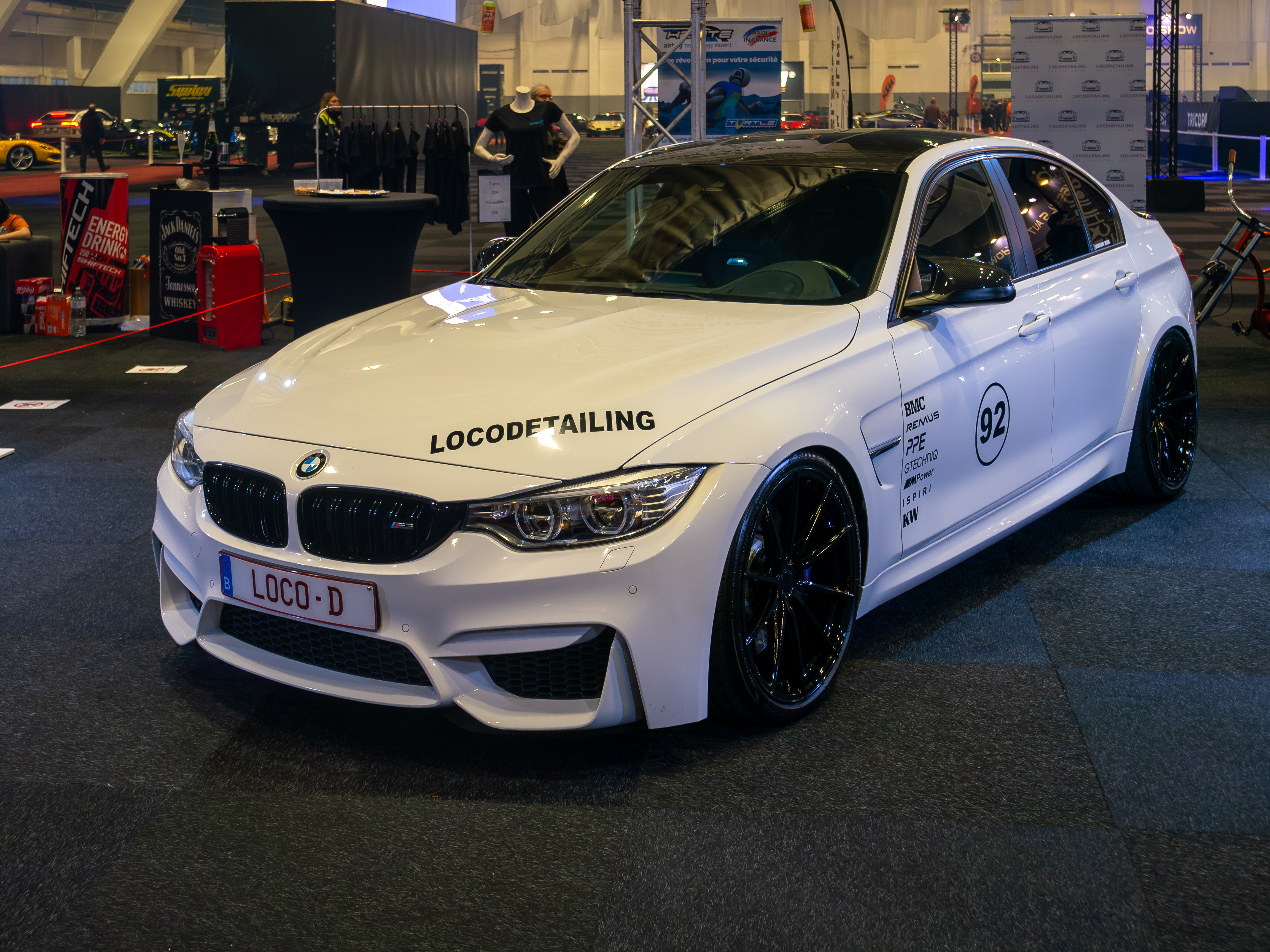
BMW M3
"You don't make what? F80. Yeah, so, OK, so me and Mr. Mansori at the minu..."
The BMW M3 is a sporty BMW made for fast driving. “F80” refers to a specific generation of the M3. People talk about it because it’s known for strong performance compared with a regular BMW 3 Series.
The BMW M3 is a high-performance version of the 3 Series, built by BMW’s M division for drivers who want a sporty, track-capable sedan. In the podcast context, the mention of “F80” points to the F80-generation M3, which is often discussed for its performance and enthusiast appeal. It comes up in conversations about how specific models are engineered and why certain generations become notable.
Mansory
"[144.6s] Yeah, so, OK, so me and Mr. Mansori at the minute [162.4s] But the car, I think, will be coming straight here [167.9s] for full Mansori."
Mansory is a company that modifies supercars. They’re known for making big, noticeable changes—so the hosts are talking about a Ferrari being customized by them.
Mansory is a German aftermarket tuner known for extreme styling and performance upgrades on exotic cars. In this segment, they’re described as doing “full Mansory” work on a Ferrari, highlighting how some customers commission major visual and mechanical changes rather than mild cosmetic mods.
Ferrari F82
"[149.4s] are connected with a customer who I am selling a Ferrari F82. [162.4s] But the car, I think, will be coming straight here [167.9s] for full Mansori."
Ferrari F82 is the specific Ferrari car being mentioned for sale. The conversation is about that car coming in for Mansory modifications.
Ferrari F82 refers to a specific Ferrari model designation being sold to a customer in this segment. The discussion ties it to Mansory’s customization work (“full Mansory”), implying the car is being modified with aftermarket styling/performance upgrades.
aftermarket customization (full conversion)
"[162.4s] But the car, I think, will be coming straight here [167.9s] for full Mansori. [169.5s] No, they're coming here only for a little loan change."
“Full” customization usually means the tuner is doing a lot more than small add-ons. It can change how the car looks (and sometimes how it drives), which can affect what the car is worth later.
“Full Mansory” implies a more complete aftermarket conversion than simple bolt-on accessories—typically involving extensive bodywork and possibly performance-related changes. This matters because the scope affects cost, fitment quality, resale value, and how the car is used day-to-day.
mold
"So then you have to make the mold. It is milling the model."
A mold is like a custom form used to make parts the same way every time. If you’re building body panels or aero pieces, the mold helps ensure they fit correctly.
A “mold” is a shaped tool used to produce repeatable parts—especially for composite bodywork. Once the design is finalized, manufacturers or specialist shops create molds so each component matches the intended shape and fit.
milling the model
"It is milling the model. And then we make mold, yeah?"
Milling the model means using a computer-controlled machine to carve the exact shape. That carved shape is used to make the tools (like molds) that produce the final parts.
“Milling the model” refers to using CNC machining to carve a physical master model from a block of material. That master is then used to create molds or tooling for production parts, which is why it’s a key step in expensive custom bodywork.
wind tunnels for aerodynamics
"And obviously the design, you would have had to go through wind tunnels for aerodynamics. We do, we do. We do it not in wind tunnel, it's out."
A wind tunnel is a controlled airflow test where engineers can see how air moves around the car. It helps them make the car faster and more stable by shaping it to push air the right way.
Wind tunnels are facilities that measure airflow around a vehicle to optimize aerodynamic performance. They help engineers reduce drag, improve downforce, and manage airflow for cooling and stability—especially important for supercars and aftermarket aero.
wings
"No, or even we make the wings and so on, yeah? Because this is very, very important."
“Wings” here means aerodynamic parts like spoilers. They’re meant to push the car down onto the road so it can grip better, especially at speed.
In supercar modification, “wings” usually refers to aerodynamic spoilers or rear wings that generate downforce. The speaker mentions making wings as part of their work, tying it to their broader claim that modifications should serve a purpose beyond appearance.
function over form in aero mods
"Because this is very, very important. Everything what we do is function. Even if you make a scoop, a scoop is function... It doesn't actually do anything. It's just the visual."
They’re talking about whether car aero parts actually do something or are just for looks. The idea is that a scoop or wing should help the car—like improving cooling or grip—rather than just changing the appearance.
This segment contrasts aerodynamic parts built for real airflow and cooling (“function”) versus parts that are mainly visual (“form”). It highlights how some manufacturers and tuners may offer features that look performance-oriented but don’t meaningfully affect cooling or aerodynamics.
scoop
"Everything what we do is function. Even if you make a scoop, a scoop is function. Yeah, right. So it actually does cool the engine?"
A scoop is an opening or raised shape on the car that helps move air. The discussion is about whether it actually helps performance (like cooling) or if it’s just there to look sporty.
A scoop is a bodywork feature designed to capture airflow and channel it where it’s needed, typically for cooling or aerodynamic balance. The speaker’s point is that even small-looking parts like scoops should have a functional purpose—such as cooling the engine—rather than being purely cosmetic.

McLaren 675 LT
"I've even seen it myself with McLaren's. Like, you can get a roof scoop on a 675 LT. It was fake. Right. It doesn't actually do anything. It's just the visual."
The McLaren 675 LT is a special McLaren supercar. In this discussion, they’re saying some factory-looking parts (like a roof scoop) may be there for appearance more than real cooling or performance.
The McLaren 675 LT is a track-focused supercar variant known for lightweight construction and aerodynamic upgrades. Here, the hosts mention a “roof scoop” that’s described as fake—meaning it’s primarily visual and not actually cooling the engine as intended.
show car
"It's only you have a show car, you have a media, you have people starting, yeah?"
A “show car” is a car made to be seen—like at car shows or in photos/videos. The point is to attract attention and create buzz, which can help sales or brand value.
A “show car” is a vehicle built or modified primarily for display—typically at events, media shoots, or brand showcases. The segment connects show cars to marketing impact and how visibility can help generate money and recognition.

MC20
"And what triggered you to use the MC20 as the donor car for this, why didn't you choose a Revolto or a..."
The MC20 is a Maserati supercar. A “donor car” means someone starts with a real, existing car and then changes it—often heavily—to create a custom version.
The Maserati MC20 is a modern mid-engine supercar that Mansory-style builders often use as a base (or “donor car”) for custom modifications. In this context, it’s being discussed as the starting platform for a specific carbon-focused build.
donor car
"And what triggered you to use the MC20 as the donor car for this, why didn't you choose a Revolto or a..."
A “donor car” is an existing vehicle used as the foundation for a custom build. Builders choose a donor because it provides the underlying chassis, drivetrain, and fitment points, which can then be replaced or reworked to achieve the desired look and performance.
fully carbon cars
"Hopefully this year, all the complete fully carbon. Because we started already at the beginning with Avanador. So Avanador will make, I believe, 10, 12 fully carbon cars."
“Fully carbon” means a lot of the car is made from carbon fiber. Carbon fiber is lighter and stronger than many traditional materials, and it also looks very exotic.
“Fully carbon cars” refers to using carbon fiber extensively—often for body panels and exterior components—to reduce weight and increase stiffness while also delivering a distinctive high-end look. In supercar customization, carbon fiber is a major part of the premium “materials” story.
SVJ
"I believe the complete, we make 20 cars with SVJ, because all shape same. ... SVJ, all together we make 20."
SVJ is Lamborghini’s performance badge used on the Aventador SVJ. It signals a more track-oriented, higher-output specification than the standard Aventador, which is why the conversation frames modifications on an SVJ as a different proposition than doing the same thing to a base car.

Lamborghini Aventador
"...to do it on their SVJ rather than their standard Aventador? Some people, they have an image, you know,"
The Lamborghini Aventador is a high-performance supercar from Lamborghini. The “SVJ” is a more extreme version of the Aventador, aimed at stronger track performance. People may talk about it because the different versions can feel very different in how they’re built and used.
The Lamborghini Aventador is a flagship supercar known for its aggressive styling and high-performance character. The podcast context compares attention to the “SVJ” version versus the standard Aventador, which matters because the SVJ is a more extreme, track-focused variant. It’s brought up to discuss how people choose models based on image, specification, and performance intent.
customer image vs. functional value in customization
"Some people, they have an image, you know, that they are thinking, same as Colin, why you buy a silver batch, black batch? ... just buy a standard one. You can paint it."
This is about why people modify cars. Sometimes it’s not because the upgrade is needed—it’s because the owner wants the car to say something about them (status, identity, exclusivity).
The hosts discuss a common customization psychology: some buyers want a visual or status “statement” more than they want measurable performance gains. They compare it to choosing different editions/colors (e.g., “silver batch, black batch”) and suggest that the motivation is often identity and exclusivity rather than engineering necessity.
black badge
"No, most cars are modifying if black batch. ... So when you go to Rolls Royce to make your stock cars, you buy a black badge? Only."
A “black badge” is basically a styling/branding option—often darker logos or trim—that makes the car look more special or more aggressive. People who buy luxury cars sometimes choose it because it matches the look they want.
“Black badge” usually refers to a dark, high-contrast trim or branding package used by luxury automakers to signal a more exclusive or sportier look. In this segment, it’s discussed as a customer preference when ordering cars, especially for Rolls-Royce.
customer customization / ordering preferences
"I buy a lot of cars because we don't wait and the customer come, yeah? ... So we buy only black batch. ... Because customer, they want to fill, they're driving black batch originally."
This is basically about how buyers’ tastes affect what cars get made. If a lot of customers want the same look (like the black badge style), the brand and shops plan around that demand.
The segment highlights how customization preferences can drive what cars get built and delivered—here, the idea that customers want a consistent “black badge” look. That’s a common theme in luxury and supercar markets: buyers often specify appearance packages that influence dealer and aftermarket decisions.
Rolls Royce
"So when you go to Rolls Royce to make your stock cars, you buy a black badge? Only. ... Because customer, they want to fill, they're driving black batch originally."
Rolls-Royce is a luxury car brand that lets buyers customize a lot of the car’s look and details. Here, they’re talking about customers choosing a darker “badge” style when ordering.
Rolls-Royce is a British luxury car brand known for ultra-premium interiors and highly customizable options. In this segment, the host discusses how Rolls-Royce customers often specify a “black badge” look, showing how even factory “stock” cars can be tailored to customer tastes.
limited
"But for the 350. When we make complete car, so something like limited, we ask more than a million."
“Limited” here sounds like a special, very high-end version of the car or conversion. It’s the kind of option that pushes the price way up compared to the more normal upgrades.
In this context, “limited” appears to refer to a high-end, highly specified version or package that costs far more than the base conversion. The host is contrasting typical conversion pricing with an extreme top-tier build that can exceed a million euros.
complete fully carbon
"So that's why the Revealto, complete fully carbon, yeah."
“Fully carbon” means a lot of the car’s parts are made from carbon fiber. It’s lighter and can look amazing, but it costs a lot because it’s harder to make and install.
“Complete fully carbon” indicates an extensive use of carbon fiber across the conversion—typically body panels, aero pieces, and sometimes interior or structural components depending on the build. Carbon fiber is prized for its high strength-to-weight ratio, but it’s expensive and labor-intensive to manufacture and fit.
backside is in one piece
"[539.9s] because Revealto is, you know, the backside is in one piece. [572.4s] Right. [572.8s] Because it's one piece."
If the rear is made as one big piece, then a small crash can force you to replace more than just the broken part. That usually means more labor and higher repair costs.
A “one-piece” rear body structure means multiple panels and components are integrated into a single large assembly. That can make collision repairs harder because you may need to replace the entire rear section rather than just the damaged panel.
bespoke customization
"...what we have done, you know, everything that we do, we love the car, to be honest, yeah? And we do the best what we can..."
They’re describing their work as custom-made for that specific car and customer. That’s why the results (and the price) can be very different from normal aftermarket mods.
“Everything that we do” and “we love the car” frames their work as bespoke—tailored to the specific customer and vehicle rather than a one-size-fits-all kit. This matters because bespoke builds can dramatically change cost, timeline, and what parts/finishes are used.

Bugatti Chiron
"...what's the most expensive conversion you've done and the car you've sold? Bugatti, Chiron."
The Bugatti Chiron is one of the most expensive, high-performance supercars in the world. They’re saying their priciest customization work involved a Chiron.
The Bugatti Chiron is a flagship hypercar from Bugatti, famous for extreme performance and high build costs. When the guest says they did their most expensive conversion on a Chiron, they’re highlighting the scale of work and pricing possible when modifying an ultra-rare, high-value supercar.
refund
"...to check if you're owed any refund on your car finance agreement in the UK between 2007 and 2021."
A refund here means getting money back because your car payment deal may have been wrong. It’s usually based on a review of how the finance was set up.
In this context, “refund” refers to money returned to drivers after a review of their UK car finance deal. It’s tied to whether the agreement was handled properly and whether the customer is entitled to compensation.
car finance agreement
"...to check if you're owed any refund on your car finance agreement in the UK between 2007 and 2021."
It’s the paperwork that lets you pay for a car in installments instead of all at once. Sometimes, people later find out they were charged unfairly or incorrectly and may be owed money back.
A car finance agreement is a contract for paying for a vehicle over time, usually through monthly payments. In the UK, certain finance arrangements can later be reviewed for potential refunds if the terms were mis-sold or calculated incorrectly.
Mansourie
"And how did you start Mansourie? Well, we started in 2004, Mansourie."
This sounds like the name of the company the episode is about—likely connected to supercar tuning/modification. They’re asking when the business started and how it got going.
“Mansourie” appears to be the start of a question about the company behind Mansory-style supercar modifications. The transcript suggests the speaker is asking how the business began, with a founding date mentioned.
Munich
"So, I said to my guys, I go to Munich, I bought the car, [812.3s] I bring the car, we start tuning."
They say they went to Munich to buy the car first. That matters because tuners often start with a specific base vehicle from a dealer or market, then modify it. Munich is a major automotive hub in Germany, so it fits the “buy in Europe, build in-house” approach.
Munich is mentioned as the place where the speaker went to buy the car before bringing it back to start modifications. For listeners, this signals the European sourcing and proximity to major German automotive brands and dealerships. It also frames the workflow of a tuner: acquire the base car, then develop the kit and calibration.
tuning
"I go to Munich, I bought the car, [812.3s] I bring the car, we start tuning. [814.7s] But people say it's crazy."
In this context, “tuning” refers to Mansory’s modification work on a Bentley GT—turning a stock luxury grand tourer into a more aggressive, bespoke machine. Tuning can include bodywork, interior changes, and performance calibration, depending on the project. The speaker is using it to describe the step-by-step process from acquiring the base car to delivering a finished product.
Auto Mechanica
"So, we make the Bentley GT and then this one, [837.8s] not car show, we put in Auto Mechanica, [839.6s] Auto Mechanica is part of it, yeah?"
Auto Mechanica is mentioned as part of the car’s launch/visibility strategy (“we put in Auto Mechanica”). For listeners, this reads like a dealer, event, or showroom channel that helped generate attention and inquiries. It highlights how high-end modifiers rely on distribution and exposure, not just the build itself.
Royce Royce dealer
"then that time we get a USA dealer, [850.7s] which is also was a Bentley and Royce Royce dealer, [854.1s] directly, yeah?"
The transcript mentions a dealer that is also a “Royce Royce dealer,” which almost certainly refers to Rolls-Royce. This is relevant because it suggests the modified Bentley’s market reach and the kind of luxury retail network Mansory was tapping. It also underscores how brand-adjacent dealers can accelerate inquiries for bespoke builds.
Bentley
"So, Bentley was unhappy, of course, because they put our name in the homepage, so they had to remove it, well, whatever."
Bentley is a luxury car brand from the UK. Here, they’re mainly discussing a disagreement about using their name publicly, not how the cars are built.
Bentley is a British luxury automaker known for high-end grand tourers and SUVs. In this segment, the host is talking about Bentley being unhappy with how a brand name was used online, which is more about branding and partnerships than vehicle engineering.
Aston
"So, we've done Bentley, Aston, and Rolls Royce? Yeah."
Aston Martin is a well-known British luxury sports-car brand. In this segment, it’s just one more brand in the list of cars Mansory modifies.
Aston Martin (referred to here as “Aston”) is a British sports-luxury automaker. It’s mentioned as part of a list of prestigious brands Mansory has worked with.
Porsche
"So, then we start in Mercedes, we start with Porsche, we bought branding from Porsche for Rind Speed,"
Porsche is a famous German sports-car brand. In this part of the conversation, they’re talking about Porsche-related branding and how Mansory handled the business side of modifying cars.
Porsche is a German performance brand best known for the 911 and for engineering-focused sports cars. Here, Porsche is central because the discussion is about Mansory’s relationship to Porsche branding and how they approached making modifications without directly making a Porsche-branded product.
Mercedes
"So, then we start in Mercedes, we start with Porsche, we bought branding from Porsche for Rind Speed,"
Mercedes-Benz is a big luxury car brand from Germany. They’re mentioning it as part of the order or strategy for which brands Mansory worked on.
Mercedes-Benz is a major German automaker spanning everything from luxury sedans to performance AMG models. The segment suggests Mansory’s modification work starts with Mercedes before moving to other brands.
Rind Speed
"we bought branding from Porsche for Rind Speed, you know Rind Speed? Of course, on Rind Speed, yeah."
“Rinspeed” is a company associated with automotive design and concept work. Here, it’s mentioned because the speaker is describing partnerships and how Mansory approached branding and builds.
“Rind Speed” appears to be a mishearing of “Rinspeed,” a Swiss company known for concept cars and automotive design/engineering projects. In this segment, it’s discussed as a partner/relationship used to create a “solution” rather than making Porsche directly.
custom customer and the part
"let's say, custom, customer and the part, and continuing proportion, yeah?"
They’re talking about making cars to order. That usually means choosing specific parts and tailoring the build to what the customer wants.
This sounds like they’re describing a custom build process where specific parts are tailored for a customer’s order. In the supercar-modification world, “custom” typically means bespoke bodywork, interior, and performance components rather than off-the-shelf upgrades.

Tesla Cybertruck
"[1031.6s] And your Cybertruck? [1033.4s] Yeah, we make Tesla long time ago, [1036.0s] the, I don't know the name, but not succeed,"
The Tesla Cybertruck is Tesla’s electric pickup truck with a very unusual, boxy design. The host is basically saying it’s a different kind of vehicle than the supercars Mansory usually modifies.
The Tesla Cybertruck is Tesla’s angular, stainless-steel-bodied electric pickup. Mansory’s discussion of it frames how even mainstream EVs can be controversial for modification and how their design and systems differ from traditional supercars.
electric car sound system
"Would you personally drive an electric car? ... No, because you need, you, whole life, whole life, you have a sound... Electric car, we make sound system."
Electric cars can be so quiet that people don’t realize one is coming. So some manufacturers add a fake sound that plays outside the car to help others hear it.
Because electric motors are very quiet at low speeds, some cars use an artificial sound system so pedestrians and other drivers can notice the vehicle. The goal is safety and awareness, not to recreate a traditional engine note.

Spectre
"If the Spectre came with the normal V12 Rolls-Royce engine, like that would be the only car I want to have."
The Rolls-Royce Spectre is an electric Rolls-Royce. The host is basically saying they’d rather have the classic Rolls-Royce V12 than the electric version.
Rolls-Royce Spectre is the brand’s all-electric grand tourer. The discussion contrasts it with the “normal” Rolls-Royce V12 engine, highlighting how some enthusiasts judge cars by engine feel and sound rather than emissions or efficiency.
emissions
"But now the emission is anyhow, they try to bring the emission from the engine much lower, lower, lower."
The segment discusses how emissions are reduced at the tailpipe as engine technology improves, but also argues that other parts of the lifecycle (like battery production) can be worse. This is essentially a debate about “where” environmental harm happens: during driving versus during manufacturing.
battery production lifecycle impact
"Because to get the coal boat out the ground to make the batteries is way worse for the earth than what the emissions out of an exhaust are."
They’re arguing that making electric-car batteries can be very harmful to the environment. The idea is to compare the total impact of building and using the car, not just what comes out of the tailpipe.
The speaker claims that producing batteries—requiring mining and industrial processing—can be “way worse” for the environment than exhaust emissions from an engine. This is a reference to lifecycle assessment (LCA), which compares total environmental impact from manufacturing through use and disposal.
tailor-made
"You know, that's why they start to make different section tailor-made. Tailor-made, yeah. So... Or by Royce Royce Bespoke."
“Tailor-made” means the car can be customized to match what the buyer wants, like choosing a specific color. Instead of only picking from a small menu, the brand can build a more unique spec.
“Tailor-made” here refers to bespoke personalization—customizing a car’s appearance (like paint color) beyond the standard options. In the supercar world, this often means dedicated departments and structured customization processes rather than one-off requests.
Royce Royce Bespoke
"So... Or by Royce Royce Bespoke. Or by many company, they have their own, let's say, section,"
“Bespoke” is Rolls-Royce’s way of offering very customized cars. It’s basically the brand helping you create a car that’s tailored to your tastes.
“Bespoke” is a personalization program associated with Rolls-Royce, aimed at creating highly individualized cars. The speaker is contrasting Ferrari’s expanded color options with Rolls-Royce’s established custom-spec approach.
car collection
"[1371.8s] I mean, maybe 50, 80 kilometers, not much. [1376.9s] So do you have your own car collection that you own?"
A car collection is just owning more than one car. People do it for fun, variety, or because they like different styles of cars.
A “car collection” is when someone owns multiple vehicles, often for variety, investment, or enthusiast purposes rather than daily use. For supercar modifiers and brand insiders, collections can also serve as personal references for what they like and how they evaluate changes.
collection car
"I'm not a collector. I don't like a collection car. I don't like it."
A collection car is usually kept more like a collectible than a daily vehicle. Some owners don’t want to “baby” the car and would rather drive it whenever they can.
A “collection car” is a vehicle owned mainly for preservation, display, or occasional special use rather than regular driving. People who dislike them often prefer cars as tools—something to be used, not stored.
traffic jam
"Hey, now in this time, to be honest, traffic jam. If you see... It's bad here."
A traffic jam is heavy, slow-moving traffic that can make driving stressful and time-consuming. In the context of supercars and modifying, it’s often used to argue that real-world conditions limit how much you can enjoy performance driving.
valet
"So you have to go to a valet, wait there, wait there, wait there. Take Uber, take taxi, chauffeur, ciao."
Valet parking is when a staff member parks your car for you, typically in busy areas or during events. In supercar ownership discussions, it often comes up because owners worry about how their car will be handled and where it’s parked.
Uber
"Take Uber, take taxi, chauffeur, ciao. Easy. And you can have a drink?"
Uber is an app-based service where you request a ride. Here it’s mentioned as an easier option than driving yourself.
Uber is a ride-hailing service used as an alternative to driving your own car. Mentioning it in a supercar conversation highlights how owners may choose not to drive in certain conditions and instead use a car service.
alcohol percent which we have to allow
"It's not much, yeah, but who knows the alcohol, the body, how the body works and you have more than the percent which we have to allow."
They’re talking about the legal alcohol limit for driving. If you drink too much, your driving skills get worse, so the law sets a maximum amount you’re allowed.
This refers to legal limits for blood alcohol content (BAC) or breath alcohol concentration. Those limits exist because alcohol impairs reaction time and judgment, which is why driving is restricted once you exceed the allowed threshold.
bumper
"And I guess when the valet parked these cars, they could easily damage that bumper. Yes, they pay their insurance."
The bumper is the part at the front or back meant to take small impacts. On low cars, it’s easy to scrape when parking close to curbs or walls.
The bumper is the front and rear impact-protection area, often made of plastic with reinforcement underneath. On modified or low-clearance supercars, bumpers are especially vulnerable to scuffs and cracks from curbs and parking mishaps.
pay their insurance
"Yes, they pay their insurance. And they come back to Mansour in another place?"
Insurance is the system that helps pay for repairs after an accident or damage. If valet damages the car, the insurance may cover the repair bill depending on the policy.
Insurance coverage is how damage costs are handled when something goes wrong—like valet-caused bumper damage. In practice, whether the claim affects your premiums or involves deductibles depends on the policy and local rules.
Mansoury
"[1506.2s] on the road and just ram into Mansoury cars and go, oh, back to Mansoury. [1512.8s] If I had a quiet month, that's what I'd be doing."
They’re talking about a company that modifies high-end supercars. The conversation is less about the stock car and more about the aftermarket business around it.
Mansoury appears to be the company being discussed in the context of modifying supercars. The hosts are talking about how their work (and the surrounding business practices) affects owners and the cars themselves.
wheels
"[1495.1s] Of course. [1496.2s] What I would do... [1496.6s] They make... [1497.2s] They damage a lot of wheels, by the way."
They’re saying the people parking the cars can scrape or hit the wheels. On expensive cars, wheel damage is pricey to fix.
The speaker mentions that valets damage wheels, which is a common real-world ownership issue for supercar owners. Wheels are expensive and often have unique sizes/finishes, so damage can quickly become a costly repair.
aftermarket parts delivery
"[1516.4s] But at least we are fast to deliver the part. [1520.1s] Yeah. [1520.6s] I bet you are. [1521.6s] Yeah. [1522.6s] One week, we deliver the part."
They’re talking about how quickly replacement or upgrade parts can be shipped. If parts arrive fast, the car is back on the road sooner.
The hosts discuss how quickly the company can deliver parts, which is a key part of the supercar modification ecosystem. For owners, fast parts availability can reduce downtime after damage or upgrades.
Mansouris
"So, we were told that lots of companies try and copy and fake Mansouris. Is this, is this true? ... in the UK, there is a pandemic of people with Lamborghini Uruses, with fake Mansouris kits."
Mansory is a company that customizes expensive supercars with flashy bodywork. The discussion is about people copying their designs and selling fake “kits,” which can look cheap compared to the real thing.
The hosts are discussing Mansory (often misspelled as “Mansouris” in the transcript), a well-known German aftermarket tuner that modifies supercars with aggressive styling and performance upgrades. The segment focuses on how copycat companies and counterfeit kits try to imitate Mansory’s look.
copying luxury brands (counterfeits)
"If you go fashion, Louis Vuitton, Hermès, they are Chanel, they have many copy. In one case, if they copy you, you should be a little bit proud... in the UK, there is a pandemic of people with Lamborghini Uruses, with fake Mansouris kits."
They’re saying that luxury brands get copied a lot because people want the same look. In their view, copying can be a compliment to the original—unless the copy is so bad it looks wrong.
The hosts compare supercar tuning copycats to luxury fashion brands like Louis Vuitton and Hermès, which also face many copies. The idea is that widespread copying can be a sign the original brand’s design is desirable and recognizable.

Lamborghini Uruses
"...in the UK, there is a pandemic of people with Lamborghini Uruses, with fake Mansouris kits. A lot. And they look awful."
The Lamborghini Urus is a Lamborghini SUV that’s very popular with tuners. Here, the point is that some owners put on cheap, fake body kits instead of proper, well-fitting upgrades.
The Lamborghini Urus is Lamborghini’s high-performance SUV that has become a popular platform for aftermarket body kits and tuning. In this segment, it’s specifically mentioned in the context of fake Mansory-style kits being installed.
certificate of authenticity
"Do you supply your cars with like a certificate of authenticity? Yes. Now we are very soon, hopefully by next year, we are making a new system... That they know the car is original or not original. So you don't need the certificate of authenticity."
It’s basically paperwork that says, “This car/part is real and came from the right place.” Buyers use it to feel more confident—especially when a car has been modified.
A certificate of authenticity is documentation meant to prove a car (or specific parts) is original or legitimately modified. In the supercar/modding world, it’s often used to reduce buyer uncertainty and support resale value by providing provenance.
original or not original
"Now we are very soon, hopefully by next year, we are making a new system, which the car will be cheap. That they know the car is original or not original. So you don't need the certificate of authenticity."
People care whether a car is still “factory correct” or if it’s been changed. That can change what buyers are willing to pay and how confident they feel about the car’s history.
The “original vs not original” distinction matters because it affects how a modified car is valued, insured, and sold. In practice, it can refer to whether bodywork, components, or the overall build is factory-spec versus aftermarket or reworked.

Mercedes-Benz G-Wagon
"So for instance, this G-wagon behind is a new car. Yeah. Okay. So this comes with a three-year Mercedes-Benz warranty as a new car."
The Mercedes-Benz G-Wagon is a rugged luxury SUV. The hosts are talking about whether warranty coverage still applies when the car has been modified.
The Mercedes-Benz G-Wagon (often called the G-Wagon) is a boxy, body-on-frame luxury SUV known for durability and off-road capability. In this segment, it’s used as an example of how warranty coverage can work when a car has been modified.

G-Class Gwagon
"In that case, they complain, but they should not complain. So for instance, this G-wagon behind is a new car. Yeah."
The G-Class is a luxury SUV made by Mercedes-Benz. It’s known for being tough and capable off-road, while still feeling upscale inside. The podcast mentions a newer G-Wagon, meaning the model has been updated over time.
The Mercedes-Benz G-Class (often called the G-Wagon) is a rugged luxury SUV known for its distinctive, boxy design and off-road capability. The podcast mentions a “new car” G-Wagon, which points to ongoing updates and continued popularity of the model. It’s discussed because it’s a recognizable status-and-capability vehicle that people often talk about in terms of ownership and expectations.
warranty
"So this comes with a three-year Mercedes-Benz warranty as a new car. Do Mercedes-Benz still warrant the car with your kit on it or do you have to put your own warranty on it? ... So say the car is one, two years old and it has an engine light or a problem come on, the customer come back to you and you warrant it."
A warranty is a guarantee that if something goes wrong within a certain time, the repair cost may be covered. Here they’re discussing whether the warranty still applies after modifications.
A warranty is the manufacturer’s (or sometimes a dealer’s) promise to cover certain repairs for a set period or mileage. This segment focuses on whether warranty coverage remains valid after aftermarket modifications, and who ultimately bears responsibility for repairs.

Ferrari SF90
"So if someone bought a Ferrari, an SF90, like this car here, which is beautiful by the way, and obviously I know Ferrari would strip the car of a warranty."
The Ferrari SF90 is a very expensive, high-performance Ferrari. The hosts are using it to explain how some brands may not honor warranty coverage if you add aftermarket modifications.
The Ferrari SF90 is a high-performance Ferrari supercar known for its advanced hybrid powertrain. In the segment, it’s mentioned as an example of a car brand that may strip or void warranty coverage when the vehicle is modified.
lift truck bring the half of the body to join the body
"[1896.2s] They cut the car without any measure table. [1900.7s] Yeah. [1900.9s] And they make the lift truck bring the half of the body to join the body. [1908.5s] Yeah. [1909.0s] Yeah, yeah, yeah."
They’re describing how the shop physically moves big sections of the car body into position to put them together. This is common when the body is being cut and reshaped. The hard part is making sure the panels line up correctly afterward.
This describes a fabrication workflow where a lift truck (hoist/forklift) is used to position large body sections so they can be joined together. In extreme custom builds, the body is often separated into sections to achieve the new geometry, then reassembled with welding and careful alignment. The key challenge is maintaining panel gaps, structural strength, and overall straightness after rejoining.
cut and shot
"[1908.5s] Yeah. [1909.0s] Yeah, yeah, yeah. [1909.8s] Which is really. [1910.8s] Cut and shot. [1911.7s] Amazing."
They mean the car’s body gets physically cut apart and then rebuilt into a new shape. That’s a serious modification, not just adding parts. It can affect how well everything lines up and how solid the body feels.
“Cut and shot” describes a body-modification approach where the vehicle’s body is cut apart and then reassembled (“shot” often meaning welded/formed and finished) into a new shape. It’s a high-impact method that can dramatically change fitment, structural integrity, and panel alignment. In supercar customization, it’s typically used only when the desired design can’t be achieved with bolt-on parts.
homologation
"America, you need the homologation is different. Shashi number is different. Yeah, yeah, yeah. So you cannot sell a European car to America."
Homologation is basically “getting permission to sell and drive.” Different countries have different rules for safety and emissions, so a car that’s legal in Europe might need extra approval or changes to be legal in America.
Homologation is the legal approval process that a vehicle (or a specific modification) must pass to be sold and used in a particular country. Different regions can require different safety, emissions, and documentation standards, which is why a European-spec car may not be directly sellable in the U.S. without meeting U.S. requirements.
VIN (shashi number)
"America, you need the homologation is different. Shashi number is different. Yeah, yeah, yeah. So you cannot sell a European car to America."
They’re talking about the car’s unique ID number (VIN). If the paperwork or identification rules don’t line up for the U.S., the car can’t be sold there as-is.
The “shashi number” is almost certainly the vehicle identification number (VIN), which is the unique ID assigned to a car. If the VIN/vehicle identification and paperwork don’t match the destination country’s requirements, the car may not be eligible for import or sale without re-identification or proper compliance documentation.
import/compliance workflow ("the car must come to us, made it and send them")
"Right. So the car must come to us, made it and send them. So that's the. Right."
They’re saying the car has to be processed in a specific way for the destination country. They bring it in, do the required work so it’s legal, and then send it to customers.
This describes a compliance-driven modification workflow: the car is brought to the modifier’s facility, altered to meet the target market’s regulations, and then shipped out. For high-end supercars, the legal process can be as important as the styling or performance work.
aftermarket supercar modification investment risk ("balls to invest a lot of money... you don't know yourself")
"The value of the time and spending on the car, what you are doing. That you need, sorry, the balls to invest a lot of money. Because you don't know yourself. Customer could change his mind."
They’re talking about how risky it is to spend a lot of money on a custom car when you’re not sure the buyer will still want it. Even if the work is ready, the customer might change their mind.
The hosts are discussing the business risk of custom supercar modification: you can spend heavily on time, engineering, and parts without knowing whether the customer will ultimately commit. In this market, demand and customer decisions can change late in the process, affecting profitability and inventory planning.

Bugatti Veyron
"Yeah, I've seen the Veyrons. Wow. Yeah."
The Bugatti Veyron is a famous, very expensive supercar. Here it’s mentioned as an example of a car someone might buy first, then customize. It helps set the context for the kinds of “world-class” cars Mansory is talking about.
The Bugatti Veyron is a landmark hypercar known for its extreme performance and engineering when it debuted. In this conversation, it’s referenced as an example of a customer buying a supercar and then having it modified. That frames how Mansory approaches high-end platforms and client expectations.
buy the car
"Yeah. So you buy the car. Yes. Do you already know the customer in mind? No, I feel myself already the customer."
The speaker describes a workflow where a client buys a supercar “for stock” and then has it modified. This is a common supercar-tuning model: start with a known base vehicle, then tailor appearance and performance to the buyer’s preferences. It also highlights that the modifier is thinking about the customer’s end goal before the build.

golf buggy
"Golf buggy. Oh no, the golf buggies. I've, my friend has a golf buggy, a Mansory golf buggy in Spain."
A golf buggy is basically a small vehicle used to get around a golf course. In this conversation, they’re talking about one that’s been customized and is electric.
A golf buggy (golf cart) is a small, low-speed vehicle typically used on golf courses. Here it’s being discussed as a Mansory-modified, electric example—highlighting how supercar-style customization can be applied to everyday vehicles.
Under Armour
"So it's coming amazing project next year. Right. Yeah. The collaboration with some famous branding."
Under Armour is a sports clothing brand. They’re saying Mansory is teaming up with them for a collaboration—more about fashion/lifestyle than car mechanics.
Under Armour is a major sportswear brand, and the hosts mention a collaboration with Mansory. Brand collaborations like this typically focus on lifestyle products and co-branded fashion rather than vehicle engineering.
Brand merchandise (car brands making watches)
"It pisses me off when car brands make watches... Actually, it does not fit to, as you say, for the car designer manufacturer to make a watch."
The hosts are talking about car companies selling branded stuff like watches. Their point is that if people can’t get the exciting car they want, it feels weird to spend money on a watch instead.
This segment critiques the idea of automakers selling branded lifestyle products—like watches—especially when demand for their actual performance cars is high. It highlights a common tension: customers want limited, high-demand vehicles, but brands sometimes monetize attention through accessories instead.
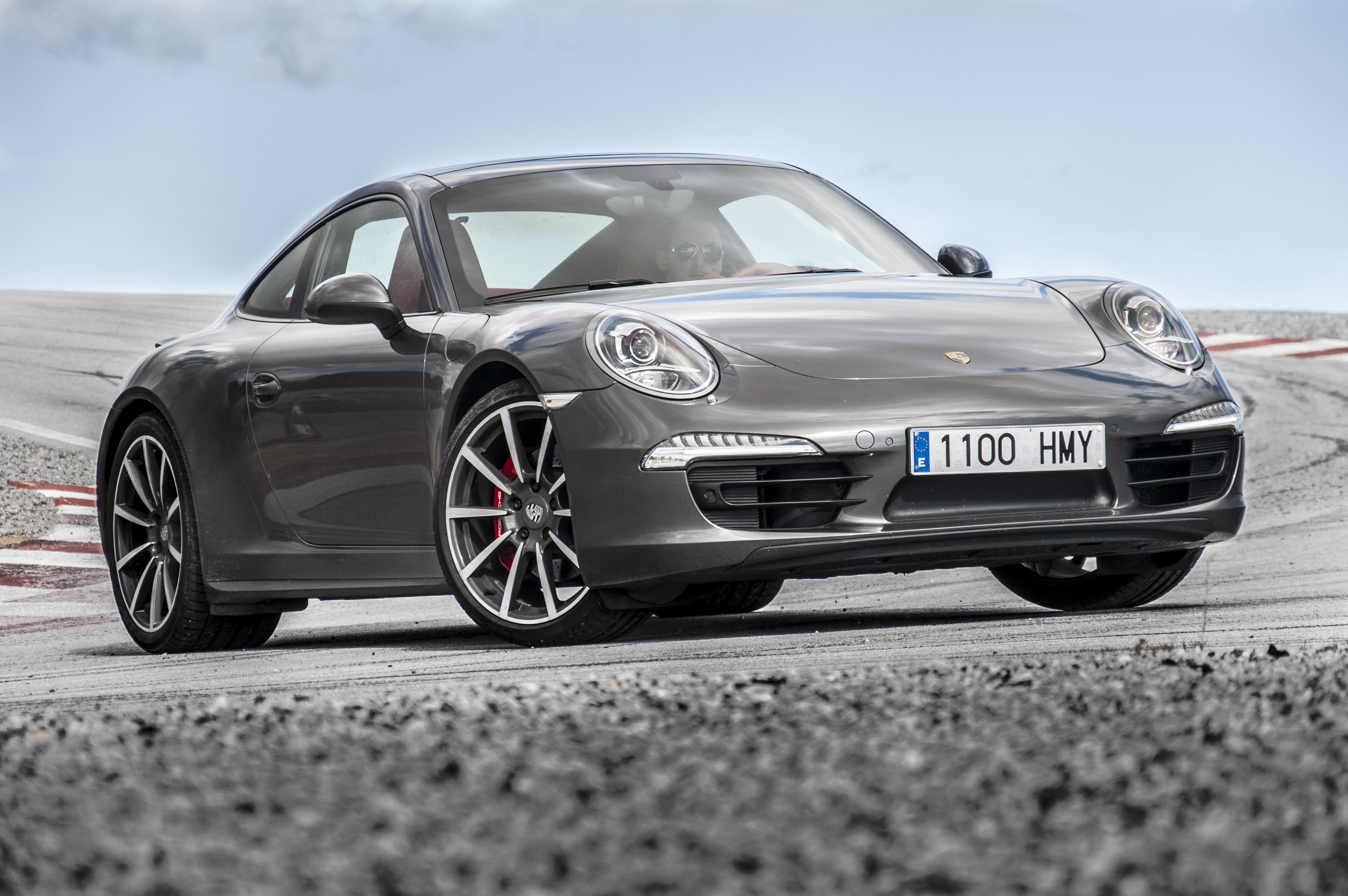
Porsche 911 GT3 RS
"I mean when Porsche, Porsche make people buy a Porsche watch. Because they can't get a GT3 RS. Honestly, it makes no sense."
The Porsche 911 GT3 RS is a special, performance-heavy 911 made for serious driving. The hosts are basically saying people would rather buy the actual car than a Porsche-branded watch.
The Porsche 911 GT3 RS is a track-focused version of the 911, known for high-performance aerodynamics and a driver-focused setup. In the segment, it’s used as the “real” product people want, contrasted with Porsche-branded merchandise like watches.
Rolex
"Do you think someone who drives these cars would not wear a Rolex, a Patek, whatever, you know."
Rolex is a luxury watch brand often associated with status and wealth. In this segment, it’s mentioned as part of the idea that supercar buyers may also wear high-end watches, reinforcing the “money/status” angle the hosts are discussing.
Patek Richelmille
"I think these cars are Patek Richelmille probably. Yeah. That's what I'm saying."
Patek Philippe is a very expensive, high-status watch brand. They’re using it as an example of the kind of luxury items people might have alongside supercars.
Patek Philippe (often misspoken as “Patek Richelmille”) is a high-end Swiss watch maker known for collectible, prestige timepieces. The hosts use it to illustrate the overlap between luxury-watch culture and supercar ownership.
bribe you to give you more money
"...people know that these brands that are doing what, it's just a money thing. It's just, you know, it's a way for them to bribe you to give you more money. Right."
They’re basically saying the brand might pressure you to buy extra luxury items so you can get the limited car sooner. It’s a criticism of how scarcity can be used to get people to spend more.
The hosts are describing a “buy more to get access” dynamic—where brands may use cross-selling (cars plus watches/bikes) to extract more spending from customers. It’s essentially a critique of how scarcity and allocation can be leveraged for higher revenue.
front of the queue
"...but to get you to the front of the queue, if you buy the bike and you buy the watch, then we'll just get you to the front of the queue."
“Front of the queue” refers to priority allocation—how some luxury brands manage limited production by deciding who gets access first. The hosts are describing a strategy where buying other branded products (like watches or bikes) can improve your chances of getting a scarce car.
armrests
"[2185.3s] No, but the amount of stuff that we make in different cases. [2187.4s] We make armrests, we make carbon wallets, we make some leather, let's say, parts. [2195.1s] Yeah."
Armrests are the padded supports you rest your arms on inside the car. They’re being mentioned as part of the kinds of custom interior pieces Mansory makes.
Armrests are interior components that can be customized for comfort, ergonomics, and brand/luxury styling. The hosts are listing Mansory-made interior items (like armrests) to illustrate how the company sells more than just exterior car modifications.
carbon wallets
"[2184.8s] Yeah. [2185.3s] No, but the amount of stuff that we make in different cases. [2187.4s] We make armrests, we make carbon wallets, we make some leather, let's say, parts."
Carbon fiber is a strong, lightweight material. They’re mentioning carbon wallets as a luxury accessory made with the same material people associate with performance cars.
Carbon fiber is a lightweight, high-strength material often used in performance and luxury automotive products. In this segment, “carbon wallets” is an example of Mansory-style branding that uses carbon fiber beyond just car parts.
leather
"[2187.4s] We make armrests, we make carbon wallets, we make some leather, let's say, parts. [2195.1s] Yeah. [2195.8s] Yeah."
Leather is a high-end material used for seats and interior trim. They’re mentioning it because the customization includes luxury interior finishes, not just performance parts.
Leather is a premium upholstery material commonly used in luxury car interiors. In this context, it’s part of the broader customization catalog being discussed—showing that Mansory’s offerings extend into interior materials and accessories.
G-Wagon
"[2206.6s] Yeah. [2206.9s] If you had a G-Wagon and you had the Mansory suitcases to go in the G-Wagon, it makes [2211.0s] sense."
“G-Wagon” is what people call the Mercedes-Benz G-Class SUV. The hosts are saying that if you have one, special luggage designed to fit it would actually be useful.
“G-Wagon” is the common nickname for the Mercedes-Benz G-Class, a boxy, luxury off-road SUV. In this segment, it’s used as an example of a vehicle that could be paired with Mansory-branded luggage/suitcases made to fit the car’s interior or cargo setup.
suitcases
"[2206.9s] If you had a G-Wagon and you had the Mansory suitcases to go in the G-Wagon, it makes [2211.0s] sense."
They’re talking about special luggage made to match the car. The idea is that if it fits your vehicle well, it feels like a real upgrade—not just a gimmick.
In luxury automotive culture, branded luggage is often designed to fit specific vehicles and reinforce the “complete lifestyle” ownership experience. The hosts use “Mansory suitcases” as an example of accessory merchandising tied to a particular car (the G-Wagon).
Patek Philippe
"You don't see Patek Philippe making a car. But they join with us, maybe, or some other companies."
Patek Philippe is a famous luxury watch company. They’re being used as an example that some brands focus on watches, not cars, and may collaborate with car experts instead.
Patek Philippe is a luxury watch brand known for high-end mechanical timepieces. The hosts use it as an analogy: just as Patek Philippe doesn’t make cars, some luxury brands may partner with specialists rather than build everything in-house.
Hypercar customization
"It depends. Hypercar, if customer wants, we do. But, I mean, small cars, we make also for customer one of one good customer, Mini Cooper."
A hypercar is an extremely high-performance, very expensive supercar. The host is saying they’ll customize those cars if the customer wants it.
Hypercars are ultra-high-performance, top-tier supercars, and they’re often the most heavily modified segment by boutique tuners. The speaker’s point is that Mansory will take on hypercars when a customer requests it, implying the firm’s capability and willingness to work at that extreme end of the market.
One-off / "one of one" custom build
"But, I mean, small cars, we make also for customer one of one good customer, Mini Cooper. Right. But this is only one we make for them."
A “one of one” build means a bespoke modification program where the customer gets a unique, non-production car. This is common in high-end tuning and coachbuilding because it allows extreme personalization without being constrained by mass-market engineering.

Mini Cooper
"But, I mean, small cars, we make also for customer one of one good customer, Mini Cooper. Right. But this is only one we make for them."
Mini Cooper is a small, popular car model. The point here is that Mansory will do custom, one-off builds for customers even on smaller cars like a Mini Cooper.
Mini Cooper refers to the compact car model line from Mini (BMW-owned brand). In this segment, Mansory is described as doing bespoke “one of one” customer work even on smaller cars, not only hypercars.
Request an Explanation
Heard something you'd like explained? We'll add it to this episode.
Sign in to request explanations for terms you heard.
Want to learn more?
Browse our glossary for plain-English explanations of automotive terms, jargon, and concepts.
Help improve this episode
See something that's not quite right? Our annotations are AI-generated and can sometimes miss the mark. Click the flag icon on any annotation to suggest a correction.