
About this episode
Porsche’s story on Acquired starts with the brand’s unusual balance of luxury and daily-driver practicality, then zooms out to the German auto roots that shaped it—Benz, Daimler, Ferdinand Porsche, and the Nazi-era entanglements. From a consulting firm in Austria to Beetle royalties and the 356/911 blueprint, the episode tracks how racing, engineering, and corporate finance built Porsche’s identity. It also covers the 914/928/Boxster pivots, the Cayenne gamble, and the Volkswagen takeover saga—ending with Porsche’s modern EV and SUV-driven dominance.
Nobody’s perfect — including Porsche. Despite that phrase appearing in their famous 1983 magazine advertisement, they managed to get damn-close to the perfect luxury business (even Bernard Arnault would be jealous!). Porsche is both quality AND quantity, owning the most prestigious brand in its market, while at the same time churning out almost half a million mass-market soccer mom/dad SUVs per year. And like any good luxury brand, it’s packed with enough juicy family drama and creeping takeovers to fill a Netflix series.
Yet, behind it all lies perhaps the darkest origin story we’ve ever told on Acquired. Not only was Porsche was started by Nazis, Adolf Hitler himself was deeply involved in its early fortunes. And, following WWII, the Allies simply looked past these facts and essentially bestowed a license to generate wealth on Porsche and its owners — setting the stage for them to become one of the top ~15 wealthiest families in the world today.
Joining us to explore it all is perhaps the very most-qualified person in the person in the world: the one & only Doug DeMuro. Not only is Doug the largest independent car reviewer on YouTube with millions of subscribers (we’re HUGE fans), he previously worked at Porsche corporate and owns a legendary Porsche Carrera GT — which served as the recording backdrop for this episode. Make sure you tune in to watch the video version! :)
Sponsors:
- Sentry: https://bit.ly/acquiredsentry
- WorkOS: https://bit.ly/workos25
- Anthropic: https://bit.ly/acquiredclaude25
- Statsig: https://bit.ly/acquiredstatsig26
More Acquired!
- Get email updates with hints on next episode and follow-ups from recent episodes
- Join the Slack
- Subscribe to ACQ2
- Merch Store!
© Copyright 2015-2026 ACQ, LLC
Links:
- Doug’s YouTube channel (which we HIGHLY recommend)
- Cars & Bids
- Episode sources
Carve Outs:
Note: Acquired hosts and guests may hold assets discussed in this episode. This podcast is not investment advice, and is intended for informational and entertainment purposes only. You should do your own research and make your own independent decisions when considering any financial transactions.
LVMH
"So switching gears but staying on gross margins because david you brought up lvmh earlier lvmh's gross margins"
LVMH is the big luxury company behind brands like Louis Vuitton and Moët. They’re bringing it up to compare how luxury businesses make money, not just car companies.
LVMH is a luxury-goods company, and the hosts are about to compare its gross margins to Porsche's. It is being used as a corporate benchmark for premium-brand economics rather than as an automotive brand.
daily driver
"The company has struck an incredible balance of both building some of the world's finest supercars While also being a great daily driver unlike say a Ferrari or a Lamborghini"
It’s the car you can actually live with and drive all the time. They mean Porsche cars can be fun but still usable every day.
A daily driver is a car that’s practical enough to use every day, not just on weekends or at the track. The hosts are contrasting Porsche’s usability with more extreme supercars.
Ferrari
"Unless we're talking about Ferrari apparently. Yeah, which is like almost not in the auto industry It's like a completely different luxury category. Yeah, that's so true It just happens to make cars."
Ferrari is being used as the example of a car company that makes a lot of money and feels more like a luxury brand. They’re saying Porsche is good, but Ferrari is in an even more exclusive class.
Ferrari is used as the benchmark for an automaker that behaves more like a luxury brand than a traditional car company. The hosts are contrasting Ferrari's economics with Porsche's to suggest Ferrari sits in a different profit category.
pricing power
"For a business that has pricing power that that they get to mark up their goods And so we just talked about Porsche having better gross margins than BMW or Mercedes"
Pricing power means a company can charge higher prices because people still want the product. Here it means Porsche can ask more for its cars than many rivals.
Pricing power is the ability to charge more without losing customers, and it is central to the hosts' explanation of Porsche's business strength. They are discussing why Porsche can sustain durable profitability.
Doug DeMuro
"And if you like quirks and features you're gonna be pumped about our partner in crime to help us tell this story Doug Demiro Doug is one of David and my favorite youtubers and content entrepreneurs"
Doug DeMuro is the car reviewer joining the episode. He’s known for making videos about interesting cars and their quirks.
Doug DeMuro is being introduced as a collaborator and media personality in the episode. Here he functions as a person and content creator associated with the automotive world, not a car brand or company.
Porsche Carrera GT
"In fact, we are filming this episode now sitting in his garage in front of a very special Porsche Doug's Carrera GT. Welcome to acquired Doug."
The Carrera GT is a super-rare Porsche supercar. People love it because it feels raw and special, more like a race car than a normal road car.
The Porsche Carrera GT is a mid-engine V10 halo supercar from the early 2000s, famous for its race-car-like character and manual transmission. It became one of Porsche's most celebrated modern exotics because it was uncompromising and very analog.
German engineering
"To set the stage a little bit. I think that even though it's a marketing phrase the German engineering thing. It's worth sharing a little bit of history because it is more than just a marketing phrase, right?"
This is the stereotype that German cars are especially well engineered. People use it to mean precise, carefully built, and technically advanced.
In automotive contexts, 'German engineering' is shorthand for the reputation of German manufacturers for precision, durability, and technical sophistication. It's a cultural and industrial idea more than a literal engineering term.
platform sharing
"And a lot of volkswagen stuff shared with all these cars engines are shared across Tons of model lines now. Yeah"
This means different cars are built on the same basic hardware underneath. It lets companies save money by using the same bones for several models.
Platform sharing is when multiple vehicles are built on the same underlying architecture, even if they wear different bodies and badges. In this segment, the hosts are describing how Porsche, Lamborghini, Bentley, and Audi can all share major mechanical components under Volkswagen Group ownership.
gas-powered transportation vehicle
"It is very likely that the first gas-powered Transportation vehicle this was looked more like a tricycle than a car but predecessor of a car was created by a German inventor in 1864 named Siegfried Marcus."
They're talking about one of the first vehicles powered by gasoline. It was an early ancestor of the modern car.
This refers to an early internal-combustion vehicle, before automobiles became standardized as cars. The speaker is describing the historical origins of the automobile rather than a specific model.
Mercedes-Benz
"So Benz and Daimler end up merging in 1924 and thus Mercedes Benz is born, but okay, you might be asking what does this have to do with Porsche? well turns out quite a lot because in 1906"
Mercedes-Benz is the car company that came from two older German companies merging. The hosts are explaining where the name came from and why it matters to Porsche’s history.
Mercedes-Benz is being discussed as a company formed by the 1924 merger of Benz and Daimler. In corporate terms, it’s the combined automaker that became one of the defining German manufacturers.
Ferdinand Porsche
"You've got these two Ferdinand grandsons That are kind of vying starting to vie for control of the company"
This is the famous Porsche family name. In this episode, it comes up because different family members were competing for influence over the company.
Ferdinand Porsche is the family name and marque identity behind the Porsche brand. The hosts are referring to the Porsche family lineage as part of the company's control and design history.
Volkswagen
"Ferdinand's vision the small affordable car for the people a Volkswagen You might say in German That car would go on to become the Volkswagen Beetle and the company that contracted Porsche to build and design it"
Volkswagen is the car brand behind the Beetle and many modern cars. The hosts are talking about how the company started with a government-backed plan for a cheap car for ordinary people.
Volkswagen is the consumer-facing marque here, and the hosts are talking about the brand identity that grew out of the original "people's car" idea. In this context, it matters because the episode is tracing how Volkswagen's origins are tied to the Beetle and to Porsche's early role in the project.
Stuttgart
"Was this sad thing and it had kind of really hurt morale. In stuttgart at the factory all the way up to the to some of the people at the top"
Stuttgart is the German city where Porsche is based. In this story, it is where the factory workers were upset about the 911 potentially being replaced.
Stuttgart is the city where Porsche's headquarters and factory operations are centered, so it functions here as a corporate and manufacturing location. The mention matters because it anchors the story in Porsche's home base and the reaction inside the factory.
mass market automobile
"He comes up with a concept He thinks that he can produce a small affordable car that can really become the first German and European mass market automobile now back in the US"
This means a car meant for lots of regular people to buy, not a luxury or specialty vehicle. The idea is to make something cheap enough and common enough that it becomes widely used.
A mass market automobile is a car designed to be affordable and produced in large numbers for ordinary buyers, not just wealthy customers. In this segment, the hosts are describing Ferdinand Porsche's idea for a small, accessible German car.
Model T
"now back in the US There was the Model T and Henry Ford that existed"
This is the famous early Ford that put lots of people into cars for the first time. The speakers are comparing Porsche's idea to that kind of breakthrough.
The Ford Model T was the landmark early mass-produced car that made automobile ownership accessible to ordinary Americans. It is being used here as the benchmark for what Porsche hoped to create in Germany and Europe.
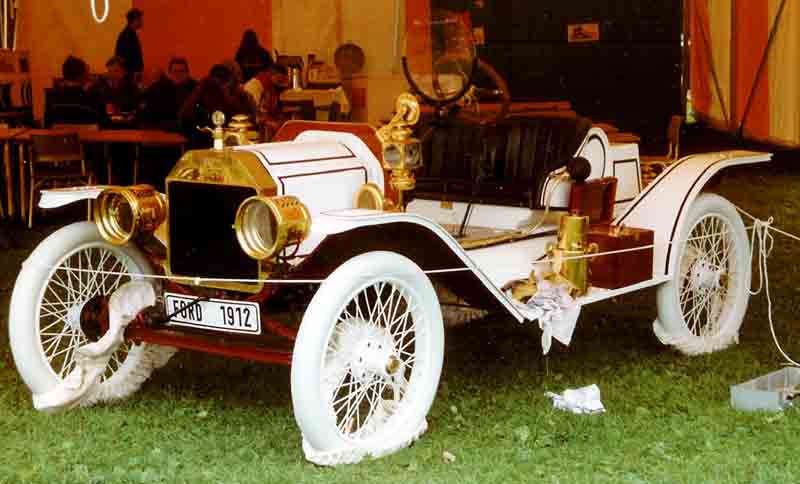
Ford Model T
"...arket automobile now back in the US There was the Model T and Henry Ford that existed But Ferdinand's visio..."
The Ford Model T is an early car made by Ford. It was one of the first cars many people could afford.
The Ford Model T was the car that made automobiles affordable for many Americans and transformed mass production. It is important in this discussion because it represents the early era of the modern automobile market.
car ownership
"...Car ownership was not anywhere near as as big as it was in the United States Apparently only 2% of Germans owned a car versus 30% of Americans..."
This means how many people actually have their own car. They’re saying far fewer Germans owned cars than Americans did at the time.
Car ownership is being used here as a historical mobility metric: how many people in a country actually owned cars. The hosts contrast Germany and the United States to show why building an affordable mass-market car was such a big deal.
Daimler-Benz
"...the board of Daimler-Benz rejects it. They're like no like we we can't do this. We make expensive cars for wealthy people..."
Daimler-Benz was the old company behind Mercedes-Benz. In this story, it’s the business side that turned down Porsche’s idea for a cheaper car.
Daimler-Benz was the corporate predecessor of Mercedes-Benz, acting here as the company whose board rejected Ferdinand Porsche’s affordable-car idea. This is a company annotation because the discussion is about management decisions, internal conflict, and Porsche leaving after a dispute.
Gestapo
"Rosenberger was Jewish and he gets arrested by the Gestapo. He gets imprisoned. He eventually bribes his way out and escapes to America, but during the war Porsche and the Nazis totally appropriate his stake in Porsche and he's written out a history."
This was the Nazi secret police. The hosts are talking about how one of Porsche's early backers was arrested during the war.
The Gestapo was Nazi Germany's secret police, and here it appears in the historical account of Adolf Rosenberger's arrest and imprisonment. The mention matters because it explains how Porsche's early business history was entangled with wartime politics and persecution.
Volkswagen Beetle
"That car would go on to become the Volkswagen Beetle and the company that contracted Porsche to build and design it"
The Beetle is the famous little Volkswagen with the rounded shape. It started as a cheap car meant for regular people and became one of the most famous cars in the world.
The Volkswagen Beetle is the iconic rear-engine economy car that grew out of the original "people's car" program. It became one of the most recognizable cars ever built, and in Porsche history it matters because the Beetle's basic architecture and origin story are part of the brand's early foundation.
people's car
"Ferdinand's vision the small affordable car for the people a Volkswagen You might say in German"
This means a car meant for regular people, not a luxury or sports car. In this episode, it's the original idea behind the Volkswagen Beetle.
"People's car" is the translated idea behind Volkswagen's original mission: a small, affordable car for ordinary buyers. It's a historically loaded automotive concept because it describes the political and industrial purpose behind the Beetle project.
Beetle production history
"It is very hard to get actual production and sales data, especially for old cars especially for cars like the beetle which were Produced in many countries over many years."
They’re discussing how long the Beetle was made and why it was such a big deal. It’s basically a history segment about the car’s production and legacy.
This segment is about the Volkswagen Beetle's production history, including how long it was built, where it was assembled, and why sales totals are hard to pin down. It also frames the Beetle as both a mass-market family car and a cultural icon.
Ford Mustang
"Yes, so we're now in the 60s. Ford announces the Mustang Jaguar has got the e type Um, Chevy comes out with the second generation Corvette the stingray And all these are starting to show up all yeah, Austin. He everything is like, okay, there's a lot of pressure"
The Mustang is Ford’s famous pony car. They’re mentioning it because it showed up and changed the sports-car market in the 1960s.
The Ford Mustang is being cited as one of the new sports-car competitors that arrived in the 1960s and increased pressure on Porsche and other makers. Here it functions as a brand/model name for a major rival in the era.
Ford F-150
"Both in terms of length of time and number of units produced of a single generation model Like the Civic the Mustang the f-150 More than the beetle, but like those aren't the same cars right the beetle was the same freaking car until the new beetle in"
The Ford F-150 is a pickup truck made by Ford. It is used for carrying people and cargo and is one of Ford’s most popular vehicles.
The Ford F-150 is Ford’s full-size pickup truck and one of the most important vehicles in the American market. It is often mentioned because of its huge sales, long production history, and status as a benchmark for trucks.
New Beetle
"He oversaw and launched the new Beetle. Like literally his grandfather's legacy the beetle. He turned over the beetle model to the the new beetle"
The New Beetle was the modern version of the old Volkswagen Beetle. It kept the classic look but was a newer car underneath.
The New Beetle is Volkswagen’s retro-styled revival of the classic Beetle nameplate. It matters here because the hosts are using it as an example of Piëch reviving a family-linked icon inside Volkswagen.
Wolfsburg
"But like the Volkswagen group one of the largest car conglomerates in the world that owns many other brands you're familiar with All out of Wolfsburg all"
Wolfsburg is the German city where Volkswagen is based. The hosts are talking about it as the place where the company grew up and where its factories were located.
Wolfsburg is the German city that became the center of Volkswagen's operations and manufacturing. In car history discussions, it often stands in for Volkswagen's corporate and industrial base.
pre-war Beetle
"They do start production of the beetle before World War two starts. They only make about 200 units These aren't super rare today. They find a pre-war beetle"
This is an early Volkswagen Beetle from before World War II. The hosts are pointing out that very old Beetles still exist today, even though only a small number were built before the war.
The Beetle is Volkswagen's original rear-engine, air-cooled people's car, and 'pre-war' refers to examples built before World War II. That makes this an especially early and historically significant version of one of the most famous cars ever made.
West Germany
"Post-war was ground zero for the cold war like the battle against the soviet union was happening right there right next door and so for the west reconstituting the west german industrial base was of paramount importance"
West Germany was the part of Germany aligned with the West after World War II. The hosts are saying its government helped rebuild car companies and factories as part of the Cold War.
West Germany is being discussed as a geopolitical and economic actor that deliberately rebuilt its industrial base after World War II. In automotive history, that matters because state policy helped revive companies like Porsche and Mercedes-Benz.
Marshall Plan
"So like the marshal plan that people probably know about like this is why the marshal plan happened"
The Marshall Plan was a big postwar aid program from the United States. It helped rebuild Europe, including the factories and businesses that made cars.
The Marshall Plan was the U.S.-backed program to rebuild European economies after World War II. In this episode it’s used to explain the broader policy environment that helped restart German industry, including carmakers.
commercially viable
"They said nah, that is they literally said it is not commercially viable. Wow. Wow"
This means whether something is likely to make money as a product. They’re saying the British thought the Beetle would not be worth selling.
In automotive and business contexts, commercially viable means a product is expected to sell well enough to justify producing it. The British officials were judging the Beetle as something that would not make economic sense to build or sell.
the British government
"the british come up with they were going to dismantle the factory and ship it over to britain... the british didn't want it"
This is the government of Britain. In the story, it’s the group deciding whether the Volkswagen factory should be taken apart or kept running.
The British government is acting here as the postwar authority deciding what to do with the Volkswagen factory and its designs. This is a company-like institutional actor in the story because it is making policy and industrial decisions that affect the car’s future.
pre-war production Beetles
"He finds one of the pre-war Production beetles the 200 that were made"
These were Beetles built before the war, before the car became famous. The hosts are saying there were only a small number made at that point.
This refers to the small number of Volkswagen Beetles built before World War II, before the car became a true mass-market product. The phrase matters because it shows the car already existed in limited production and could be evaluated in real-world use.
Cold War
"We talked about a minute ago the iron curtain and the soviets like So hard for us to remember now, but germany Post-war was ground zero for the cold war"
The Cold War was the long standoff between the U.S. and the Soviet Union. Here it explains why rebuilding German industry mattered so much.
The Cold War is the geopolitical backdrop for the discussion of West Germany’s industrial policy. The hosts are connecting the automotive story to the strategic competition with the Soviet Union.
economic revitalization
"He realizes that west germany needs an economic revitalization here We need to restart german industry because hey the iron curtain is falling just to the east here so he"
This means helping an economy recover and grow again. Here it’s about getting German industry moving after the war.
In this context, economic revitalization means restarting a damaged economy by getting factories running and people back to work. The hosts use it to explain why rebuilding Volkswagen mattered in postwar Germany.
Fiat 500
"You know uk had the mini italy had the fiat 500 France had the citrone two cv. They all kind of looked similar. Wait, these are all based on the beetle"
This is the little Italian car that became a classic. It’s mentioned because Italy had its own version of a small, affordable car for everyday use after the war.
The Fiat 500 is Fiat’s tiny postwar city car, built to be cheap, simple, and easy to live with in crowded European cities. Here it’s being used as another country-specific example of the same postwar mobility solution as the Beetle and Mini.
France
"So I mean it makes sense Porsche's like well, what do we do? We can't really not sell in france. I mean france wasn't like the biggest market, but it wasn't a small market for me Now the story that I hear have heard about this is that they said well, we got these badges that say 901"
They’re talking about the French market and why Porsche had to change the name. Peugeot had already claimed a naming pattern in France.
France is being discussed here as a market that influenced Porsche’s naming decision because Peugeot had trademarked a similar three-digit naming pattern. The country matters in the story because Porsche reportedly needed to avoid legal conflict to sell cars there.
postwar era
"Europe was so war torn after world war two was the all these places were in similar situations to germany and that like The people needed to get back to work. They needed to be able to drive and go places and each european country had their own You know uk had the mini italy had the fiat 500"
This means the time right after World War II. The hosts are talking about how car companies made cheap, useful cars because people needed transportation again.
In automotive history, the postwar era refers to the years after World War II, when European manufacturers focused on rebuilding industry and creating affordable transportation. It’s the backdrop for the Beetle, Mini, Fiat 500, and Citroën 2CV discussion here.
hybrid and electric cars
"Yeah, and also some of the very first hybrid and electric cars in history But at that time battery technology wasn't advanced enough And so you're lugging around this huge weighted battery pack to get almost no juice out of it"
These are cars that use electricity to move, either by itself or together with a gas engine. The point here is that Porsche was working on this idea very early.
Hybrid and electric cars are vehicles that use electric propulsion, with hybrids combining an engine and electric motor while EVs run primarily on battery power. The hosts mention them to show that Ferdinand Porsche was experimenting with advanced propulsion long before it became mainstream.
battery technology
"But at that time battery technology wasn't advanced enough And so you're lugging around this huge weighted battery pack to get almost no juice out of it And so it didn't really go into production"
This means how good batteries are at storing and delivering power. Early car batteries were too heavy and not powerful enough to make electric cars practical.
Battery technology refers to the energy density, weight, and performance of batteries used in electric vehicles. Here it explains why early electric-car experiments were impractical: the batteries were too heavy and weak to be useful.
war criminals
"After the war ferdinand and the son-in-law Anton Piech are both arrested by the french as war criminals Tried in france. They end up being imprisoned for two years in france"
This means people accused of serious crimes during wartime. The hosts are talking about the legal trouble Porsche’s family faced after World War II.
War criminals are people accused of serious violations of the laws of war. In this segment, the hosts are discussing the postwar arrest and imprisonment of Ferdinand Porsche and Anton Piëch.
car for the masses
"he Definitely liked and agreed with his father's vision for a you know small car a car for the masses of volkswagen"
This means a car designed so regular people can afford it. It’s basically the idea of making a simple, cheap, widely available car.
“Car for the masses” refers to the idea of a deliberately affordable, widely accessible automobile rather than a luxury or niche product. It’s a foundational concept in automotive history and in Volkswagen’s origin story.
supercharged
"They may not know this supercharged dug. What does it mean to supercharge a car? Basically, you know an engine takes in air and that's kind of air helps air mixes with the fuel and it creates a"
It’s a way to make an engine stronger by stuffing extra air into it. Think of it like giving the engine a forced-air boost so it can make more power.
Supercharged means an engine uses a belt-driven compressor to force more air into the cylinders. More air lets the engine burn more fuel and make more power, usually with immediate throttle response.
horsepower
"On this basic idea we started the first Porsche prototype to make the car lighter and to have an engine with more horsepower"
Horsepower is a way of measuring how much work an engine can do. More horsepower usually means the car can accelerate harder.
Horsepower is the standard unit used to measure engine power. Here it’s part of the idea that a small car becomes more fun when it has enough power.
sports cars
"Sports cars in general weren't a thing that much they were and there's going to be people who ran and say no There were a lot of sports cars before but it was really a thing of"
A sports car is a car made to be fun to drive, usually with better handling and quicker acceleration than an ordinary car. The conversation is about how Porsche helped popularize that idea.
In automotive history, sports cars are lightweight, driver-focused cars built for agility and fun rather than just comfort or utility. The hosts are explaining that Porsche helped turn the idea of a smaller, more affordable enthusiast car into a mainstream category.
professionalized racing
"Racing historians. Uh, that's a whole another branch of the automotive industry. So here we're in the late 40s early 50s Racing in this era Doesn't look at all like it looks today. It hadn't professionalized yet."
Back then, racing was still kind of a rough, early-stage sport. Cars built for the road and cars built for the track were much more closely related than they are now.
This refers to the period when racing was still loosely organized and not yet a fully separate, specialized industry. In the late 1940s and early 1950s, the boundary between street cars and race cars was much blurrier than it is today.
Brass era
"In real enthusiast wealthy people that sort of thing would buy cars to go motor racing in the air of you know Brass era and that kind of stuff the concept of creating like something more affordable littler that was still fun was like"
This is an early chapter in car history, when cars had lots of brass trim and were very different from modern cars. The hosts are using it to describe the oldest sports cars.
The Brass Era is an early period of automobile history, roughly the 1900s through the 1910s, named for the brass fittings common on cars of that time. It matters here because the hosts are contrasting early, wealthy-owner performance cars with the later idea of a more accessible sports car.
turbocharger
"I don't think turbos had been invented yet and turbos would obviously become a big thing for Porsche as much later The concept of turbo is actually fairly similar to supercharging except that it spins something that adds even more air basically and and"
A turbo is a part that uses exhaust gases to help the engine breathe harder. That extra air lets the engine make more power.
A turbocharger is a forced-induction device that uses exhaust flow to spin a turbine and compress incoming air. It makes an engine more powerful by packing more oxygen into the cylinders, but usually with some lag compared with a supercharger.
chassis platform
"The beetle was the, you know, main kind of chassis platform for a lot of military vehicles for for germany during the war What if we take a lot of those parts and um, the basic architecture of the beetle"
It’s the car’s basic foundation — the structure and hardware underneath the body. Automakers often reuse a platform across different models.
A chassis platform is the underlying structural and mechanical base a vehicle is built on, often shared across multiple models. Here, the hosts are describing how the Beetle’s underpinnings influenced other vehicles.
rear-mounted air-cooled engine
"What if we take a lot of those parts and um, the basic architecture of the beetle, which is a Rearmounted air cooled engine on a small car and we try and put something together here"
It means the engine sits in the back of the car and doesn’t use coolant like most modern cars. Air flowing over the engine keeps it from overheating.
A rear-mounted air-cooled engine is an engine placed behind the rear axle that relies on airflow, not liquid coolant, to control temperature. That layout strongly shaped early Volkswagen and Porsche cars, including the Beetle and 356.
Porsche 356
"What if we take a lot of those parts and um, the basic architecture of the beetle, which is a Rearmounted air cooled engine on a small car and we try and put something together here and this becomes The legendary Porsche 356"
This is one of the first cars Porsche ever made. It’s famous because it helped make Porsche what it is today, and old ones are now very collectible.
The Porsche 356 was Porsche’s first production sports car, and it helped establish the brand’s identity after World War II. It’s notable for its lightweight, rear-engine layout and for being one of the cars that defined the early sports-car formula.
project numbers
"Yes, the the lore is that you know all of our projects have model numbers and like the bs, right? ... The only way to distinguish the newer version from the older version is to call it by the project number."
This means the internal code Porsche uses for a car design while it is being developed. Fans often use those numbers to tell different versions apart.
In Porsche culture, internal project numbers are the development codes used to distinguish one generation or model from another. The hosts are comparing that to a company using invoice numbers, but here the code has become part of the enthusiast language around the cars.
production numbers
"The well, I mean production numbers is probably the biggest component of that one, right? They made literally zillion beetles and the 356 is special because"
This just means how many of a car were made. Fewer built usually makes a car rarer and often more expensive later.
Production numbers are the total quantity of a model built, and they matter a lot in collector-car pricing. Lower production usually means more scarcity, which can push values up.
technical design consulting
"Because we could still really use, you know, technical design Consulting work and really leadership from you individual porches here at volkswagen"
This means giving engineering advice and design help as a paid service. Volkswagen wanted Porsche's expertise, not just cars.
Technical design consulting is specialized engineering advisory work, where one company pays another for design expertise rather than for a finished product. In the Porsche-Volkswagen story, this is the core service Porsche was being asked to provide.
German Porsche company
"One they say let's reinstate that old german Porsche company the doctor engineer honoris causa blah blah blah We'll recreate the german Porsche company"
This is the German side of the Porsche business after the war. It was set up to do engineering and consulting work again.
The German Porsche company refers to the postwar German-side Porsche business being reinstated as a separate corporate entity. The hosts are describing how this company would resume consulting for Volkswagen in exchange for a royalty stream.
royalty
"In return They give that german Porsche company literally the sweetheart deal of a lifetime A royalty on every beetle sold worldwide. No way. Yes. Yes."
A royalty is a cut of each sale. In this story, Porsche would get paid every time Volkswagen sold a Beetle.
A royalty is a payment made every time a product is sold or used, often as part of a licensing or intellectual-property deal. Here, Porsche was promised money on every Beetle sold worldwide, which made the arrangement unusually lucrative.
collector value
"The weirdest thing about high-end cars that have lore associated with them is typically when someone high-profile dies in it The value goes up. Right. It's like a like an artist. It's like paintings. Yeah"
It means how much a car is worth to collectors, not just regular buyers. Rare or famous cars can become much more expensive over time.
Collector value is the premium a rare or culturally important car can command beyond its original market price or ordinary used-car value. In this context, the hosts are talking about how notoriety and scarcity can push a Porsche Carrera GT's price dramatically higher.
the value chain evolved for selling cars
"Doug the way the value chain evolved for selling cars There's this very clear delineation and in the us at least until tesla of separating the dealership from the manufacturer"
They’re talking about who actually sells cars to customers. Instead of the car company selling directly, dealerships often handle the retail side.
This segment is about how car sales moved from a manufacturer-led model to a dealer-led distribution system. It frames the business structure of the auto industry rather than a specific car or part.
direct to consumer
"There's this very clear delineation and in the us at least until tesla of separating the dealership from the manufacturer There is no direct to consumer"
It means buying straight from the company that made the car, not from a separate dealer. Tesla is the famous modern example in cars.
Direct-to-consumer means the manufacturer sells straight to the buyer instead of using independent dealerships. In the auto world, this is a major distribution-model issue because it changes pricing, service, and control over the customer relationship.
Lower Saxony
"Because the state of lower saxony still owned the 20 share in volkswagen still does to this day And it was considered sort of a national"
This is a German state, not a car company. It owned a big chunk of Volkswagen and helped protect the company from takeover.
Lower Saxony is the German state acting as a major shareholder in Volkswagen. Its ownership stake is part of why Volkswagen was treated as strategically important and politically protected.
marginal tax rate
"Germany sets the marginal tax rate at 95 percent Whoa, so they basically cap your income. Yeah, like people are complaining. Oh you live in california. Oh my gosh You're paying 13 state income tax on top of federal like imagine if the marginal tax rate were 95 percent"
This is the tax rate on the next bit of money you earn. If it gets very high, people and companies may choose to keep money in the business instead of taking it out.
A marginal tax rate is the tax applied to the next dollar of income, not the average tax on all income. In this segment, it matters because the hosts are explaining how an extremely high top rate can change incentives for wealthy individuals and companies.
capital reinvestment
"So what are they trying to do here? They're trying to incentivize capital reinvestment in The industrial base so they're basically saying to portion and others Set all this up and we are going to create all the incentives such that you will plow all of the money all these royalties"
It means using the money a business makes to buy equipment, build factories, or develop new products instead of taking the money out as profit.
Capital reinvestment means putting profits back into the business instead of distributing them to owners. Here it is the mechanism the hosts say helped Porsche build production capacity, R&D, and new models.
new models
"into building up your production capabilities and investing in rnd and new models and etc etc and I mean it sounds crazy on paper, but like my god, it actually works. Like it works really freaking well"
This means making new cars or major redesigns of existing ones. The company keeps building fresh products instead of just selling the same cars forever.
In automotive context, new models means newly developed car lines or major updates to existing ones. The hosts are using it as part of Porsche's reinvestment strategy: profits were pushed into future product development rather than extracted.
consumer enthusiast car market
"So the line between consumer enthusiast car market And professional racing market was very blurry Very very blurry, right"
It means the market for regular people who really care about cars and want something fun or special, not just basic transportation.
This is the part of the market made up of regular buyers who want sporty or interesting cars, but not full-on race machines. The hosts are pointing out that early Porsche racing development was still tied closely to what enthusiasts could buy.
Formula 1
"It wasn't like like you look at an f1 car today or you look at a lamans car Like like there is no connection between that and something you can buy"
Formula 1 is the famous international racing series with very fast, very specialized race cars. Those cars are built only for racing and are nothing like normal street cars.
Formula 1 is the top tier of open-wheel circuit racing, with highly specialized single-seat cars. The hosts use it as a contrast to show how disconnected modern race cars are from road cars.
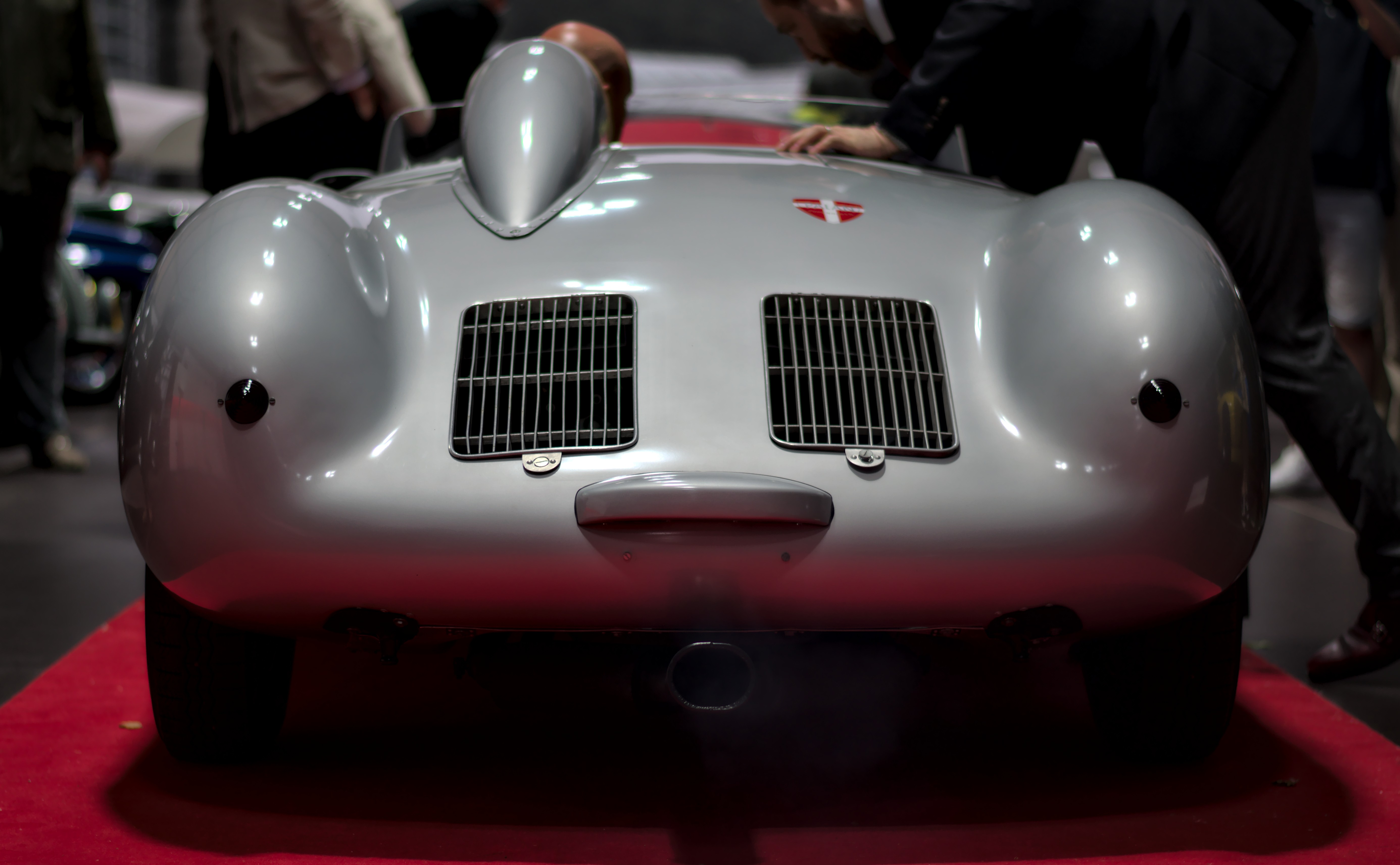
gentlemen race
"While the 356 was like the sports car that you could gentlemen race The 550 spider was for people who like Were really like let's go racing and like do it But like you said you could a person could walk into it that not a dealership necessarily, but like just order one Yeah, um, but it is it is an absolute legend. It totally is. Yeah You kind of see this trend this moment where you see the bifurcation between"
It means rich hobby racers who drove their own cars in races, not professional drivers. The car could be a street car and still be raced by its owner.
This refers to amateur or gentleman-driver racing: wealthy enthusiasts racing cars they could also drive on the street, rather than full-time professional competition. It's a historical motorsport culture term that helps explain how early Porsche cars were used.
bifurcation
"You kind of see this trend this moment where you see the bifurcation between Anybody can do it and what the very best of the world kind of look like That seems to be true across everything in the world today in the way that like what taylor swift is doing on the stage On her tour has nothing to do with like a person who picks up their guitar and is talented and plays at the local bar like"
It means a split into two different directions. In this case, they're talking about how cars and racing started separating into everyday hobby cars and serious race cars.
Here bifurcation means a split into two very different paths: ordinary enthusiasts versus the absolute top level of racing and performance. The hosts are using it to describe how car culture and racing separated into streetable hobby cars and elite competition machines.
engine classes
"356 is in 1951 and 1952 Win their class at lamans. They don't win it outright like other bigger powerful cars win it outright But they win their engine classes at lamans and these are you know, yeah, they're modified a little bit But like you basically buy them, right? Yeah Then that that was kind of a special thing But that was that was the point of those classes"
Racing doesn't always put every car together in one big group. Cars are split into categories, and winning your category can still be a big achievement.
In motorsport, cars are grouped into classes based on engine size or other technical rules so similar cars compete against each other. The hosts are explaining that Porsche's early cars won their class at Le Mans even if they didn't win the race overall.
racetrack
"You can actually take it on a racetrack that like has remained sort of an ether whether or not they're It's constantly a north star for them."
A racetrack is a place where cars are driven fast in a controlled environment. They’re saying Porsche is built so you can actually take it there and enjoy it.
A racetrack is a closed course designed for high-speed driving and motorsport, and here it matters because the hosts are highlighting Porsche's ability to be used there. The point is that Porsche products are engineered with track capability in mind, not just street comfort.
Rolex
"It's kind of like a Rolex to me. Is that really good? Yeah, that's a great. What do you think? Yeah, absolutely It's uh, you buy those watches to wear them."
Rolex is a watch brand. They’re comparing Porsche to a luxury product people actually use, not something they just keep on a shelf.
Rolex is being used as a luxury-brand analogy for Porsche: expensive, desirable, and intended to be worn and used rather than stored away. In this context it functions as a consumer brand comparison, not a corporate discussion.
Louis Vuitton
"I remember reading when Louis Vuitton first started coming out with the more approachable wallets and clutches... They were also releasing 100000 dollar 200000 dollar special handbags"
Louis Vuitton is the luxury fashion brand. They’re using it as an example of a company that sells both entry-level and very expensive products to keep the brand desirable.
Louis Vuitton is being used as a luxury-brand comparison point for how Porsche managed its image. The hosts are comparing Porsche’s strategy to a fashion house that sells both accessible items and ultra-expensive halo products.
Birkenstock
"I think that's probably the right it's not a Birkenbeck like brands like this Are so valuable because it has both the breadth and the depth"
Birkenstock is a sandal brand. Here it’s just part of a comparison about products that are useful versus ones that are mostly for style.
Birkenstock is another brand used in a luxury-versus-practicality analogy. The speaker is contrasting brands with broad appeal and utility against more purely status-oriented luxury goods.
Le Mans as the proving ground for Porsche
"Lemond has always kind of been a place to prove technology It's a 24-hour race So you switch drivers And it's always been a place where some of like it proves like the endurance and the capabilities of a car and of a manufacturer"
They’re talking about how Le Mans made Porsche famous. Winning there showed that Porsche cars were tough, fast, and advanced.
This segment is about how Le Mans helped establish Porsche’s reputation by proving its cars in brutal endurance conditions. The hosts connect racing success, technology development, and Porsche’s rise in popularity, especially in the U.S.
24-hour race
"Like the nd 500 is the car race of that racing series Lemond has always kind of been a place to prove technology It's a 24-hour race So you switch drivers"
This is a race that lasts an entire day and night. Drivers take turns so the car can keep going without stopping for one person to drive the whole time.
A 24-hour race is an endurance event where teams run continuously for a full day, usually with multiple drivers rotating the same car. The goal is not just outright speed, but reliability, fuel strategy, tire management, and keeping the car alive through the night.
endurance
"It's always been a place where some of like it proves like the endurance and the capabilities of a car and of a manufacturer Over that time period. It's really serious."
Here it means how well a car can last through a very long race without breaking. It’s about toughness and staying reliable for hours at a time.
In racing, endurance means the ability of a car, team, and components to survive and stay competitive over a long event rather than just a short sprint. It emphasizes durability, consistency, and low failure rates.
fuel efficiency
"It's closer to like what you want for a all-around car that would also be a drivable car because like fuel efficiency matters It's also a road race."
This means how far a car can go on a given amount of fuel. In a long race, using less fuel can be a big advantage because you may not need to stop as often.
In racing, fuel efficiency matters because a car that uses less fuel can stay out longer, make fewer pit stops, or run a better strategy. It becomes part of performance in endurance events, not just a consumer-car economy metric.
road race
"It's also a road race. So it's not on a racetrack It's literally on they closed down roads in the french countryside and and race on the road"
This is a race held on roads instead of a normal racetrack. The course can feel more like real streets than a closed racing facility.
A road race is run on public roads or roads that are temporarily closed, rather than on a permanent purpose-built circuit. That changes the challenge because the surface, layout, and environment are less controlled than on a racetrack.
Chevrolet Corvette Stingray
"Yes, so we're now in the 60s. Ford announces the Mustang Jaguar has got the e type Um, Chevy comes out with the second generation Corvette the stingray And all these are starting to show up all yeah, Austin. He everything is like, okay, there's a lot of pressure"
The Corvette Stingray is Chevrolet’s classic sports car. They’re talking about the second-generation version that came out in the 1960s and competed with European sports cars.
The Chevrolet Corvette Stingray is the second-generation Corvette, a major American sports car that brought more modern styling and performance to the segment. It’s being used here as another competitor that intensified pressure on Porsche in the 1960s.
Chevy
"He got a he got a chevy pickup with with tires so big that he was able to drive it out into a bay in florida"
Chevy is the casual name for Chevrolet. Here it just means a Chevrolet pickup truck.
Chevy is the shorthand brand name for Chevrolet, used here for a pickup truck in another stunt. The mention is brand-level rather than a specific model, so it’s best treated as a consumer-facing marque reference.
Porsche Panamera
"For a couple years Porsche had actually been working on a design For a sedan for a larger model seems heretical now, right? I mean people look at the Panamera"
This is Porsche’s big four-door car. People often find it surprising because Porsche is usually associated with sports cars, not sedans.
The Porsche Panamera is Porsche’s four-door grand tourer, a major departure from the company’s traditional two-seat sports-car image. It matters because it shows Porsche expanding beyond pure sports cars into a larger luxury performance sedan segment.
sedan
"The final sort of chapter to the vita king era on the product production side was the panamera The sedan Porsche makes the sedan now"
A sedan is the normal four-door car shape most people think of. Porsche making one was unusual because the brand was famous for sports cars.
A sedan is a conventional four-door passenger car with a separate trunk. Here it matters because Porsche entering the sedan market was unusual for the brand.
six-cylinder boxer engine
"...he really was the one that led the development of the six-cylinder boxer engine. Now he didn't invent the six-cylinder boxer engine, but the engine that ends up in the 911 that is like still to this day the model for the 911 engine..."
This is a type of engine where the cylinders lie flat instead of standing upright. Porsche made the flat-six famous in the 911, and that layout is a big part of why the car sounds and feels the way it does.
A boxer engine is a flat engine layout where opposing pistons move in and out horizontally, like two boxers punching each other. In Porsche lore, the flat-six became the defining engine architecture for the 911 and is central to the car’s identity.

Porsche 911
"But it's kind of I don't know Doug where where you would put it in my mind. It's kind of it's not quite a modern car it's like It's like close, you know, it's not a model t but it's not uh, right It's not a 9 11 Right, right, right and and what was starting to happen was the 356 was one of the leaders of the charge of the sports car in that era"
The 911 is Porsche’s most famous sports car. It’s the one people usually think of when they hear Porsche, and it became the model that defined the brand.
The Porsche 911 is Porsche’s defining rear-engine sports car, famous for its flat-six layout and long-running evolution from the 1960s onward. In this discussion it serves as the benchmark for what a more modern, fully developed Porsche sports car would become.
saving the 911
"Like peter shoots the american ceo saving the 9 11 in this moment And a lot of talk about whether this actually happened like did he actually just draw the line and make the"
This is the story about Porsche deciding not to kill off the 911. The hosts are telling it like a legendary moment in the company's history.
This is the anecdote about Porsche leadership deciding to preserve the 911 instead of replacing it. It functions as a story beat about corporate culture, product strategy, and the mythology around the 911's survival.
Porsche 901
"...and this is the birth of the portion 901. 901 David, I'm not familiar with that model. Yeah, what is that? Well, uh, this is why I mean I'm Doug. I'm sure you do this. Oh, this is a famous famous story..."
This was the first name Porsche used for the 911 before it got renamed. The name changed because another car company had legal rights to that numbering pattern in some markets.
The Porsche 901 was the original name for what became the 911. Porsche had to change the name because Peugeot had rights in France to three-digit car names with a zero in the middle.
Peugeot
"With a zero in the middle and then any other number so x zero x and in fact all pujo cars even to this day are named 205 206 207 208 That's the two series the 308 408 508 and so they trademarked them all just knowing that eventually that would that would happen"
Peugeot is another car brand. They’re mentioned because Peugeot had already trademarked a similar model-number naming style in France.
Peugeot is the French automaker whose three-digit naming convention is being referenced here. The hosts are explaining that Peugeot’s trademark position is part of why Porsche changed 901 to 911.
apocryphal
"Some of this may be more apocryphal than others One of the things that I don't understand is why they wanted to call the car the 901 in the first place"
It means a story people tell that might not be completely true. They’re saying the 901-to-911 explanation may be more legend than fact.
In this context, apocryphal means a story that is widely repeated but not fully verified. The hosts are flagging that the Porsche naming origin story may be more legend than documented fact.
engineering project
"The 356 was purportedly named because it was the 356 like engineering project They did yeah, but did they really do 500 engineering projects between 36 and 901"
This means an internal code Porsche used while developing a car. The story here is that some Porsche model names may have started as project numbers.
In Porsche lore, model numbers are sometimes said to come from internal engineering project numbers. That’s a specialized product-development convention, not just a generic project in the everyday sense.
Porsche 959
"There is one bright spot though, however, which if there's where a normal acquired episode we would just skip but We've got dug um The 959 comes out it's actually the 959 and another interesting component offshooting that but the 959 comes out at that time"
The Porsche 959 was an exotic supercar Porsche built in the 1980s. It mattered because it showed off new tech, especially all-wheel drive, before that was common.
The Porsche 959 was Porsche's 1980s halo supercar and a technology showcase. It was famous for advanced all-wheel drive and other engineering tricks that previewed features later seen in modern performance cars.
tribe language
"Maybe that's part of the success of there's like sort of a language you have to speak in order to like get Porsche to an extent. And there's something to that."
This means the special words and codes that fans use with each other. The hosts are saying Porsche has its own kind of insider language.
This is a reference to the specialized insider vocabulary that develops around a brand or enthusiast community. In the Porsche world, knowing the codes and generations signals membership in the group.
flat six
"the flat six Boxer engine which was a great engine that for an mps design to go in this first 9-eleven There's something like cool and unique to the lake we've been talking about the difference between porches and other cars here This is a Performance engine, but it's a sex right. It's not an a and it's rear mounted right so the 356 had a boxer 4"
It’s a six-cylinder engine with the cylinders laid out flat instead of upright. Porsche is famous for using this kind of engine in the 911.
A flat-six is a horizontally opposed six-cylinder engine, where the cylinders lie flat in two banks across from each other. Porsche’s flat-six became a signature part of the 911’s identity, especially because it was rear-mounted in the early cars.
Porsche 912
"So they do a stop gap at the same time that they introduced the 9 11 They also introduced the 9 12 And the 9 12 is a 9 11 with the old 356 four cylinder engine in it"
It's basically a cheaper version of the early 911 with a smaller engine. Porsche sold it so people could still get into the new shape without paying 911 money.
The Porsche 912 was a stopgap model that paired the 911 body with the older 356's four-cylinder engine. Porsche used it to keep the entry price lower and avoid losing customers when the 911 launched.
entry-level Porsche
"The entry-level Porsche has always been looked at as a second-class citizen like like his like Furman literally said... How do we make it not look like a second-class citizen? The answer is"
It means the cheapest or most accessible Porsche you can buy. The hosts are talking about how hard it was to make that car feel special instead of second-best.
An entry-level Porsche is the least expensive or most accessible model in the brand's lineup. The phrase matters here because Porsche had to make the Boxster feel like a true Porsche instead of a lesser substitute.
joint project
"And the idea is that they're going to make both a four-cylinder and a six-cylinder version of this. The four-cylinder version is going to be a Volkswagen the six-cylinder version is going to be a Porsche."
This means two companies are working together to make one car. In this case, Porsche and Volkswagen were sharing the work.
A joint project is a shared development effort between two companies, here Porsche and Volkswagen. In automotive history, these collaborations often determine who designs, builds, and sells a car.
Porsche 914
"...t car and mid-engined not rear-engined Called the 914 And the idea is that they're going to make both a..."
The Porsche 914 is a small sports car made by Porsche. It was built with help from Volkswagen and has the engine in the middle of the car.
The Porsche 914 was a mid-engine sports car developed with Volkswagen and sold in the late 1960s and 1970s. It is discussed because it was an early attempt to make a more affordable Porsche and showed the company experimenting with different layouts.
Volkswagen Karmann Ghia
"Volkswagen had made a little sports car called the karmann guia Previous to this like in the 60s And so the thought was they wanted to replace the karmann guia"
This was an older Volkswagen sports car that came before the 914. The hosts are saying the 914 was meant to take its place.
The Volkswagen Karmann Ghia was a stylish small sports coupe that Volkswagen sold before the 914. It is mentioned as the car the 914 was intended to replace, which helps explain why Volkswagen wanted an entry-level sports car in the first place.
mid-engine
"Also a market for mid-engine roadsters I mean including the one sitting behind us regardless of price like these are pretty amazing sports cars"
A mid-engine car has its engine closer to the middle of the car. Car people like it because it can make the car feel better balanced in corners.
Mid-engine means the engine is placed near the center of the car rather than in front or all the way in back. That layout is prized in sports cars because it can improve balance and weight distribution.
weight distribution
"You kind of can put the engine right in the center of the car and it gives you like perfect weight distribution When I always talk about sports cars in my mind like God intended sports cars to be mid-engine"
This is about where the car’s weight sits. If the weight is balanced well, the car usually handles better.
Weight distribution is how a car’s mass is spread between the front and rear axles. Enthusiasts care about it because it strongly affects handling, grip, and how the car behaves at the limit.
rear-engine
"Porsche's previous to this had all been rear engines the 911 the 356 And so this was a mid-engine which had was starting to really take hold in the car world as the right"
A rear-engine car has the engine in the back. That’s unusual and it changes how the car drives.
Rear-engine means the engine sits behind the rear axle, all the way at the back of the car. It’s a distinctive layout associated with certain Porsches and it changes handling in ways that are very different from front- or mid-engine cars.
rear axle
"The passenger compartment and the rear axle. Yeah I think you have a video where you say the Cayman gt4 rs, which is the capon of the boxster"
This is the part at the back of the car that the rear wheels are attached to. In some Porsches, where the weight sits relative to the rear axle is a big deal for handling.
The rear axle is the assembly that carries the rear wheels and transmits load and motion at the back of the car. In a Porsche discussion, it matters because rear-engine and rear-biased layouts change how the axle is loaded and how the car handles.
Porsche Cayman GT4 RS
"I think you have a video where you say the Cayman gt4 rs, which is the capon of the boxster The same it's the same lineage. We're talking about here"
This is the extra-aggressive version of Porsche’s Cayman sports car. It’s the one built to be especially fast and sharp on a racetrack.
The Porsche Cayman GT4 RS is the hardcore, track-focused version of the Cayman, with RS standing for a more extreme Porsche performance treatment. It matters because it represents Porsche taking the mid-engine Cayman platform and pushing it close to 911 GT-car territory.
SEO
"one of the differences between youtube and um podcast world is Titles and SEO is really important in the youtube world, right?"
It’s the trick of making a video easier to find in search. Creators use it so more people click on their content.
SEO means search engine optimization: the practice of shaping titles and descriptions so content ranks better in search results. In this context, they’re talking about how YouTube creators use SEO to get more views.
electrification of performance cars
"I gotta imagine this is One of just the huge c changes that is coming with electrification of performance cars, right? Like Yeah"
It means fast cars are becoming electric instead of gas-powered. That changes how the car is built and how it feels to drive.
Electrification of performance cars refers to high-performance cars moving from gasoline engines to electric drivetrains. The key change is that the traditional engine packaging and sound are replaced by battery and motor placement, which changes how engineers think about weight distribution and character.
weight to be as close to the middle of the car as possible
"Although you still even an electric cars for a performance electric car You still want the weight to be as close to the middle of the car as possible for a similar reason, honestly"
It means engineers try to place heavy parts near the center of the car. That usually helps the car turn and balance better.
This is a shorthand way of describing ideal weight distribution, especially for handling balance. Putting mass near the center reduces polar moment and usually makes a car feel more agile and predictable.
oil crisis
"as we head into the 70s the oil crisis happens in the 70s and sports cars become Less of a thing people are really worried about this. This is like a challenge to Porsche"
This was the time when fuel got expensive and scarce. That made big, thirsty sports cars harder to sell.
The oil crisis refers to the 1970s energy shocks that made fuel more expensive and changed consumer demand. For sports-car makers like Porsche, it meant a tougher market because buyers became more cautious about fuel-hungry cars.
succession
"This creates a lot of Tension in the company. This is kind of a backdrop of stress to another Family dynamic that's emerging"
This means who takes over when the current leader gets older or steps aside. In this episode, it's about which family member would end up running Porsche.
Succession here means the transfer of control of Porsche to the next generation of the family. It's a corporate-governance concept, and the hosts are using it to explain the family dynamics around who would lead the company.
Porsche Design
"He found Porsche design. So there exists these weird there's like Porsche sunglasses out there. You can buy Porsche designed laptops like all this stuff. That's him. That's a totally new company that he started."
This is the Porsche side business that makes non-car products like sunglasses and watches. It was started by a Porsche family member who moved from car design into product design.
Porsche Design is the Porsche-branded design business founded by Ferdinand Alexander Porsche after he stepped away from direct car design. It became a separate consumer-products and licensing arm, making sunglasses, watches, luggage, and other lifestyle goods under the Porsche name.
Porsche conglomerate
"That's him. That's a totally new company that he started. It has now been reabsorbed into The broader Porsche conglomerate."
This means the business side of Porsche, not just the cars. They're talking about the company that owns and manages the brand.
Here Porsche is being used as a corporate entity, not just a car brand. The speaker is referring to the broader company structure that reabsorbed Porsche Design.
Gucci
"I mean, but even okay, let's say they did because you know what this is what we learned from the lvmh episode of evaluating brand power. Gucci Everything you could think of to kill a brand they did that but the heritage there that it can always be resurrected"
Gucci is a luxury fashion name they’re using as an example. They mean that even if a brand gets hurt, people may still care about it later because the name is so famous.
Gucci is mentioned as an example of a luxury brand that can be damaged and later revived. The point is not fashion itself, but the idea that a famous name can retain enough cultural power to come back after missteps.
Saab
"Audi was not what it is now like now you view Audi as a legitimate competitor Mercedes and BMW back then it was more like how Saab would have been treated like it was a absolute second or third tier brand"
Saab is a car brand. They’re using it as an example of a brand people didn’t think of as top-tier luxury.
Saab is used as an analogy for a brand that was seen as lower-tier or less desirable in the market. This is a brand-identity reference rather than a technical car term.
Hyundai
"It's a but like, you know, Kia and Hyundai are trying to enter the luxury market Yeah, yeah, it was on that level of like, I'm gonna stick with Mercedes."
Hyundai is the car brand. They’re talking about it as a company trying to move into luxury cars.
Hyundai is mentioned alongside Kia as a mainstream brand trying to enter the luxury market. This is a brand-positioning reference rather than a specific vehicle or technology.
Audi 5000
"Was the Audi 5000 the thing that kind of saved them and Brought them back on the contrary actually that car was the one that had the the famous scandal in the united states where the 60 minutes Found that it unintended acceleration where it would accelerate which turned out to kind of be unfounded"
The Audi 5000 was an older Audi car model. It became famous in the U.S. because of a big safety controversy that hurt Audi’s image.
The Audi 5000 was a specific Audi model line that became infamous in the U.S. because of the unintended-acceleration controversy. It matters here because the hosts are discussing how that scandal damaged Audi's reputation.
Bugatti
"And they repurchased the bugatti the rights to the bugatti name which had gone to an italian company"
Bugatti is the famous luxury-performance car brand. They’re talking about Volkswagen buying the rights to the name and bringing it back.
Bugatti is being referenced as a historic performance marque whose name rights Volkswagen repurchased. In this context it’s a brand identity and heritage asset, not just a company name.
Porsche 924
"His first move is to scrap the 914. And instead introduced the 924 the 924 was another joint project between vw and Porsche. The problem with the 924 I I think it actually was a decent car..."
The Porsche 924 was a Porsche model made with Volkswagen. It was different from the classic rear-engine Porsches because the engine was in the front.
The Porsche 924 was Porsche's front-engine, water-cooled entry model developed with Volkswagen, and it marked a major shift away from the company's traditional rear-engine formula. The hosts are using it as the next-step replacement for the 914 and as an example of Porsche experimenting with a different kind of car.
Porsche 944
"...Doug, you actually reviewed a 944 the nice way that which is the kind of next iteration of it. I think you can say I think it was a good car, but it's not a Porsche..."
The Porsche 944 was a later version of the 924 idea. It’s a Porsche with the engine in front, not in the back like the classic 911.
The Porsche 944 is the later evolution of the 924 platform, and it became one of Porsche's best-known front-engine transaxle cars. It is mentioned here as the 'next iteration' of the 924, which helps explain the product lineage the hosts are discussing.
Porsche 928
"The crazy thing about the 9 28 in the Porsche world is that It was a front engine v8 car which Porsche had never pursued before and was more kind of an American thing But in the context of the time it's not that insane that they went after this"
This was a Porsche that used a V8 up front instead of the usual engine-in-the-back setup. Porsche built it as a more luxurious, modern kind of sports car for the era.
The Porsche 928 was Porsche's front-engine V8 grand tourer, a major departure from the rear-engine 911 formula. It mattered because Porsche was trying to adapt to the oil crisis, emissions rules, and the market shift toward bigger, more comfortable sports cars.
unsafe at any speeds
"Isn't like a great strategy to be pursuing here and unsafe at any speeds. That was like a federal report that came out that said Like basically all cars on the market are unbelievably unsafe and people our citizens should not be driving around at them"
It’s the title of a famous book and a phrase tied to the idea that older cars were much less safe than modern ones. People use it here to explain why car design and laws changed in the 1960s and 1970s.
This is a reference to Ralph Nader's famous critique of automotive safety, which helped push the U.S. industry toward stronger safety regulation. In car history discussions, it signals the era when crash safety, seatbelts, and other standards started becoming central design constraints.
seatbelts
"And then you had all these regulations about bumpers and safety and seatbelts that you know We're very Important and beneficial, but at the time it was like other killing our fun"
These are the straps that keep you in your seat in a crash. The point here is that safety rules made cars much safer over time.
Seatbelts are basic safety equipment, but in this historical context they mark the period when safety regulation started reshaping car design. The hosts are contrasting enthusiast nostalgia with the real gains in occupant protection.
bumpers
"And then you had all these regulations about bumpers and safety and seatbelts that you know We're very Important and beneficial, but at the time it was like other killing our fun"
These are the front and rear impact pieces on a car. The rules made them bigger and stronger, which changed how cars looked.
In this context, bumpers refers to the federally regulated crash structures that became much more prominent in the 1970s. They changed styling and packaging because cars had to absorb low-speed impacts better.
Jeep Wrangler
"...ike oh, I have a Jeep and you're referring to the Wrangler Like that was up the Porsche was the 356 and so t..."
The Jeep Wrangler is an off-road vehicle made by Jeep. It is built for driving on rough roads and trails.
The Jeep Wrangler is Jeep’s rugged off-road SUV and one of the most recognizable utility vehicles in the U.S. It is often brought up as a shorthand for the classic Jeep shape and off-road identity.
front engine V8
"The crazy thing about the 9 28 in the Porsche world is that It was a front engine v8 car which Porsche had never pursued before and was more kind of an American thing"
It means the engine is in the front and it's a V8, which is a big eight-cylinder engine. That's a very different setup from the classic Porsche 911 layout.
A front-engine V8 is a car layout where the V8 engine sits ahead of the cabin, rather than behind the driver or in the middle. In Porsche's case, this was a major departure from the rear-engine 911 formula and signaled a move toward a different kind of sports car.
emissions laws
"All sports cars were starting to get bigger and more powerful and because of the oil crisis and because of tightening emissions laws It was getting very difficult to make any sort of power"
These are government rules about how much pollution cars can put out. They forced carmakers to make engines cleaner, which often hurt power.
Emissions laws are regulations that limit the pollutants a car can produce. In the 1970s and 1980s, they made it harder for automakers to get strong performance from large engines without adding restrictive controls.
Jaguar E-Type
"Yes, so we're now in the 60s. Ford announces the Mustang Jaguar has got the e type Um, Chevy comes out with the second generation Corvette the stingray And all these are starting to show up all yeah, Austin. He everything is like, okay, there's a lot of pressure"
The E-Type is Jaguar’s famous classic sports car. People love it because it looked amazing and was very advanced for its time.
The Jaguar E-Type is the iconic British sports car known for its long hood, independent suspension, and advanced performance for the era. It’s mentioned here as one of the benchmark rivals that raised the bar in the 1960s.
Jaguar XJ-S
"That was the big competitor was another sports car that had been replaced by the xjs, which was now a v8 Comfortable automatic transmission car Mercedes-Benz did the same thing with the sl class"
This is the Jaguar that followed the E-Type. It was more of a comfortable cruiser than a pure lightweight sports car.
The Jaguar XJS was Jaguar's larger, more luxurious successor to the E-Type, and it represented the shift toward V8-powered grand touring cars. It helps illustrate why Porsche thought a front-engine V8 car like the 928 could make sense.
Mercedes-Benz SL Class
"Comfortable automatic transmission car Mercedes-Benz did the same thing with the sl class It went from like a little fun sports car like the 9 11 to a big v8"
This is Mercedes-Benz's long-running sporty luxury car line. The hosts are saying it became more of a relaxed, comfortable car over time.
The Mercedes-Benz SL Class is being referenced as another example of a sports car lineage that evolved into a bigger, more luxurious V8 cruiser. In this context, it reinforces the broader 1970s trend away from small, nimble sports cars and toward comfort and refinement.
Helmut Bot
"The the office of helmut bot who's the chief of engineering for Porsche And there's a line on the wall that shows where all the products stop and start and you know the timeline"
Helmut Bot is the engineer the story says was in charge of Porsche's engineering side. He's part of the leadership team in the famous 911 decision story.
Helmut Bot is being referenced as Porsche's chief of engineering in this anecdote. He is part of the corporate and engineering leadership involved in the decision-making around the 911's future.
non voting shares
"They sold I think a 30 stake in the company, but all non voting shares Like oh, we're not gonna know, you know, no corporate raiders here"
These are shares that let someone own part of a company but not vote on major decisions. Porsche used them to keep control in the family.
Non-voting shares are stock that gives ownership economics without giving the holder a vote in company control. Porsche’s family tried to sell equity while preserving decision-making power.
corporate raiders
"They sold I think a 30 stake in the company, but all non voting shares Like oh, we're not gonna know, you know, no corporate raiders here"
These are aggressive investors who try to take over companies. Porsche’s owners thought they had set things up so outsiders couldn’t do that.
Corporate raiders are investors or firms that try to buy enough of a company to force changes, break it up, or take control. The hosts are describing the family’s attempt to structure Porsche’s IPO so outside buyers couldn’t easily seize voting power.
Porsche 968
"He continues production of all three lines and not only does he continue production? He reinvests especially in the 924 944 line. They even refreshed it a third time to the 968 I mean same basic car."
This is basically the last and most developed version of Porsche's 924/944-style front-engine sports car. It was Porsche's way of keeping that cheaper sports-car line alive before moving on.
The Porsche 968 was the final evolution of Porsche's 924/944 front-engine platform, essentially a heavily updated version of that family. The hosts mention it as the third refresh of the same basic car, which is why it matters in Porsche's lineup story.
exchange rates
"But like another aspect of the kind of recession at the end of the 80s Was the exchange rates with european currencies got hit really hard right and so Relative to the asian currencies in the u.s. So it became I don't know call it 10 20 thousand dollars cheaper to buy"
This is about how one country's money compares to another country's money. If the dollar gets stronger, imported cars can suddenly cost less or more depending on where they're built.
Exchange rates are the relative prices of different currencies, and in the car business they can dramatically change how expensive imported cars are in a given market. Here the hosts are explaining how currency shifts made Japanese sports cars much cheaper in the U.S. compared with European alternatives.
Nissan 300ZX
"So the Nissan 300zx has to show up the Toyota Supra You know all these cars are showing up and by the way, they don't have four-cylinder engines and they're not 25 20 year old platforms"
This is a sporty Nissan coupe from the era when Japanese cars were getting really fast and sophisticated. It was one of the cars people cross-shopped instead of buying a more expensive European sports car.
The Nissan 300ZX was Nissan's flagship Z-car sports coupe in the 1980s and 1990s, known for bringing serious performance and technology to the Japanese sports-car boom. It appears here as one of the Japanese rivals that pressured Porsche's entry-level models.
Toyota Supra
"So the Nissan 300zx has to show up the Toyota Supra You know all these cars are showing up and by the way, they don't have four-cylinder engines and they're not 25 20 year old platforms"
This is Toyota's famous sporty car, especially popular with enthusiasts because it could make a lot of power. In this conversation it's one of the Japanese cars that started competing hard with European sports cars.
The Toyota Supra is Toyota's performance coupe, and in the late 1980s and 1990s it became one of the headline Japanese sports cars. The hosts cite it as part of the wave of powerful Japanese rivals that made Porsche's lower-priced models less compelling.
Fast and Furious
"I feel like I'm I'm sort of uh in my history probably all of us barely, you know starting to enter consciousness here Uh, you know, this is pre-fast in the furious, but not that pre-fast in the furious all those, you know"
This is the movie series that made modified Japanese cars a huge part of car culture for a lot of people. They’re using it to place the era they’re talking about.
The Fast and Furious franchise is a cultural reference point for the tuner-car boom and the mainstreaming of modified Japanese performance cars. The hosts use it as a timeline marker for when these cars were starting to become part of enthusiast consciousness.
value proposition
"Then and starting to blow up and they offered just as they do today this great great value proposition of like big power For not as much money."
It means what you get for the money. In car talk, it’s the reason one car seems like a better deal than another.
Value proposition is the combination of price, features, and appeal that makes a car attractive relative to alternatives. Here it refers to Japanese sports cars offering more power for less money than European competitors.
supercar
"The 959 comes out it's actually the 959 and another interesting component offshooting that but the 959 comes out at that time Which is like their first supercar so sort of the predecessor to this car and it actually wasn't commercially successful"
A supercar is an ultra-fast, very expensive, very special car. The 959 is being described as Porsche's first one.
A supercar is a high-performance, exotic car built more for extreme speed, technology, and image than everyday practicality. Here it refers to the Porsche 959 as Porsche's first true supercar and a showcase for new engineering.
four-wheel drive
"But it did it was kind of a test bed for some new technology including four-wheel drive in a supercar Which has now pretty much become standard fare the 959 was really the first car that had that"
This means the car can power all four wheels for better traction. The hosts are saying Porsche helped popularize it in a supercar.
Four-wheel drive means the engine can send power to all four wheels instead of just two. In this context, the 959 used it as a test bed for a technology that later became common in high-performance cars.
Mercedes-Benz E-Class
"So it was a Mercedes e-class like a regular Mercedes sedan but with a larger engine. And Mercedes felt that having Porsche involved would give it some sports car credibility"
The Mercedes-Benz E-Class is Mercedes' midsize sedan family. In this story, the 500E was basically a special, faster version of that car.
The Mercedes-Benz E-Class is Mercedes' midsize luxury sedan line, and here it's being used as the base platform for the 500E. The important point is that the 500E was not a separate exotic car; it was a heavily modified E-Class with a larger engine and Porsche involvement.
sports car credibility
"Mercedes felt that having Porsche involved would give it some sports car credibility. Porsche literally produced the car and then Audi did the exact same thing"
This means a brand seems more believable as a maker of fun, fast cars. Audi and Mercedes wanted Porsche's help so their cars would seem more exciting to car people.
This is industry shorthand for the reputation a brand has for building desirable performance cars. Audi and Mercedes wanted Porsche's involvement because Porsche's name could make their cars seem more serious to enthusiasts.
Audi RS2
"And so Audi came to Porsche and said can you help us develop a car? And it was called the rs2 and I actually had one and just sold it last year. It was a station wagon"
The Audi RS2 was a very fast station wagon that Porsche helped develop. It's famous because it helped make sporty wagons a thing people wanted.
The Audi RS2 was the original high-performance Audi wagon, developed with major Porsche input and widely seen as the car that helped define the fast wagon formula. It matters because it combined practical station-wagon bodywork with serious performance and became a template for Audi's later RS models.
station wagon
"And it was called the rs2 and I actually had one and just sold it last year. It was a station wagon and that was the conditions under which Porsche agreed to build the car"
A station wagon is a car with extra cargo space behind the back seats. Car fans care about it here because a fast wagon is a practical car that can also be very quick.
A station wagon is a car body style with a longer roof and rear cargo area than a sedan, prioritizing utility while still being car-based rather than truck-based. In enthusiast circles, a high-performance station wagon is notable because it combines family practicality with sports-car speed.
Mercedes-Benz 500E
"Porsche built a Mercedes Benz. Which was called the 500 e it was a mid-sized sedan Mercedes didn't have the capacity or didn't really want to do it. They built a sedan"
The Mercedes-Benz 500E was a special Mercedes sedan that Porsche helped build. People like it because it was a fast, unusual collaboration between two famous German car companies.
The Mercedes-Benz 500E was a special W124-era sedan developed with Porsche involvement, which is why enthusiasts remember it as a sleeper performance sedan with unusual factory collaboration. It stands out because Mercedes used Porsche's engineering and assembly capacity to create a faster, more credible sports sedan.
production lines
"It was literally like you have empty production lines. So even though you're not going to make a lot of margin on this let's at least like."
This is the assembly line in a factory where cars get built. They’re saying Porsche had empty lines and needed work to keep the plant busy.
Production lines are the assembly systems in a factory where vehicles are built step by step. The hosts are describing a factory with idle capacity, which is why outside work could help keep the plant operating.
contract manufacturer
"It was literally like you have empty production lines. So even though you're not going to make a lot of margin on this let's at least like. You can be our contract manufacturer."
This means one company builds something for another company. Here, they’re talking about Mercedes using Porsche’s factory capacity to keep people working.
A contract manufacturer is a company that builds products for another company rather than selling them under its own name. In automotive, this means one automaker can use another factory’s capacity to assemble cars.
union contracts
"I maybe maybe this was part of the circumstance you have union contracts to get paid these people whatever. Here you're not going to make money, but like let we're doing it and it's something it's a project for you."
This is a labor agreement between a company and workers. It sets pay and working rules, and the hosts are saying those obligations made it important to keep people working.
Union contracts are labor agreements that set wages, benefits, and working conditions for employees represented by a union. In this segment, they’re part of the explanation for why keeping production lines active mattered financially and operationally.
colors
"There's also this other thing of like you alluded to the colors the money they're charging for colors Like they've done this They've perfected this with so many options and people are just paying it and paying it paying it"
They mean special paint colors you can pay extra for when ordering a car. Porsche makes a lot of money from those choices.
In this context, colors refers to paid paint and finish choices that can materially increase a Porsche’s price. The hosts are pointing out that Porsche has turned paint and appearance options into a profit center.
Work OS
"So this is where work os comes in they've built stripe for enterprise features Work os turns enterprise authentication requirements into drop-in apis"
This is a company that sells tools for business login and security setup. It helps other companies add things like single sign-on without building everything themselves.
Work OS is being used here as the company/product behind enterprise authentication infrastructure. The hosts are describing it as a vendor that helps software companies meet enterprise security and identity requirements.
Porsche paint configurator pricing
"So david this thing that doug just referenced to me the money they charge for colors You can do a thing today where you go to buy a Porsche and their online configurator"
They’re talking about how Porsche lets buyers pick special paint colors online, and some of those colors cost a lot extra.
This segment is about Porsche's online configurator and the premium pricing for special paint choices. The hosts are discussing how Porsche monetizes customization by charging a large fee for historically specific colors.
design language
"Of what makes Porsche special is this unbelievable heritage Like the design language that they use What the 911 is you mentioned earlier, they don't really change it that much from, you know, generation to generation"
This means the repeated style choices that make a brand’s cars look related. For Porsche, it’s why a 911 still looks like a 911 even after many years.
Design language is the consistent visual vocabulary a manufacturer uses across its cars: proportions, shapes, lighting signatures, and styling cues. In Porsche’s case, the point is that the cars evolve slowly enough that they remain instantly recognizable from generation to generation.
generation to generation
"What the 911 is you mentioned earlier, they don't really change it that much from, you know, generation to generation There's this sort of obsession with put something out there and then spend years and Tiny little tweaks and refinements"
A generation is one version of a car before the next big redesign. They’re saying Porsche keeps updating the 911 without making it look or feel totally different.
In car talk, generation refers to a major redesign cycle for a model, usually spanning several years. The hosts are emphasizing that Porsche changes the 911 slowly, so each generation feels like an evolution rather than a reinvention.
platonic form
"There's this sort of obsession with put something out there and then spend years and Tiny little tweaks and refinements Making it the like platonic form of what it can be and there's this like"
They mean the best possible version of the car’s original idea. It’s a fancy way of saying Porsche keeps polishing the same formula.
Here, platonic form is being used in the philosophical sense to mean the idealized, perfected version of something. In automotive terms, they mean Porsche keeps refining the 911 until it feels like the most complete expression of that idea.
sales cycle
"It's so funny. I feel like the sales cycle for a 911 has got to be 40 or 50 years right like kids fall in love And then you can't really buy one until you're in your 40s or 50s"
This means how long it takes someone to go from wanting a car to actually buying it. They’re saying Porsche’s version can last 40 or 50 years.
A sales cycle is the time between first exposure to a product and eventual purchase. The hosts are using it to describe how Porsche can attract someone as a child and convert that interest into a sale decades later.
Toyota production system
""and he implements the Toyota production system at Porsche, which uh They must have been like the last auto manufacturer in the world""
This is a way of building cars more efficiently with less waste. It’s famous because Toyota used it to make factories faster, cleaner, and more reliable.
The Toyota production system is a manufacturing philosophy focused on lean production, reducing waste, and improving efficiency and quality. Here it matters because Porsche adopted it as part of a turnaround to become more profitable and operationally disciplined.
coat hook
"It has a coat hook on the back of the seat because the 9 11 had a coat hook on the back of there... You can't put a coat in a Boxster the seat is right up against the but they shared everything"
It's literally a hook for hanging a coat, but here it's being used to show that the Boxster borrowed a lot from the 911. The hosts are pointing out how similar the two cars were inside.
A coat hook here is a small interior convenience feature, but the joke is that Porsche reused the 911's cabin layout in the Boxster. The mention is a shorthand for how closely the two cars shared interior design and packaging.
Porsche Boxster
"Let's create a new car that can replace can be the entry level Porsche. Will eventually introduce the Boxster."
This is Porsche’s two-seat convertible sports car. It was meant to be the cheaper way into the brand compared with the 911.
The Porsche Boxster is Porsche’s mid-engine roadster that eventually became the brand’s entry-level sports car. It’s important here because the hosts are describing Porsche’s long-term strategy of separating the affordable model from the 911.
touring car
"Now the 9 11 is kind of playing more of a luxury car like touring car role Almost where you know with the special colors and the stitching and all that and it seems like the more"
It’s a car meant to be comfortable on long drives, not just fast on a racetrack. The hosts are saying the 911 has become a little more like that over time.
In car culture, a touring car is a car set up more for comfortable high-speed road use than for pure track aggression. Here it’s being used to describe the 911 as becoming more luxury-leaning and grand-touring oriented.
stitching
"Almost where you know with the special colors and the stitching and all that and it seems like the more Porsche has focused more of its sort of true sports car efforts on those"
This means the decorative seams you see in the interior upholstery. Car makers use it to make the cabin look fancier and more customized.
Here stitching refers to visible interior trim detailing, usually on seats, dashboards, or door panels, that signals a more upscale or customized cabin. In Porsche discussions, it often points to luxury-oriented options rather than mechanical performance.
Sequoia Capital
"I feel like Vita king and don valentine of sequoia capital would be like brothers in arms here like they're targeting big markets"
This is a big venture capital firm that invests in companies. The host is using it as a business analogy, not talking about cars.
Sequoia Capital is a venture capital firm, mentioned here as a comparison point for growth strategy. The speaker is drawing a business analogy between Porsche’s market strategy and startup investing.
SUVs
"We're building suvs, but we're not straying too far. We're still doing our thing"
SUVs are the bigger, taller family vehicles people drive instead of sedans or sports cars. The hosts are talking about Porsche making SUVs without losing its sports-car identity.
SUVs are sport-utility vehicles, a body style that blends passenger-car and truck-like traits. In Porsche’s case, the term is important because the brand was expanding beyond its traditional sports-car identity into a much broader market.
Porsche Cayenne
"...period, but I remember when I looked at the first cayenne I was like"
The Porsche Cayenne is an SUV made by Porsche. It is a larger car with more space for passengers and cargo.
The Porsche Cayenne is Porsche’s midsize luxury SUV and one of the company’s most important modern models. It was a major turning point because it brought Porsche into the SUV market and became a huge sales success.
first mover
"Looking what happened was the cayenne was an interesting situation because Porsche was kind of a first mover They weren't exactly Mercedes came out with a suv first in nights for the"
A first mover is just the company that gets into a new market early. Here, they mean Porsche was one of the early brands to jump into SUVs.
A first mover is a company that enters a market before most competitors and helps define it. The hosts are using the term to describe Porsche's early move into the SUV market after Mercedes and BMW had already started legitimizing the segment.
BMW X5
"BMW came out the x5 in 2000 and that was also a revolution the m-class Mercedes never had the sporty pretense that bmw did so that car was just for suburban"
The BMW X5 is BMW's SUV. The hosts are talking about it as one of the early luxury SUVs that changed what people expected from BMW.
The BMW X5 was BMW's early luxury SUV, and it followed the Mercedes-Benz M-Class in making the segment mainstream. In this discussion, it serves as another reference point for how quickly performance-oriented German brands moved into SUVs.
Land Rover
"I don't think there were any Super expensive suvs on the market the only ones were land rover But they were focused so far on off-roading"
Land Rover is a brand known for SUVs and off-road vehicles. The hosts are saying it was basically the main luxury SUV player before Porsche got serious about the Cayenne.
Land Rover is mentioned as the other premium SUV reference point at the time, but with a stronger off-road focus than Porsche’s approach. Here it functions as the established SUV brand Porsche was trying to outdo.
off-road capability
"But they were focused so far on off-roading But part of the reason the cayen was ugly when it first came out is because Porsche decided we're Porsche We're going to do it best"
This means how well a vehicle can drive on rough ground instead of just roads. It’s about things like ground clearance, gearing, and suspension travel.
Off-road capability refers to how well a vehicle can handle dirt, rocks, mud, and steep terrain away from pavement. The hosts are emphasizing that the early Cayenne was engineered with unusually serious off-road hardware for a luxury SUV.
two-speed transfer case
"And the early cayens actually have an unbelievable off-road capability They have a two-speed transfer case. They go a high-low gearing off-road."
It’s a gear system in an SUV that gives you extra-low gearing for rough trails or steep hills. That makes the vehicle much better at slow, hard off-road driving.
A two-speed transfer case is an off-road drivetrain component that adds a low-range gear set for crawling and steep terrain. The Cayenne’s inclusion of one is notable because it shows Porsche built the early SUV with real off-road capability, not just all-wheel drive for bad weather.
high-low gearing
"They have a two-speed transfer case. They go a high-low gearing off-road. They have air suspension that can lift them up and lower them"
This is a special gear mode for off-roading. Low range gives the car more pulling power at slow speeds.
High-low gearing means a vehicle can switch between a normal gear range and a low-range gear set for difficult terrain. It’s a classic off-road feature that helps with control at very low speeds and steep climbs.
air suspension
"They have air suspension that can lift them up and lower them They had all these off-road hardware that like you would never put in a luxury performance suv now"
This is a suspension system that uses air bags instead of regular springs. It can make the car sit higher or lower and change how it rides.
Air suspension replaces steel springs with air springs, letting the vehicle raise or lower itself and often improve ride quality. In the Cayenne, it’s part of the overbuilt hardware that made the early trucks capable but also heavy and complex.
luxury performance SUV
"They had all these off-road hardware that like you would never put in a luxury performance suv now But because Porsche didn't know what customers would want they decided to give them everything"
It’s a fancy SUV that’s also supposed to be quick and fun to drive. Think comfort and status, but with sporty handling too.
A luxury performance SUV is an SUV tuned to drive more like a sports car while still offering premium comfort and utility. The hosts are contrasting Porsche’s early Cayenne with later SUVs that prioritized style and on-road performance over heavy off-road hardware.
Cadillac Escalade
"There wasn't anything else that was like a I can spend a 100000 dollars on an suv Right, this was the four the days of an escalade even cayen came out no three escalate came out 99 So it was it was the escalator like 40 50 grand and they were just at that time"
This is Cadillac's big luxury SUV. They're using it as an example of the kind of expensive family vehicle rich buyers wanted before Porsche joined the market.
The Cadillac Escalade is the full-size luxury SUV being used here as the benchmark for expensive SUVs in the early 2000s. The speakers are contrasting its early pricing and image with how Porsche later entered the same space.
brand equity
"It isn't Ferrari. It doesn't have that brand equity that Ferrari does. But it's got more than you'd think."
Brand equity means how much status and goodwill a brand name carries. A strong brand can make people want the product even before they know the details.
Brand equity is the intangible value a marque has in consumers' minds: prestige, desirability, and willingness to pay more because of the name. In this context, the hosts are comparing Porsche's cachet with Ferrari's and noting how strong Porsche's image has become.
Ferdinand Piech
"They were looking to recruit him to be the successor to ferdinand piech. So I think Ferdinand piech took over as CEO of the whole vw group."
Ferdinand Piëch was a top Volkswagen leader, kind of the boss of the boss. The hosts are talking about him because he was the person Porsche’s CEO might have replaced at VW.
Ferdinand Piëch was a powerful Volkswagen Group executive and engineer, discussed here as the person Wiedeking might have succeeded. He matters in Porsche/VW history because he shaped the broader corporate strategy and leadership structure.
Maserati
"We've seen this with Maserati come out with all these sedans and now nobody wants one But Porsche always made sure to be making other cool stuff..."
Maserati is another car brand. They’re using it as an example of a company that lost some of its cool factor.
Maserati is used as a comparison point for a luxury brand that diluted its image by broadening its lineup. Here it serves as an example of brand positioning rather than a specific model discussion.
driver aids
"Stuff technology and cars that is designed to keep you from like doing stupid stuff And that this car was kind of the end of that era and I think that's why it's so special"
These are the computer systems in cars that help keep you from spinning out or making a bad mistake. The hosts are saying this older car didn’t have much of that help.
Driver aids are electronic systems designed to prevent mistakes or reduce loss of control, such as traction control or stability control. The hosts are describing this car as belonging to an era before modern intervention systems became common.
manual transmission
"It was a true analog supercar, which means manual transmission. There's very few driver aids in this car..."
This means the driver changes gears by hand instead of the car doing it automatically. Car fans often like it because it feels more connected.
A manual transmission is a gearbox that the driver shifts themselves using a clutch pedal and gear lever. In enthusiast cars, it often signals a more involved, analog driving experience.
stability control
"There's very few driver aids in this car Like you'd get in a modern car stability control traction control that sort of stuff is either non-existent or heavily dialed down..."
This is a safety system that helps keep the car from sliding out of control. If it’s turned down or missing, the car feels much more old-school and demanding.
Stability control is an electronic system that helps prevent skids by selectively braking wheels and reducing power. In a supercar context, saying it is absent or heavily reduced emphasizes how raw and demanding the car is.
traction control
"There's very few driver aids in this car Like you'd get in a modern car stability control traction control that sort of stuff is either non-existent or heavily dialed down..."
This system stops the tires from spinning too much when you hit the gas. If it’s weak or off, the car is harder to drive but more exciting for enthusiasts.
Traction control is an electronic system that limits wheelspin when accelerating, usually by cutting power or braking a slipping wheel. In a performance car, less traction control means more driver responsibility and a more analog feel.
carbon fiber body
"Full carbon fiber body like no expense was spared basically and the coolest part was that the powertrain, which is a big v10..."
The car’s outer body is made from a very light, very strong material instead of regular metal. That helps the car go faster and handle better.
A carbon fiber body uses lightweight composite panels instead of conventional steel or aluminum. In a supercar, this reduces weight and can improve stiffness, which helps performance and handling.
powertrain
"...and the coolest part was that the powertrain, which is a big v10 was shared with Initially it was developed for formula one racing..."
This means the parts that actually make the car go, like the engine and gearbox. They’re saying the Carrera GT’s moving parts came from racing.
The powertrain is the group of components that make the car move, typically including the engine, transmission, and driveline. Here it matters because the speaker is emphasizing that the Carrera GT's engine was race-derived.
Le Mans racing
"Initially it was developed for formula one racing And then it was evolved to lemaw racing"
Le Mans is a famous long-distance race in France. They mean the engine was adapted for endurance racing, not just short sprint races.
Le Mans racing refers to endurance racing centered on the 24 Hours of Le Mans and related prototypes and GT cars. It matters here because the speaker is describing the engine's evolution from Formula One to endurance-racing use.
Formula One engine
"And in neither cases did it ever actually see the light of day. They created a formula one engine It didn't work out It's a little bit like the original 9 11 engine that for an mps design for racing"
This is the kind of engine used in Formula 1 race cars. It’s built for racing, so it’s very different from a normal street-car engine and usually can’t just be dropped into a regular car.
A Formula One engine is a racing powerplant built to extreme performance rules, not durability or everyday drivability. In this context, the hosts are talking about a race engine concept being adapted for a road car, which is unusual because modern regulations and packaging make that nearly impossible.
emissions regulations
"But then only made it into the right It's exactly like that the crazier thing here though being in that time you could do that because there were no emissions regulations"
These are the laws that control pollution from cars. They make it much harder to put a pure race engine into a street car now than it used to be.
Emissions regulations are government rules that limit what cars can legally emit from the tailpipe. The hosts are using them to explain why a race-engine-to-road-car idea was more feasible in the past than it would be today.
homologated
"Like to get a lemaw or formula one engine homologated for road use is just like mind blowing So that's that's the cool thing and and this car has"
It means officially approved to be used under certain rules. Here they mean making a race engine legal for the road.
Homologated means approved or certified to meet the rules for a specific class of use, often racing or road legality. In this clip, the hosts are talking about the challenge of getting a Le Mans or Formula One engine approved for street use.
analog feel
"But its legend has sort of grown since then as sports cars have moved away from some of the things that made this car So special specifically this analog feel, you know all exotic cars now are"
It means the car feels more old-school and connected, like you’re directly controlling it instead of the computer doing a lot of the work.
Analog feel is enthusiast shorthand for a car that feels mechanically direct and less filtered by electronics. It usually implies more driver involvement, less isolation, and fewer electronic aids than modern cars.
hybrids
"So special specifically this analog feel, you know all exotic cars now are Automatics and hybrids and that sort of thing and this was kind of the end"
A hybrid car uses both gas power and electric power. The hosts are saying modern exotic cars often use this kind of setup instead of a purely mechanical feel.
In automotive use, hybrids are vehicles that combine an internal-combustion engine with electric propulsion. The hosts are contrasting modern exotic cars with older, more mechanical-feeling cars that lack this kind of powertrain complexity.
Audi RS 3
"You know a new outie rs 3 which is just an outie Hyperference outie sedan that you can buy for 65 70 thousand dollars faster than this car zero to 60"
This is a very fast Audi sedan. They’re comparing it to an older Porsche to show how much performance cars have changed.
The Audi RS 3 is Audi’s high-performance compact sedan/hatch model, positioned as a fast all-weather performance car. The hosts use it as a modern benchmark to show how much faster contemporary cars have become compared with the older Porsche they’re discussing.
zero to 60
"Hyperference outie sedan that you can buy for 65 70 thousand dollars faster than this car zero to 60 It's not that crazy by modern standards, but at the time it certainly was"
It’s a quick way to measure how fast a car accelerates from stopped to 60 miles per hour.
Zero to 60 is the acceleration benchmark measuring how long a car takes to go from a standstill to 60 mph. It’s a common shorthand for straight-line performance comparisons.
market cap growth
"So that's a hundred X market cap growth. Is that right? Did you say 300 million to 32 billion? Yes, that is a hundred X"
This is how much a company’s stock-market value has gone up. They’re saying Porsche’s value multiplied dramatically over about a decade.
Market cap growth refers to the increase in a company’s total market value over time. Here it’s central because the hosts are comparing Porsche’s stock-market appreciation to a 100x outcome.
hundred baggers
"Occasionally there are these hundred baggers available in the public markets and like you only know about them looking backwards But like it's crazy. You don't have to be an early stage venture capitalist to find these they exist elsewhere sometimes"
It means something that turns into 100 times what you paid for it. They’re saying some stocks can become massive winners if you hold them long enough.
A hundred bagger is investor slang for an asset that returns 100 times the original investment. It’s used here to frame Porsche as an unusually huge public-market winner.
entry level stuff
"Hey, this guy's coming in. He's gonna kill the entry level stuff Go back to doing entry level stuff and then do an SUV. You'd be like, uh, how do I get out of this stack?"
This means the cheaper models that are meant to bring new buyers into the brand. They’re talking about Porsche moving away from and then back toward those cars.
In Porsche context, “entry level stuff” means the lower-priced, more accessible models at the bottom of the lineup. The hosts are referring to a strategic shift away from those cars and back toward them later.
operating profit
"It's not crazy because by this time Porsche is doing almost 2000000000 euros a year in operating profit turns out these SUVs and making only supercars"
This is the profit a company makes from actually selling its products, before extra accounting items. They’re saying Porsche was making a lot of money from its business.
Operating profit is the money a company makes from its core business before financing and taxes. The hosts use it to explain why Porsche’s SUV-heavy lineup was so financially powerful.
China market
"Was to really target the china market and it became successful globally too But I think the panamera and the cayenne too"
This just means the car market in China. It’s important because China became one of the biggest places for luxury cars to sell.
The China market refers to the Chinese automotive market as a major sales region. The hosts are discussing how Porsche’s expanded lineup helped it succeed there and, more broadly, in Asia.
product suite
"We serve with a very particular type of product to like let's have a pull a full product suite just like everyone else"
This means a company sells a whole range of products instead of just one kind. For Porsche, that meant adding SUVs and sedans to the sports cars people already knew.
A product suite is a broad lineup of products offered by a company, rather than a single specialty item. In this context, the hosts are describing Porsche’s shift from a narrow sports-car focus to a fuller range of vehicles, including SUVs and sedans.
BMW 7 Series
"Let's like go after you know the mercedes s-class and the bmw 7 series the big luxury sedans from their german rivals"
This is BMW’s biggest fancy sedan. It’s one of the main rivals in the luxury-car world, alongside the Mercedes S-Class.
The BMW 7 Series is BMW’s flagship luxury sedan, positioned against the Mercedes-Benz S-Class. It’s referenced here as part of the competitive set Porsche aimed at when it moved into large luxury sedans.
Mercedes-Benz S-Class
"Let's like go after you know the mercedes s-class and the bmw 7 series the big luxury sedans from their german rivals"
This is Mercedes-Benz’s top luxury sedan. People use it as the standard for big, expensive, comfortable German cars.
The Mercedes-Benz S-Class is Mercedes-Benz’s flagship full-size luxury sedan, often treated as the benchmark in the segment. Here it’s mentioned as one of the big German luxury sedans Porsche wanted to challenge with the Panamera.
VW Group
"32 percent of the vw group which remember now also owns Porsche But they have over 50 percent of the voting power. So they control vw group"
VW Group is the big company that owns several car brands. The conversation is about who really controls it and how much of it the Porsche family owns.
VW Group is the corporate parent that owns multiple automotive brands, including Porsche. Here it matters because the discussion is about control, voting power, and the Porsche family's stake in the larger group.
Ferdinand Piëch
"Remember though / Ferdinand piech is chairman and CEO of volkswagen group. He's also a piech"
Ferdinand Piëch was a major boss in the Volkswagen world and part of the Porsche family. He’s important here because he had both business power and family ties in the same fight.
Ferdinand Piëch is being discussed as a powerful executive and family member with influence over both Volkswagen Group and Porsche. The important context is that he’s not just a name; he’s a central corporate actor in the control battle being described.
Porsche-Piëch family
"He's also a key member of the family that owns Porsche... sitting active CEO of volkswagen as a family member of the Porsche piech family"
This is the family that controls a lot of the power around Porsche and Volkswagen. The hosts are talking about family ownership, not just the cars themselves.
The Porsche-Piëch family is the controlling family behind Porsche’s ownership and governance story. In this segment, they matter because family voting power and board seats are central to the attempted Volkswagen takeover.
takeover
"they don't announce like hey, I'm trying to take over vw You know out of my seat of Porsche"
This means one company is trying to gain control of another company. Here, Porsche was trying to take control of Volkswagen.
A takeover is when one company tries to gain control of another company, usually by buying enough shares or getting voting power. The hosts are describing Porsche's attempt to control Volkswagen through a creeping, market-based approach.
derivatives
"And then they keep buying shares, but using another patented bernard arno technique They do it mostly using various derivatives and options contracts"
These are special finance contracts tied to something else, like a stock. In this story, Porsche used them to get control without buying every share directly.
Derivatives are financial contracts whose value is based on another asset, here Volkswagen shares. Porsche used them to gain economic exposure and future purchase rights without immediately buying all the stock outright.
options contracts
"They do it mostly using various derivatives and options contracts So they're buying like the rights to buy shares in the future"
This is a deal that gives you the right to buy something later at a fixed price. Porsche used these to line up control of Volkswagen without buying everything immediately.
Options contracts give the holder the right, but not the obligation, to buy or sell an asset later at a set price. Here they matter because Porsche used them as part of a control strategy around Volkswagen shares.
voting rights
"No shareholder in volkswagen ag could exercise more than 20 percent of the firm's voting rights regardless of their level of stock holding"
Owning shares can give you a say in how a company is run. The law they mention capped how much say any one owner could have.
Voting rights are the power attached to shares that lets a shareholder influence company decisions. The Volkswagen law limited those rights, which is why Porsche's stock purchases alone could not easily translate into control.
holding company
"So it's there's still the Porsche operating company the old doctor engineer ag Operating company. There's now a new holding company that owns a hundred percent of the operating company and the vw shares that they've been acquiring..."
It’s basically a company that owns other companies. Porsche set one up so it could control its car business and its Volkswagen shares.
A holding company is a parent entity whose main job is to own shares in other companies rather than make products itself. Here, Porsche used one to control the operating company and the Volkswagen stake.
Porsche operating company
"And that as a result of this extraordinary circumstance vw led by ferdinand is willing To bail out their partner Porsche And save them by purchasing the Porsche operating company"
This means the actual business that runs Porsche, not a specific car model. They’re talking about buying the company itself to solve a debt problem.
This refers to the operating business of Porsche as a corporate structure, separate from the brand identity of the cars. The hosts are discussing a proposed purchase of the company’s operating entity as part of a bailout or restructuring.
Porsche SE
"There's now a new holding company that owns a hundred percent of the operating company and the vw shares that they've been acquiring and this is Porsche se holding. And here's where things start to go awry..."
This is a parent company set up to own Porsche’s business and investments. In the story, it’s the company that borrowed money to buy more Volkswagen shares.
Porsche SE is the holding company created to own Porsche’s operating business and the Volkswagen shares it had accumulated. This is the corporate shell that took on debt to keep buying VW stock.
cheap debt
"Porsche now owns more than 50 percent because they had kept buying after that 25 percent using all the cheap debt And they got all the way up to 50 percent, right? So that only leaves 30 percent left"
Cheap debt means borrowing money at a low cost. Porsche used borrowed money to buy more Volkswagen stock than it could have with cash alone.
Cheap debt refers to borrowed money with low interest costs, which Porsche used to keep buying Volkswagen shares. It matters because leverage amplified Porsche’s ability to accumulate a controlling stake.
Lehman
"Lemons just happened. So like clearly they're not going to be able to refinance any of that and Yes, vw's share price is in the stratosphere, but it's not sustainable because if Porsche were to start to sell any of their shares, which they're going to have to to service the debt really soon"
This is Lehman Brothers, the investment bank that failed in 2008. They’re using it as shorthand for the financial crisis that made everything much worse.
Lehman is a reference to Lehman Brothers, used here as a marker of the 2008 financial crisis. The hosts are saying the market disruption happened right around the time Lehman collapsed, which made refinancing and asset sales much harder.
hedge funds
"Volkswagen group becomes the most valuable company in the world hedge funds have been shorting Volkswagen you get a short squeeze that happens and the stock just goes"
Hedge funds are big investment firms that make aggressive bets with money from wealthy clients. In this story, they were betting Volkswagen stock would fall, and that backfired badly.
Hedge funds are the institutional investors being described as shorting Volkswagen stock. They’re part of the market mechanics behind the short squeeze.
short squeeze
"hedge funds have been shorting Volkswagen you get a short squeeze that happens and the stock just goes Through the roof. There's all the demand for borrowing the shares to do the short selling"
A short squeeze is when people who bet a stock will drop suddenly have to rush to buy it instead. That extra buying can make the price shoot up even more, which is what happened with Volkswagen.
A short squeeze happens when investors who bet against a stock are forced to buy shares back quickly as the price rises, which pushes the price even higher. In this episode, it’s the key market mechanism that sent Volkswagen’s stock soaring.
short selling
"Volkswagen you get a short squeeze that happens and the stock just goes Through the roof. There's all the demand for borrowing the shares to do the short selling So you would think that this is like the best thing that's ever happened to Porsche and veta king"
Short selling is a way to bet that a stock will fall. You borrow shares, sell them, and try to buy them back cheaper later.
Short selling is the practice of borrowing shares and selling them, hoping to buy them back later at a lower price. The transcript uses it to explain why demand for borrowed Volkswagen shares became so intense.
bail out
"And that as a result of this extraordinary circumstance vw led by ferdinand is willing To bail out their partner Porsche"
It means helping a company survive when it’s in serious money trouble. In this story, Volkswagen is stepping in to keep Porsche from going under.
A bailout is when one party provides money or support to rescue another party from financial trouble. Here it refers to Volkswagen stepping in to save Porsche from a debt crisis.
insolvent
"A key partner of ours Went so deeply into debt Buying our shares That they can't service that debt and are now about to be insolvent and defaults on loans"
It means the company doesn’t have enough money to pay what it owes. Here, the hosts are saying Porsche’s debt got so bad that it might not be able to keep paying its loans.
Insolvent means a company cannot pay its debts as they come due. In automotive business discussions, it signals a serious financial distress situation that can lead to restructuring, bankruptcy, or a bailout.
defaults on loans
"Went so deeply into debt Buying our shares That they can't service that debt and are now about to be insolvent and defaults on loans So therefore we will help them out by"
It means the company can’t pay back the money it borrowed on time. That’s a big red flag because lenders can then force major changes or take action.
Defaulting on loans means failing to make required payments on borrowed money. In this context, it explains why the company is in danger of collapse and why a rescue deal becomes necessary.
VW
"VW does end up buying Porsche the operating company in two tranches over three years. They buy 50 up front..."
VW is Volkswagen, the big car company. In this part they’re talking about Volkswagen buying Porsche’s business.
VW refers to Volkswagen, the corporate buyer in this deal. The discussion centers on Volkswagen acquiring Porsche’s operating company and the financial terms of that transaction.
Porsche AG
"After Porsche AG the operating company is fully owned by vw What does the family own? 32 percent of the vw group which remember now also owns Porsche"
This is the actual company that makes Porsche cars. The hosts are talking about who owns it and how the ownership works.
Porsche AG is the operating company that builds and sells Porsche vehicles. In this segment, the hosts are discussing its ownership structure and how it sits inside the Volkswagen Group.
voting power
"32 percent of the vw group which remember now also owns Porsche But they have over 50 percent of the voting power. So they control vw group"
This is about who gets to make the big decisions in a company. You can own less of the company but still control it if you have more voting rights.
Voting power is the ability to control corporate decisions through shareholder votes, which can differ from simple ownership percentage. In this context, the Porsche family controls Volkswagen Group because it holds more than half the voting power despite owning less than half the equity.
great financial crisis
"we're deep in the great financial crisis and the recession Um Porsche the business It's fine. The drama is all around"
This was the big worldwide recession around 2008 and 2009. It mattered for car companies because people bought fewer cars and financing got tighter.
The Great Financial Crisis was the 2008-2009 global economic downturn that hit automakers, lenders, and consumers hard. The hosts are using it as the backdrop for Porsche's sales performance and financial drama.
Porsche 918 Spyder
"Also, this is when they come out with the 918 spider. Um, their next"
This is Porsche’s super-expensive, super-fast flagship car from the 2010s. It’s famous because it mixes gas and electric power in a very exotic package.
The Porsche 918 Spyder is Porsche's hybrid hypercar, notable for combining a high-revving V8 with electric motors and extreme performance. It became one of the brand's signature halo cars of the 2010s and marked a major technology statement for Porsche.
plug-in hybrid technology
"Yeah, we can still make the best cars in the world. Yeah, and the 918 helped to introduce um like plug-in hybrid technology Which Porsche knew it would be going in that direction"
This means the car can run on gas and electricity, and you can recharge the battery by plugging it in. In this episode, Porsche is using that idea to prove it can make a very fast, very advanced car.
Plug-in hybrid technology combines a gasoline engine with an electric motor and a battery that can be charged from the wall. Porsche used the 918 to showcase that it could build a high-performance hybrid, not just an economy-car hybrid.
Toyota Prius
"... as this like Cheap, you know like little car the Prius and so you think of well, here's the hybrid and w..."
The Toyota Prius is a hybrid car made by Toyota. It uses both gasoline and electric power to drive.
The Toyota Prius is Toyota’s hybrid car and one of the most important mass-market hybrids ever made. It is significant because it helped make hybrid technology familiar to everyday buyers.
Prius
"I mean they were the how did they were the forefront of hybrids totally the Prius that they invented it all and now they're like Electric, I don't know. They're still like waiting and seeing on electric"
The Prius is Toyota's well-known hybrid car. It's often used as the example of how hybrids became normal.
Prius is Toyota's hybrid nameplate and became shorthand for mainstream hybrid technology. The hosts are using it as the benchmark for Toyota being early and influential in hybrids.
all-wheel drive
"But it's a very yeah It's a rare and special thing that they do it and it seems to be they do it only to Kind of prove something or prove a technology like the 959 was all-wheel drive And this car was kind of this new production facility and and the 918 was the"
This means the car can power all four tires, which can help with grip. In this episode, it's being discussed as one of the big technical tricks Porsche showed off with the 959.
All-wheel drive sends power to all four wheels instead of just the front or rear axle. In the Porsche 959, it was a headline technology because it helped make the car unusually capable and advanced for its era.
McLaren P1
"It's biggest rivals at the time Uh, which were the mclaren p1 and the la ferrari. They didn't combine to make 918 of those But the the 918 spider"
This is a very expensive, very fast McLaren supercar that also uses electric power. The hosts mention it as one of the 918's biggest competitors.
The McLaren P1 is a hybrid hypercar from McLaren, developed as one of the 'holy trinity' of modern halo cars. It is notable for pairing extreme performance with advanced electrification, making it a direct rival to the Porsche 918 Spyder.
Ferrari LaFerrari
"It was the same with the la Ferrari and the mclaren p1 They still had massive engines also"
The Ferrari LaFerrari is an ultra-expensive Ferrari supercar with both a gas engine and electric power. It’s being used as a comparison to the Porsche 918 Spyder.
The Ferrari LaFerrari is Ferrari’s hybrid halo hypercar, combining a high-output V12 with electric assistance. It matters here because it represents Ferrari’s own attempt at hybrid supercar technology, which the hosts contrast with Porsche’s approach.
orphaned cars
"Oh, those are gonna be orphaned cars exactly orphaned"
An orphaned car is one that feels left behind by its maker. People worry it may not get much support, parts, or attention in the future.
Orphaned cars are models whose maker no longer supports them in a meaningful way, often because the technology or philosophy behind them has been abandoned. In enthusiast usage, it can imply uncertain long-term parts, service, or resale support.
Fiat Group
"Ferrari was owned by somebody at some point though, right? Yeah, there were all these. Oh god Ferrari's a story that is a crazy one also. But the fiat group eventually had stepped in because Enzo had just driven the company"
Fiat Group is the company that owned Ferrari at one point. The hosts are talking about business ownership, not a specific car model.
Fiat Group is referenced as the corporate owner that stepped in around Ferrari’s financial troubles. This is a company-level mention because the discussion is about ownership and corporate rescue, not the consumer-facing brand identity.
corporate average fuel economy standards
"It's not it's not really possible either because of the way that regulations are structured. Especially fuel economy you have to spread out your fuel economy over your corporation. Um, and you have to hit certain targets"
This is a rule that makes car companies average out their gas mileage across all the cars they sell. It can affect which models a company is allowed to focus on.
Corporate average fuel economy standards are regulations that require a manufacturer’s fleet to meet fuel-economy targets on average. The hosts are using this as a corporate-level constraint that can shape what Porsche can build and sell.
Porsche Cayenne Turbo
"But the engine in the cayenne turbo, which is the best cayenne is in the lamborghini urus an italian car The bentley bentega a british car, but volkswagen owns all of these."
This is the fast version of the Cayenne SUV. The interesting part is that its engine is also used in other expensive performance SUVs and cars.
The Porsche Cayenne Turbo is the high-performance version of the Cayenne SUV. The hosts mention it because its engine is shared with several other Volkswagen Group performance models, which is a striking example of modern parts commonality.
Lamborghini Urus
"But the engine in the cayenne turbo, which is the best cayenne is in the lamborghini urus an italian car The bentley bentega a british car, but volkswagen owns all of these."
The Urus is Lamborghini's SUV. The hosts are saying it shares an engine with the Porsche Cayenne Turbo, which is pretty wild.
The Lamborghini Urus is Lamborghini's SUV, and it is part of the same Volkswagen Group hardware ecosystem discussed in the segment. It is notable here because the hosts are pointing out that its engine is shared with the Porsche Cayenne Turbo.
Audi RS6
"It's in the audi rs6 and the audi sq7 It's like it's everything is now just spread across all these brands"
The RS6 is Audi's very fast wagon. It comes up because it shares hardware with other cars in the Volkswagen Group family.
The Audi RS6 is Audi's high-performance wagon, and it is included here as another model sharing the same broader Volkswagen Group engineering. The hosts are using it to show how one engine family can spread across very different body styles and brands.
Audi SQ7
"It's in the audi rs6 and the audi sq7 It's like it's everything is now just spread across all these brands"
The SQ7 is Audi's sporty SUV. The hosts mention it to show how one engine can end up in lots of different vehicles.
The Audi SQ7 is Audi's performance SUV, and it is part of the same shared-engine discussion. It matters because it reinforces the episode's point that Volkswagen Group spreads the same core hardware across many premium vehicles.
Bentley Bentayga
"The bentley bentega a british car, but volkswagen owns all of these. It's in the audi rs6 and the audi sq7"
The Bentayga is Bentley's SUV. Here it's being used as another example of how the same engine and parts can show up in very different luxury cars.
The Bentley Bentayga is Bentley's SUV, and it is mentioned as another vehicle tied into the same Volkswagen Group parts-sharing network. The point is that a luxury SUV from Bentley can share major engineering with Porsche and Lamborghini products.
Porsche Taycan
"Wild so the take on comes out. It's a very phenomenal car Like I think people are a little unsure at first, but then it's super well received within like three years Yeah, no, it's it is it's been well received it drives like a Porsche"
This is Porsche's electric car. People like it because it still feels sporty and quick, even though it doesn't have a gas engine.
The Porsche Taycan is Porsche's all-electric four-door performance car, notable for translating the brand's sports-car feel into an EV. It matters here because the hosts are debating whether it still drives like a Porsche even without the usual engine sound and combustion feel.
Mission E
"Yeah, yeah, I think I think probably because development started about when they started mission e And that was in 15 and sedans were still a big part of the market"
This was Porsche's early name for the project that became the Taycan. It was basically the prototype idea before the production car existed.
Mission E was Porsche's internal concept and development name for what became the Taycan. It matters because it marks the point when Porsche committed to building a serious electric performance car.
Hummer EV
"You look at revian pure suv and truck Hummer ev all there's a ton. Um, I think Porsche made a mistake. Yeah"
This is the electric Hummer. They're mentioning it as another big electric vehicle people know about.
The Hummer EV is GMC's electric off-road truck/SUV revival, used here as another example of a brand entering the EV market with a large utility vehicle. It illustrates the broader trend the hosts are describing.
electric SUV
"But most brands now that are coming out with electric cars as their first car are coming out with suvs You look at revian pure suv and truck Hummer ev all there's a ton. Um, I think Porsche made a mistake. Yeah"
It's an SUV that runs on electricity instead of gas. They're talking about why a lot of car companies started there.
An electric SUV is a sport-utility vehicle powered by batteries and electric motors instead of a gasoline engine. The hosts are discussing how many brands chose this body style first when entering the EV market.
track car
"Ridiculous, isn't it also like tune to drive like a track car where your 15th lap is going to be just as performant as your first Yeah, and so it's beneficial on that too, but at the end of the day a four-door car, especially one that's made in"
This means a car that's tuned for racing laps, not just normal street driving. It usually handles heat and hard use better than an ordinary road car.
A track car is set up to perform well on a racetrack rather than just on public roads. The phrase usually implies suspension, cooling, brakes, and tires chosen for repeated hard laps instead of comfort.
halo car
"Yeah, and so it's beneficial on that too, but at the end of the day a four-door car, especially one that's made in Not limited quantities is never going to have the effect that like a supercar halo car has"
This is a special showcase car that makes the brand look exciting and advanced. It may not sell many copies, but it helps the whole brand's image.
A halo car is a flagship model built to showcase what a brand can do, even if it sells in tiny numbers. It often exists more to create excitement and prestige than to be the volume seller for the lineup.
Kia EV6
"...I had a press car dropped off the other day a kia ev6 gt Which is the electric kia crossover it is size..."
The Kia EV6 is an electric crossover made by Kia. It is a car that runs on batteries and has a raised ride height.
The Kia EV6 is Kia’s electric crossover and one of the company’s newer EV models. It is relevant here as an example of the modern electric SUV/crossover segment.
Kia EV6 GT
"I was I had a press car dropped off the other day a kia ev6 gt Which is the electric kia crossover it is sized and designed to compete with like the toyota rav 4"
This is the fast version of Kia's EV6 electric crossover. It's important because it can accelerate incredibly quickly even though it looks like a practical family vehicle.
The Kia EV6 GT is Kia's high-performance version of the EV6 electric crossover, with a dual-motor setup and very quick acceleration. It matters here because it shows how an ordinary-looking EV can deliver supercar-like straight-line speed without being a traditional sports car.
Toyota RAV4
"Which is the electric kia crossover it is sized and designed to compete with like the toyota rav 4 Okay, but this is the high performance version does zero to 60 and like 3.2 seconds. It's faster than courage"
This is a very common small SUV from Toyota. The speaker is using it as a size comparison for the Kia EV6.
The Toyota RAV4 is a mainstream compact crossover that serves as the comparison point for the Kia EV6's size and market position. It is not the focus of the discussion, but it helps listeners understand the EV6's footprint and intended audience.
re-IPO
"When or or I guess more accurately last fall september 2022 when um vw group Re-ipo'd uh porcia the porcia re-ipo is the largest european ipo of all time"
It means a company is going public again after being reorganized. In this case, Porsche was sold to investors as a separate stock market listing.
A re-IPO is when a company that was previously public, private, or otherwise reorganized returns to the public markets through a new initial public offering. Here it refers to Porsche being floated again as its own listed company.
Audi e-tron GT
"Financially extricate like development costs of a powertrain that's used in multiple vehicles or a platform I mean the tycon there's an already version of a type of the tycon called the e-tron gt."
This is Audi’s electric performance car. It’s mentioned because it shares a lot with the Porsche Taycan under the skin.
The Audi e-tron GT is Audi's electric grand tourer, closely related to the Porsche Taycan through shared VW Group EV architecture. The hosts mention it to illustrate how one platform and powertrain program can span multiple brands.
Audi e-tron
"Financially extricate like development costs of a powertrain that's used in multiple vehicles or a platform I mean the tycon there's an already version of a type of the tycon called the e-tron gt. How do you you know? It's all it's all intermingled. So yeah, if it's not actually operationally any different"
The Audi e-tron is an electric car made by Audi. It runs on batteries instead of gasoline.
The Audi e-tron is Audi’s electric vehicle line, used for its battery-powered models. It is discussed here as part of the broader shift toward electric platforms and shared development across the Volkswagen Group.
Ludvigsen
"Ludwigson Carl Ludwigson who wrote excellence was expected He published a new edition of it last year and in the forward to it"
This is the name of an automotive historian who wrote a book about Porsche. The hosts are quoting him to explain how Porsche changed over time.
Ludvigsen refers to the automotive historian and author Karl Ludvigsen, who is being cited for his writing on Porsche history. This is a person/author reference tied to the episode's historical framing of Porsche as a company.
Porsche ownership structure
"So even though there was a re-ipo of porcia, it's never gonna be the same old independent porcia And by the way, you can choose to buy porcia ag the independent spin out of Uh vw or you can also on the stock market go and buy porcia se and the family"
This part of the episode is about who owns Porsche and how the company is organized. They’re explaining that the brand and the business are tied up with Volkswagen and the Porsche family.
This segment is about Porsche’s corporate structure, including the relationship between Porsche AG, Porsche SE, Volkswagen, and the Porsche family. The hosts are debating whether Porsche is still meaningfully independent after the re-IPO and shared control arrangements.
Porsche revenue mix
"So digging into the business a little bit, uh, they do over 40 billion dollars a year in revenue right now When you look at the breakdown of that interestingly enough Two-thirds of it has come from suvs and there's a good amount of it that comes from the take-hand too"
They’re talking about which Porsche models make the most money. The big takeaway is that SUVs now bring in most of the revenue, not the classic sports cars.
The hosts are discussing how Porsche makes money across its lineup, especially the fact that SUVs now dominate revenue while sports cars contribute less. This is a business-side look at how the company’s product mix has evolved over time.
Porsche 718
"When you look at the breakdown of that interestingly enough Two-thirds of it has come from suvs and there's a good amount of it that comes from the take-hand too So the 9 11 has sort of grown slowly over time the 7 18 That's the baxter cayenne not a lot of revenue coming from that."
The Porsche 718 is a Porsche sports car line that includes the Cayman and Boxster. They’re mentioning it as one of the smaller parts of Porsche’s sales compared with SUVs.
The Porsche 718 is Porsche’s mid-engine sports-car line, currently associated with the Cayman and Boxster family. In this discussion it’s part of the sports-car side of Porsche’s business, which the hosts contrast with the far larger SUV contribution.
Porsche sales mix by region
"They split out germany from europe and called them two different regions... North america is very close to china. It's 24 percent in terms of sales and then the rest of the world's about 16 percent"
They’re talking about which parts of the world buy the most Porsches. The point is that Porsche sells very differently in China, Europe, and North America.
This segment breaks down Porsche’s sales by geography, including China, Germany, North America, and the rest of Europe. It’s a business-focused discussion of where Porsche sells cars and how regional demand differs.
four-door cars
"You know the chinese is only by four doors. They only want four door cars... It's a luxury good"
A four-door car is a car with four side doors, like a sedan. They’re saying Chinese buyers tend to prefer that kind of car.
In this context, four-door cars refers to sedans or other passenger cars with four side doors, which is relevant because the hosts are describing Chinese market preferences. It’s not just a body-style detail; it helps explain Porsche’s product strategy in that market.
sports car brand
"We think of porcia as such a sports car brand. It's like part of the ethos of it."
They mean Porsche is famous for sporty cars. The interesting part is that it now sells a lot of other kinds of vehicles too.
This is the idea that Porsche is culturally identified with sports cars, even though the company now sells SUVs and four-door vehicles too. The hosts are contrasting brand identity with actual product mix.
margin structure
"So interesting thing when you start to look at both the Amount of cars that they make now because it's huge and the margin structure associated with that"
This means how much money Porsche keeps after costs, and how that changes by product or region. They’re talking about the business side of selling lots of cars.
Margin structure refers to how profitable different parts of a business are, usually across products or regions. Here the hosts are connecting Porsche’s scale to the economics of selling cars.
Master's
"It's like getting um, like the master's logo embroidered on your golf clubs. You know, it's like, okay."
They’re comparing a car badge to a famous golf tournament logo. The idea is that some logos make a statement about who you are.
This is a reference to The Masters golf tournament logo, used as an analogy for conspicuous branding. It’s not automotive, but it helps explain the speaker’s point about status signaling.
Volkswagen Golf
"...ng um, like the master's logo embroidered on your golf clubs You know, it's like, okay. Like I know you ..."
The Volkswagen Golf is a small car made by Volkswagen. It is a hatchback that is used for everyday driving.
The Volkswagen Golf is Volkswagen’s long-running compact hatchback and one of the company’s most important global models. It is often mentioned because it is a benchmark everyday car and has been sold in many generations over a long period.
Porsche Macan
"As part of the vw group they come out with the macan Which is a huge success both in the america and china and this is the mini compact suv"
The Macan is Porsche's small SUV. It was a big hit and helped Porsche sell a lot more cars than just sports cars.
The Porsche Macan is Porsche's compact SUV, and it became a major sales success for the brand. It is notable because it shows Porsche moving beyond pure sports cars into a high-volume crossover that still carries the Porsche badge.
Mazda CX-5
"Uh, Mazda CX-5. Oh, yeah, okay. Yeah, those are good cars the Porsche Macan of the uh, mainstream"
This is Mazda’s small SUV. In this clip it means “a regular, practical family car,” not a special enthusiast model.
The Mazda CX-5 is a compact crossover SUV, and it’s being used here as the opposite of a flashy status car: a normal, sensible daily driver. The comparison works because the CX-5 is one of the most common mainstream crossovers in the U.S. market.
gross margin
"Porsche is a 29% gross margin apples a 43% gross margin Right, and I believe Porsche's operating margins are in the high teens low 20s"
Gross margin is a business term for how much money is left after paying the direct costs of building something. The hosts are using it to show that Porsche keeps a lot more profit than most car companies.
Gross margin is the percentage of revenue left after subtracting the direct cost of making the product. In this episode, it’s being used to compare how much Porsche keeps from each sale before overhead and other expenses.
cost of goods sold
"Because it's basically showing like what can you mark up over your cost of goods sold and sell it to people"
This is the money it costs a company to make the thing it sells. If a car brand can charge much more than that, it has strong pricing power.
Cost of goods sold is the direct cost of producing the item being sold. In automotive business discussions, it helps show how much room a brand has to mark up a car before it reaches the customer.
Apple CarPlay
"I mean Ferrari's still charging like two grand to put apple carplay as an option in their cars"
It’s the feature that lets your iPhone show up on the car’s screen for maps, music, and calls. The hosts are saying Ferrari charges a lot extra just to add it.
Apple CarPlay is the in-car smartphone integration system that mirrors iPhone functions on the dashboard screen. It comes up here as an expensive option on Ferrari models, illustrating how brands can charge extra for software and convenience features.
heated seats
"Heated seats are like 800 bucks extra in ferrari's. Hmm. You get the idea."
These are seats that can warm you up in cold weather. The joke is that Ferrari makes you pay extra for something many cars include already.
Heated seats are a comfort feature that warms the seat cushion and backrest. Here they are mentioned as another example of Ferrari charging a premium for common equipment.
Bernard Arnault
"Going into doing this episode. I sort of wondered in the back of my mind Has barnard are no and lvmh"
Bernard Arnault is the billionaire who runs LVMH. The hosts are wondering whether he or his company would ever try to buy a carmaker.
Bernard Arnault is mentioned as the leader of LVMH and a possible acquirer of luxury auto businesses. This is a company-actor mention because the discussion is about corporate strategy and whether his group would ever buy into cars.
R&D
"into building up your production capabilities and investing in rnd and new models and etc etc and I mean it sounds crazy on paper, but like my god, it actually works. Like it works really freaking well"
It’s the work a company does to invent new things and improve old ones. For a car company, that means designing better cars, engines, and parts.
R&D stands for research and development, the work of designing and improving future products and technology. In Porsche's case, the hosts are describing it as one of the main places reinvested profits went.
scale economies
"Especially relative to Ferrari have scale economies being part of the vw group right that they can be in suvs In a way that Ferrari can't I think you're right that scale economies enable them to be in the suv business"
Scale economies mean it gets cheaper to make things when you make a lot of them. They’re saying Porsche can do more because it’s big enough to share costs across many cars.
Scale economies are cost advantages that come from making more units and spreading fixed costs over a larger base. The hosts are saying Porsche benefits from being large enough to support SUVs and other profitable products.
SUV business
"Especially relative to Ferrari have scale economies being part of the vw group right that they can be in suvs In a way that Ferrari can't I think you're right that scale economies enable them to be in the suv business"
This means making and selling SUVs, not just sports cars. They’re talking about how Porsche can sell bigger family vehicles and still make a lot of money.
The SUV business refers to selling sport-utility vehicles as part of a brand's lineup, which is a major profit center in modern luxury cars. The hosts are contrasting Porsche's ability to sell SUVs with Ferrari's inability to do so at scale.
Acura
"I'm sure their margins are much much higher than the accuracy and the lexuses of the world and"
Acura is Honda’s luxury brand. They’re using it as an example of a Japanese luxury marque Porsche competes against.
Acura is referenced as part of a comparison to Japanese luxury brands that Porsche is said to outperform on margins and perceived prestige. Here it functions as a consumer-facing brand identity, not a corporate discussion.
heritage automotive brands
"So that's the obvious one and you can't you can't manufacture it either. No, like there's there are like literally a fine wine anymore Heritage automotive brands, right? They are they're just going to take 75 years, right?"
This means a car brand that people trust and care about because it has a long history. It’s not just about making cars today; it’s about decades of stories, wins, and reputation.
A heritage automotive brand is a carmaker whose identity is built on decades of history, tradition, and accumulated reputation. In this discussion, the hosts are talking about how Porsche's long racing and road-car history created a kind of brand equity that newer companies can't quickly copy.
racing and production cars
"Maybe I mean like the there is never going to be another situation where the link between racing and production cars is like it was when Porsche was getting started"
It means race cars and street cars influencing each other. Some brands get famous because what they learn on the track shows up in the cars people can buy.
This refers to the relationship between motorsport cars and road cars, where racing success influences the design and image of production vehicles. Porsche is famous for building that connection early and using racing as part of its engineering and marketing identity.
performance is a commodity
"Related to the cars right it would have to be for something And to your point Doug performance is a commodity now The Koreans have been around for 25 years and there's no like emotional attachment to any of those cars even the older ones"
It means being fast or powerful isn’t special anymore. Lots of car companies can do it, so it doesn’t make one brand stand out the way it used to.
This is industry shorthand for the idea that raw speed and performance are no longer enough to differentiate brands, because many companies can now deliver similar numbers. The hosts are contrasting that with older eras when performance itself could define a brand.
counter positioning
"Just brand advertising of all time and they were brash the reason it's counter positioning is because a lot of car Like very high-end cars would never dream of showing their brand in such a gritty way and giving their brand voice such a Risky proposition."
It means a company tries to stand out by doing the opposite of what everyone else in the market does. Here, Porsche’s ads are being described as unusually bold.
Counter positioning is a marketing strategy where a brand deliberately does the opposite of category norms to stand out. In the car world, it often means advertising in a way that feels unlike the polished, conservative messaging used by competitors.
Porsche advertising and brand positioning
"There was in the younger days, especially the racing younger days Especially with the aggression of Porsche's advertising Porsche"
They’re talking about how Porsche sold itself to people and how that helped make the brand feel special. It’s about image, not just the cars themselves.
This segment is about how Porsche marketed itself, especially in its earlier years, and how that helped shape its image. The hosts are connecting advertising style to the brand's long-term emotional pull and counter-positioning.
Porsche 993 Turbo
"Of course is the 993 turbo the arena red 993 turbo And the the tech fortunately would put up one picture of the car and then there was always a tagline That was like the thing for decades. The famous one was kills bugs fast."
This is a specific Porsche 911 from the 993 generation, and it’s the turbo version. People like it because it’s one of the most beloved older 911s.
The Porsche 993 Turbo is the last air-cooled 911 Turbo generation, which makes it especially prized among enthusiasts. The 993-era cars are famous for combining classic 911 character with a more refined chassis and the turbocharged flat-six.
switching costs
"Um switching costs. I actually don't think there are switching costs in the car industry I think this is a really interesting thing where like uh Doug you're gonna laugh my car before the Mazda cx-5 was a Honda crv"
This is the hassle or cost of changing from one brand to another. They’re saying cars usually don’t trap you the way phones or apps can.
Switching costs are the friction or expense involved in moving from one product ecosystem to another. In automotive terms, the hosts are arguing that changing car brands usually doesn’t lock you into the same way software ecosystems do.
Honda CR-V
"Doug you're gonna laugh my car before the Mazda cx-5 was a Honda crv and like I I I completely reevaluated with flat with fresh eyes There was nothing about being a part of that old ecosystem that carried forward to the new ecosystem."
This is Honda’s popular small SUV. They’re using it as an example of a normal family car, not a sports car.
The Honda CR-V is a mainstream compact SUV that the speaker uses as a contrast to a Porsche. It’s mentioned to illustrate how moving between car segments can feel like a complete reset rather than a gradual transition.
network economies
"I suspect with all the tech that's in cars, but yeah, I agree up until this point. It certainly hasn't been a thing. Yep, there's no network economies. There's like really no benefit to"
This means something becomes more useful or valuable when lots of other people have it too. They’re saying Porsche ownership doesn’t really work like that, except that owners can hang out together.
In this context, network economies means the value of owning something increases as more people own it too, because the owner base creates shared benefits. The speakers are arguing that Porsche ownership does not really work that way, aside from social meetups and community.
cars and coffee
"Every cars and coffee event has become sort of a de facto Porsche event. They used ones the vintage ones have just shot up in value to an unbelievable level."
Cars and Coffee is a casual car meetup, usually on weekend mornings. People bring interesting cars and hang out with other enthusiasts.
Cars and Coffee is a recurring informal car-meet format where enthusiasts gather to show cars and talk shop. It has become a shorthand for the enthusiast scene, especially when discussing which brands dominate those gatherings.
cornered resource
"Uh of all the things that we've talked about and then the last one cornered resource. I don't think there's a particularly cornered resource here"
This means a company has something rare that competitors can’t easily get. They’re saying Porsche doesn’t really have one special thing like that.
A cornered resource is something a company effectively controls or monopolizes, giving it a durable advantage. The speakers are saying Porsche does not have a unique physical asset or scarce input that explains its success.
brand value
"I don't know that we've covered any other companies where there is this kind of like adjacent activity to the core Business of the company that adds so much to the brand value and is worth investing in"
This is the extra value a name like Porsche has because people care about the brand itself. It’s not just the car’s parts or specs; it’s the reputation and meaning attached to it.
Brand value refers to the extra worth a company gets from its name, reputation, and emotional pull beyond the physical product. In this segment, the hosts are emphasizing that Porsche’s racing and enthusiast culture feed directly into that intangible value.
Nike
"What is like this is the athletic apparel industry? And nike yeah, like they spend yeah all of their marketing budget on athletes. One of the biggest ones that jumps out for me is the brand continuity"
Nike is the sportswear brand, and they’re comparing Porsche’s racing spending to how Nike uses athletes in marketing. It’s an example of a company building status through association.
Nike is mentioned as an analogy for a brand that spends heavily on athletes to build prestige and demand. The comparison is about brand-building strategy, not footwear itself.
revenue growth potential
"so I give it a seven on revenue growth potential I basically agree with you numerically."
This means how much more money a company could make in the future. They’re judging Porsche like an investment or business, not just as a car brand.
Revenue growth potential is a business-analysis term for how much a company’s sales can increase over time. In this episode, the hosts are scoring Porsche as a business and discussing how much upside it has.
luxury manufacturers
"I basically agree with you numerically. I've won it on on Them versus other luxury manufacturers. It's it sort of depends how you define luxury"
These are car companies that sell expensive, premium vehicles. They’re comparing Porsche to other fancy car brands.
Luxury manufacturers are automakers that sell premium, high-priced vehicles and often rely on options, branding, and affluent buyers. The hosts are comparing Porsche’s business model against other premium carmakers.
dealer add-ons
"There's also this other thing of like you alluded to the colors the money they're charging for colors Like they've done this They've perfected this with so many options and people are just paying it and paying it paying it"
These are extra things a dealer sells you when you buy a car, like special packages or accessories. The hosts are talking about how Porsche makes extra money from these extras.
Dealer add-ons are extra items or services sold on top of the base car price, often at high margin. The discussion here is about Porsche’s ability to charge for options and extras beyond the sticker price.
speccing
"There's become this entire subculture around like specking your Porsche in this like perfect way And that is obviously big margin stuff for them. Yeah, so i'm seven you're seven"
It means choosing exactly how you want your car built, like the color and options. Here they’re talking about Porsche buyers customizing their cars.
Speccing a car means configuring it with a specific set of options, colors, and trim choices before ordering. Porsche buyers are especially known for spending time and money on highly personalized builds.
operating margins
"Right, and I believe Porsche's operating margins are in the high teens low 20s I mean, I'd love to own a business that has 20 of every dollar that I earn coming out the bottom"
Operating margin is a way to measure how much profit a company keeps after paying to run the business. It helps show whether Porsche is just selling expensive cars or actually making a lot of money overall.
Operating margin measures how much profit remains after operating expenses, not just manufacturing costs. The hosts are using it to judge Porsche's overall business quality and profitability.
customer love
"Does Porsche's margin profile and customer love and brand value Just only go down from here as they continue to grow"
This means people really, really like the brand and keep coming back to it. The hosts are saying Porsche has fans who are unusually loyal for a car company.
Customer love is shorthand for unusually strong loyalty and enthusiasm from buyers. In this discussion, it’s part of the argument that Porsche has a rare relationship with its customers that supports pricing power.
Lexus
"I'm sure their margins are much much higher than the accuracy and the lexuses of the world and"
Lexus is Toyota’s luxury brand. They’re comparing Porsche’s reputation and pricing power with Lexus.
Lexus is mentioned as another luxury brand in the market comparison, especially around pricing power and margins. The point is Porsche’s stronger brand pull versus Japanese luxury competitors.
Mercedes G-Wagon
"He dropped a Mercedes g-wagon through a house He got a he got a chevy pickup with with tires so big that he was able to drive it out into a bay in florida"
A Mercedes G-Wagon is a boxy luxury SUV. They’re talking about one being dropped through a house as part of a crazy video.
Mercedes G-Wagon is the consumer-facing name for Mercedes-Benz’s G-Class SUV, and it’s being referenced as part of a viral stunt. It’s notable because the G-Wagon has a strong luxury/off-road image that makes the house-drop gag more absurd.
Mercedes-Benz G-Class
"Like a ladder and like an axe and like a sledgehammer to see if it would like break the bubble and like damage the car He dropped a Mercedes g-wagon through a house He got a he got a chevy pickup with with tires so big that he was able to drive it out into a bay in florida"
The Mercedes-Benz G-Class is an SUV made by Mercedes-Benz. It is built for rough roads and has a very square shape.
The Mercedes-Benz G-Class is Mercedes-Benz’s boxy off-road SUV, originally developed as a rugged utility vehicle. It is significant because it became both an off-road icon and a luxury status vehicle.
car destruction YouTube content
"Oh my god, he's the mr. Beast of the car. He's the mr. Beast of the car world sort of he's like it's like dude perfect on heroin Right, it's like that and he's like this he's like from indiana and he lives in tennessee So he's like just like kind of like backwards dude"
They’re talking about videos where people wreck cars or do outrageous stunts to get views. The point is how wild car YouTube has become.
This segment is about the rise of extreme car-destruction videos as a form of entertainment and the audience reaction they provoke. It functions as a topic marker for the discussion of viral automotive content and spectacle.
WhistlinDiesel
"Do this stuff like whistling diesels out there dropping g wagons through houses. Gosh, it's a different thing But highly recommended. It's great content. That's actually a great uh dug. We have not talked about like Everything that you do give us like a little bit of insight and I think David teas We're gonna do it an interview together as a as a separate episode"
WhistlinDiesel is a YouTube personality who makes car videos, often by destroying expensive stuff. They’re talking about him as a kind of internet stunt creator.
WhistlinDiesel is the creator brand/persona being discussed as a car-world entertainer known for destructive stunts. This is a brand-style consumer identity rather than a company, since the conversation is about the channel and its content.
Cars & Bids
"But um, just dug demure and then I also run an automotive like a car auction website for enthusiast cars called cars and bids Um, and we're selling something like 30 cars a day or auctioning 30 cars a day on cars and bids right now"
Cars & Bids is a website where people auction interesting used cars. Doug runs it, and they’re talking about it like a business that sells cars online.
Cars & Bids is Doug DeMuro’s online auction marketplace for enthusiast cars. It’s a company/platform rather than a specific car, and the hosts are describing it as a business that moves a high volume of listings each day.
Statsig
"All right listeners now is a great time to talk about one of our favorite companies Statsig yes long time acquired partner"
Statsig is a software company that helps teams test and roll out product changes. It’s mentioned here because the podcast is reading a sponsor ad.
Statsig is a product experimentation and feature-flag company being discussed as a sponsor and business partner. The hosts are talking about it as a company used by product teams, not as an automotive term.
Request an Explanation
Heard something you'd like explained? We'll add it to this episode.
Sign in to request explanations for terms you heard.
Want to learn more?
Browse our glossary for plain-English explanations of automotive terms, jargon, and concepts.
Help improve this episode
See something that's not quite right? Our annotations are AI-generated and can sometimes miss the mark. Click the flag icon on any annotation to suggest a correction.