Fixed Ops Friday w/ Jason Graciano, Michael Ross | Daily Dealer Live
About this episode
Jason Graciano and Michael Ross dig into fixed ops from the ground up, starting with FTC pricing pressure and moving into White Plains Honda’s record sales, daily scoreboards, and unusually transparent management style. The conversation then gets practical: EV incentives on the Prologue, sourcing CPO inventory from lease returns and the service drive, and using video MPI to lift labor efficiency. They also debate the right KPIs, the value of human interaction, and how culture and accountability drive retention and growth.
return on investment discussion
"It's in return on investment discussion. [26.5s] Hey, everybody, welcome back to another episode of The Daily Dealer Live."
ROI is a way to measure whether something you spend money on is paying you back. The idea is: did the marketing effort bring in enough results to justify the cost?
“Return on investment” (ROI) is a business metric that compares the benefit you get from an activity to the cost of doing it. In dealer marketing, ROI is often used to judge whether things like advertising, websites, or social media are actually producing leads or sales.
FTC letter
"And before we get into service, I want to talk about an item, the FTC letter. 97 auto groups cost the country, got one. But the entire industry, this was shot over the bow by the FTC..."
This is a message from the FTC (a U.S. consumer-protection agency) telling car dealers how they’re allowed to show prices in ads. The big point is that the main price you advertise has to be shown clearly and consistently.
The FTC letter refers to guidance from the U.S. Federal Trade Commission about how car dealers must present advertised pricing. In this context, it’s being used to emphasize that the “prominent advertised price” rules apply across the industry and all states.
NADA
"...on the April 17th webinar with NADA, FTC made it crystal clear."
NADA is an organization that represents car dealers. The FTC discussed pricing-ad rules with them in a webinar.
NADA refers to the National Automobile Dealers Association, an industry group representing car dealerships. The transcript says the FTC made its position clear during an April 17 webinar with NADA.
DMS
"Well, you would think the problem nobody's solving? Every dealer runs a different DMS. Every dealer runs a different website provider..."
A DMS is the computer system a car dealership uses to manage everything—like cars in stock and customer leads. If two dealers use different systems, their websites and listings can show information differently.
DMS stands for Dealer Management System, the software dealerships use to run day-to-day operations like inventory, leads, service scheduling, and customer records. The transcript notes that different dealers use different DMS platforms, which can affect how inventory and pricing data is displayed.
Auto Trader
"...every lead provider, yes, cars.com, auto trader, car gurus, admins, all of them pulls and displays that data a little differently."
Auto Trader is a website/app where dealers list cars for sale. It may format or display pricing and vehicle details differently than other sites.
Auto Trader is a car listing platform that aggregates dealer inventory and presents it to shoppers. The transcript groups it with other lead providers that may display dealer inventory data differently.
cars.com
"...every lead provider, yes, cars.com, auto trader, car gurus, admins, all of them pulls and displays that data a little differently. So next week, we're opening the door. I want cars.com on the show..."
Cars.com is a website where people shop for cars and where dealers post their inventory. It can show dealer pricing and vehicle info differently than other sites.
Cars.com is a consumer car-shopping website that lists dealer inventory and generates leads for dealerships. The transcript mentions it as a lead/inventory source that pulls and displays dealer data in its own way.
CarGurus
"...every lead provider, yes, cars.com, auto trader, car gurus, admins, all of them pulls and displays that data a little differently."
CarGurus is a car listing site where shoppers browse vehicles. Dealers’ inventory and pricing can appear a bit differently there than on other sites.
CarGurus is a car-shopping website that publishes dealer listings and helps generate leads. In the transcript, it’s mentioned as one of the platforms that pulls and displays dealer inventory data differently.
true car
"I want cars.com on the show. Auto trader, car gurus, admins, true car. Anyone syndicating dealer inventory, come on this show..."
TrueCar is a site that helps people find cars and see pricing information from dealers. It’s mentioned as part of the ecosystem that shows dealer inventory details.
TrueCar is a car-shopping and pricing platform that connects shoppers with dealer inventory and pricing information. The transcript includes it among companies that syndicate or display dealer inventory data.
syndicating dealer inventory
"Auto trader, car gurus, admins, true car. Anyone syndicating dealer inventory, come on this show,"
This means dealers send their car listings to other websites so those sites can show the cars too. Different websites might present the same listing data in different ways.
Syndicating dealer inventory means sharing a dealership’s vehicle listings (often via feeds/APIs) with third-party websites or lead platforms. The transcript highlights that these platforms may display the same underlying data differently, which can create compliance and pricing-display challenges.
all-in price
"Let's figure out together how we push the all in price Dock v. Included downstream, uniformly, to every listing site in the country."
An “all-in price” means the full amount you’ll pay for the car, not just the sticker price. It usually includes the fees and taxes so you can compare offers more easily.
An “all-in price” is the total price a buyer pays, typically including the base vehicle price plus required fees and taxes. Dealers use it to reduce confusion from separate line items and to make comparisons between listings more straightforward.
listing site
"uniformly, to every listing site in the country. So want to join, reach out. We'll make that seat available."
A listing site is a website where cars are advertised online. Dealers post their cars there so customers can find them and compare prices.
A listing site is an online marketplace where dealers publish vehicle inventory for shoppers to browse. When dealers syndicate pricing and inventory to listing sites, they’re trying to keep the information consistent across many platforms.
White Plains, Honda
"And today's guest, Jason Graciano, returns from White Plains, Honda. He's been on the show before."
This is a Honda dealership in White Plains. The speaker is talking about how that Honda store is approaching EVs.
This refers to a Honda dealership location in White Plains. The brand context matters because EV strategy and dealer performance are often tracked by manufacturer franchise networks.
EV strategy
"We're getting an update, EV strategy with the credit gone, used car book value swings and his outlook for the rest of 2026."
“EV strategy” is how a dealership plans to sell electric cars. It includes decisions about what cars to stock and how to advertise them.
“EV strategy” refers to how a dealership plans for selling and servicing electric vehicles—everything from inventory decisions to marketing and staffing. In this segment, it’s tied to how incentives and market conditions affect what dealers can profitably sell.
used car book value swings
"EV strategy with the credit gone, used car book value swings and his outlook for the rest of 2026."
“Used car book value” is a reference estimate of what a used car is worth. If it swings, the “worth” changes fast, which affects trade-in offers and used-car prices.
“Used car book value” is the estimated value of used vehicles based on pricing guides and market data. “Swings” means those estimates can move up or down quickly, which impacts trade-in values, wholesale pricing, and how dealers price used inventory.
credit gone
"We're getting an update, EV strategy with the credit gone, used car book value swings and his outlook for the rest of 2026."
“Credit gone” means an incentive (like a government discount) is no longer available. When that happens, fewer people may buy EVs at the same price, so dealers often need to change how they price and stock cars.
“Credit gone” likely refers to the removal or expiration of an incentive credit that affects EV demand and pricing. When incentives disappear, buyers may shift to different vehicles, and dealers often have to adjust pricing and inventory plans.
fixed operations
"Then, Michael Ross, fixed-op director at Larry Green Chevrolet in Hyundai of Cottonwood. Cox just dropped the 26 fixed-op study, record service revenue."
Fixed operations are the dealership’s money-making activities like repairs and maintenance, not selling the car itself. This is the part of the business that keeps customers coming back for service.
Fixed operations are the dealership’s ongoing revenue streams outside of selling cars—mainly service (repairs/maintenance) and parts. The segment discusses how fixed-ops leaders defend that business against independent “general repair” shops.
Larry Green Chevrolet
"Then, Michael Ross, fixed-op director at Larry Green Chevrolet in Hyundai of Cottonwood. Cox just dropped the 26 fixed-op study, record service revenue."
Larry Green Chevrolet is the dealership where Michael Ross works. He’s responsible for the service/repair side of the business there.
Larry Green Chevrolet is the dealership brand where Michael Ross is the fixed-ops director. Dealer-level service and parts performance can vary widely by brand and store operations, so naming the dealership provides context for the discussion.
Hyundai of Cottonwood
"fixed-op director at Larry Green Chevrolet in Hyundai of Cottonwood. Cox just dropped the 26 fixed-op study, record service revenue."
Hyundai of Cottonwood is another dealership location mentioned in the intro. It helps explain where Michael Ross’s service/parts leadership experience comes from.
Hyundai of Cottonwood is the Hyundai dealership location mentioned alongside Larry Green Chevrolet. The segment is comparing service performance and competitive pressure across dealership brands.
fixed-op study
"Cox just dropped the 26 fixed-op study, record service revenue. But we learned dealers are losing market share to general repair."
A “fixed-op study” is research about the service and parts business at a car dealership. It looks at how much money dealers make from repairs and how they’re doing compared to others.
A “fixed-op study” is a study focused on fixed operations—typically the service and parts side of a dealership. These studies often track metrics like service revenue and market share, helping dealers benchmark performance.
market share
"But we learned dealers are losing market share to general repair. Michael's going to tell us how he's fighting for fixed."
Market share means how much of the business in an area a company gets compared to others. In this case, it’s about who customers choose for repairs.
Market share is the percentage of customers (or revenue) in a category that a company captures compared to competitors. Here, it’s about dealers losing service customers to independent repair shops.
Ford
"First up today, Ford this morning announced the return of its employee pricing campaign as part of its 250th anniversary celebration..."
Ford is the car company in this story. They’re talking about Ford’s special discount program for employees and what it might do for sales.
Ford is the automaker being discussed. The hosts talk about Ford’s employee pricing campaign and how it ties into the company’s recent financial performance and sales trends.
employee pricing campaign
"First up today, Ford this morning announced the return of its employee pricing campaign... You'll remember Ford kicked off a big upswing... by announcing employee pricing..."
An employee pricing campaign is a special sale where the company offers a discount like employees would get. Dealers and shoppers often see it as a way to get a better deal than usual.
An employee pricing campaign is a marketing program where a company offers discounted pricing similar to what employees get. In practice, it’s meant to stimulate retail demand by making deals more attractive than standard pricing.
Q1
"...which lands on the heels of a relatively strong Q1. For context, the automaker posted $2.5 billion in profit..."
Q1 is just the first three months of the year. So when they say Ford had a strong Q1, they mean the company did well financially during that time.
Q1 means the first quarter of the year (January through March). When the hosts cite Q1 results, they’re referring to Ford’s financial performance during that specific three-month period.
IEPA tariff refunds
"...with a $1.3 billion in IEPA tariff refunds contributing to that number. That's a 6% increase year-over-year..."
IEPA tariff refunds are payments back to the company connected to tariffs (taxes on imported goods). The point here is that those refunds helped Ford’s profit numbers.
IEPA tariff refunds refer to money returned to the company related to tariffs under a specific trade policy framework (IEPA). The hosts are saying these refunds boosted Ford’s profit figures, even while sales were down.
year-over-year
"That's a 6% increase year-over-year with a $1.3 billion in IEPA tariff refunds contributing to that number."
Year-over-year means “compared to the same time last year.” It helps you see whether things are improving or getting worse versus the prior year.
Year-over-year (YoY) compares results from one period to the same period in the previous year. Here, the hosts use it to describe how Ford’s profit or sales changed compared with last year.
Total sales were down 8.8%
"Total sales were down 8.8% versus last year through March. March 2025 created a tough comparison for the entire industry..."
They’re saying overall sales were down by 8.8% compared to last year. The hosts’ takeaway is that you shouldn’t panic without understanding what changed.
This is a sales comparison showing a decline versus the prior year for the same time window (through March). It’s used to argue that the drop needs context rather than being treated as a major immediate problem.
4Q2
"Interested to see the lift of the return of employee pricing might bring 4Q2. You'll remember Ford kicked off a big upswing..."
This looks like a shorthand way of talking about a future quarter. They’re basically saying they want to see how the employee pricing change might affect sales later on.
4Q2 appears to be a shorthand reference to a future quarter/period (likely “4Q” plus a second-year marker), used to talk about when the employee pricing return could start affecting results. The transcript doesn’t fully define it, but it’s clearly a timing reference for expected impact.
ban Chinese vehicles, parts and vehicle software from being imported
"Also, this week a bipartisan pair of senators introduced legislation Wednesday to ban Chinese vehicles, parts and vehicle software from being imported into the United States, including anything developed through partnership with China or other adversarial nations."
They’re talking about a proposed law that could block certain Chinese-made items from being brought into the U.S. That includes not just cars and parts, but also the software that runs in the vehicle.
This segment discusses proposed legislation that would restrict imports of Chinese vehicles, parts, and vehicle software into the United States. The mention of “vehicle software” is important because modern cars rely heavily on software for functions like infotainment, diagnostics, and increasingly driver-assistance systems.
Connected Vehicle Rule
"The bill builds on last year's Commerce Department Connected Vehicle Rule and comes the same week 70 House Democrats separately urged Trump to keep Chinese automakers out of the market entirely."
The “Connected Vehicle Rule” is a government policy about cars that can connect to networks. It’s about requirements for how those connected systems are handled, especially around security.
The “Connected Vehicle Rule” refers to a U.S. Commerce Department policy aimed at how connected vehicles (cars that communicate over networks) handle cybersecurity and related requirements. In this context, the bill is described as building on that earlier rule.
F&I
"On the topic of affordability, Poly Insurance's Q1 report found that dealers presenting insurance quotes during the purchase process averaged an additional $343 per transaction in F&I. With dealers who actually closed an insurance sale, seeing $564 boost in F&I gross, a 35% increase."
F&I is the part of the dealership that handles financing and extra products. When they say “F&I gross,” they mean the money the dealer makes from things like insurance sold during the deal.
F&I stands for “finance and insurance,” the dealership department that sells financing products and add-ons like warranties and insurance during the purchase process. In dealer reporting, F&I gross refers to the profit dealers make from these products, not the car sale itself.
Poly Insurance
"On the topic of affordability, Poly Insurance's Q1 report found that dealers presenting insurance quotes during the purchase process averaged an additional $343 per transaction in F&I."
Poly Insurance is the company that published the report being quoted in this segment. They looked at what happens when dealers offer insurance during the car-buying process and how that affects dealer profit.
Poly Insurance is referenced as the source of a Q1 report analyzing how often dealers present insurance quotes and how much profit they generate when an insurance sale is completed. The episode uses Poly’s findings to discuss affordability and dealership add-on impact.
insurance conversations
"Still, it's worth noting that some dealers push back on the idea of insurance conversations, arguing that it stalls and complicates transactions at the dealer level. Curious to hear what you think?"
They’re talking about when a dealer brings up insurance details during the car-buying process. One side thinks it makes things clearer for the customer, and the other side thinks it can make the transaction harder to complete.
“Insurance conversations” refers to discussing insurance coverage and costs as part of the vehicle purchase process—often affecting how a customer plans to pay for repairs, protection, or claims. The hosts debate whether bringing this up early helps transparency or whether it can slow down and complicate the deal.
life cycle of trade
"And it probably shortens the life cycle of trade for that customer as well. So I like the idea of providing insurance early, though I understand both sides."
“Life cycle of trade” is a dealership/retail operations phrase for how long the trade-in process takes from initial discussion to completion. The implication is that earlier information (like insurance) may reduce delays and speed up the overall transaction.
Carvana
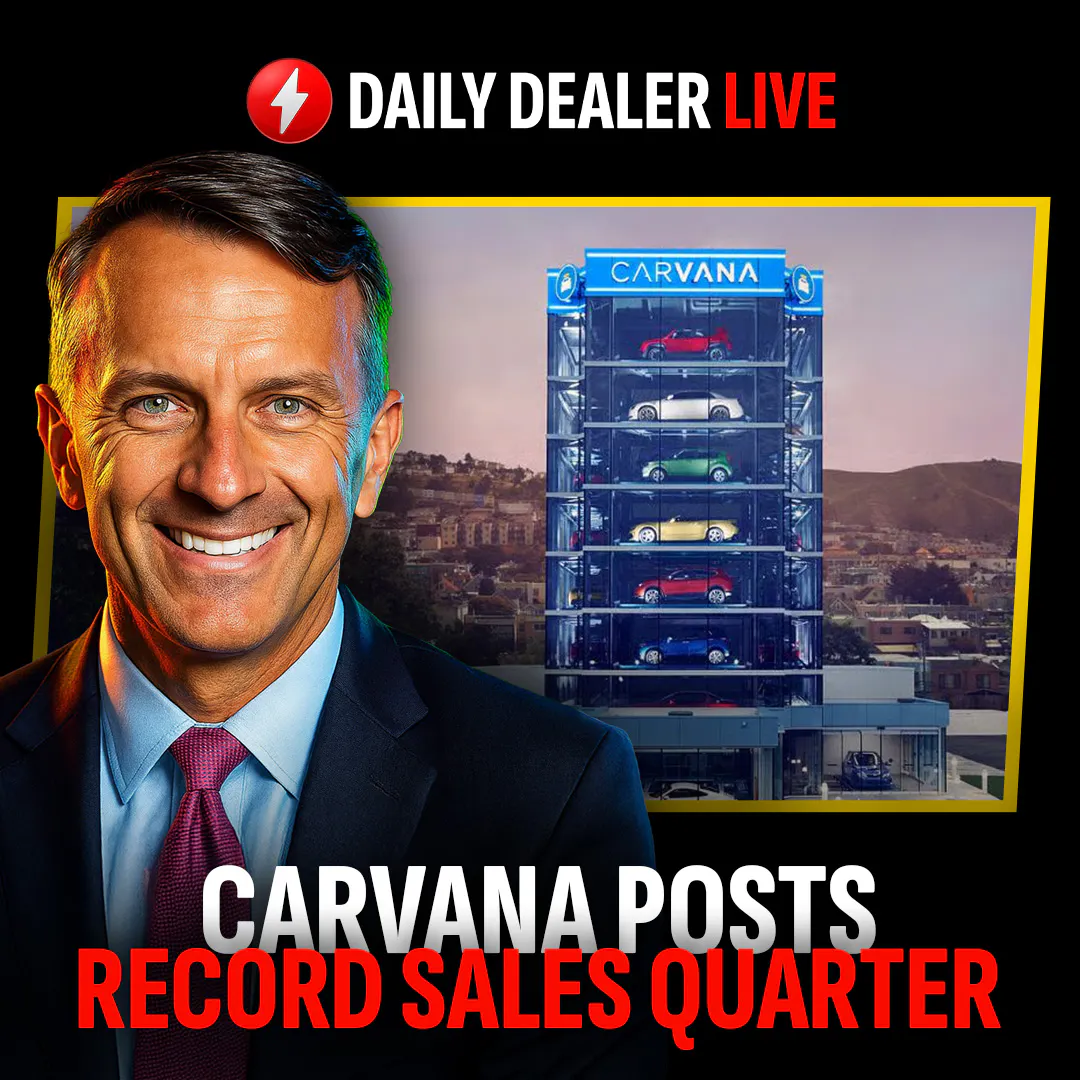
"Up closing out the news today, Carvana this week posted another record quarter with 187,000 vehicles sold in Q1, 2026. This is a 40% increase from Q1 last year and the sixth consecutive quarter of 40% plus retail unit growth."
Carvana is a company that sells used cars, mostly through an online buying process. They’re talking about how well Carvana is doing financially this quarter.
Carvana is an online used-car retailer that sells vehicles through a digital shopping process and delivers cars to customers. In this segment, the hosts cite Carvana’s quarterly sales and profit as evidence of its continued growth.
Daily Deal Alive
"And we'd love to get Mr. Garcia on Daily Deal Alive to talk about those results. Carvana, not only is it an astounding turnaround story from where they sat at the bottom of COVID,"
They mention “Daily Deal Alive” as the place they’d like to bring someone on to talk about business results. It’s basically the podcast/show they’re discussing on.
“Daily Deal Alive” appears to be the show/podcast segment name where the hosts want to invite Carvana’s CEO. It’s referenced as a platform for discussing the company’s results.
Fixed Ops Friday
"Welcome to Fixed Ops Friday, everybody. [479.5s] And just as a reminder, we're streaming live across all social media platforms. [483.8s] Push your comments in."
“Fixed Ops Friday” is the part of the show that focuses on the dealership’s service and parts business. It’s basically the “repair side” of running a car store.
“Fixed Ops Friday” is the show segment focused on the fixed operations side of dealerships—typically service, parts, and the processes that drive repair revenue. It’s a structural label for what the episode is about rather than a technical term.
Berkshire Hathaway
"Marv48 says, I think Berkshire Hathaway owns 50% of BUID along with 100 franchises in the U.S. [492.7s] How does that work?"
Berkshire Hathaway is a huge company that owns lots of other companies. When it comes up in car-dealer talk, it usually means they own part of something connected to dealerships or the auto business.
Berkshire Hathaway is a large U.S. conglomerate that owns many businesses across different industries. In auto discussions, people often bring it up because of its investments and stakes in companies involved in dealerships or related services.
Paragon
"I started my career at Paragon over in Woodside Queens, alongside of Brian Benstock, who after 20 years, we were able to be partners now at White Plains Honda,"
Paragon is the dealership Jason says he began working at. In this conversation, it’s basically the “where he started” company.
Paragon is mentioned as the dealership Jason started his career at in Woodside Queens. It’s a company/brand identity in the dealer network context of the episode.
Honda EV
"[606.6s] All right, so last time, Jason, you were on, [608.2s] you'd broken 14 records in 16 months, [611.2s] and you were the number four Honda EV dealer in the country."
They’re talking about electric cars made by Honda. The dealer is saying how well they’re doing selling Honda electric models.
“Honda EV” refers to electric vehicles sold under the Honda brand. In dealer talk, it usually means the store’s performance selling Honda battery-electric models rather than hybrids or gas cars.
CPO sales
"[631.5s] This is probably one of the most meaningful records for me. [634.9s] So in the month of April, we had an all-time record month [639.3s] in new car sales, an all-time record month in CPO sales as well. [644.7s] So all across the board, all-time record months."
CPO means “certified pre-owned.” It’s a used car that’s been checked and approved by the dealer/manufacturer, usually with extra protections like a warranty.
CPO stands for “certified pre-owned.” CPO sales count used cars that a manufacturer or dealer has inspected and certified, often with added warranty coverage and eligibility rules compared with regular used-car sales.
Certified Pre-On
"And it was an all-time record month, which not all dealers are having record months. And I'm aware of that. And not only was it record in new, it was also record in Certified Pre-On, which being top 15 in America for Certified Pre-On vehicles is a huge achievement."
This is a special program for used cars. The dealer checks the car and usually adds extra protection or promises compared to a normal used-car sale.
“Certified Pre-On” refers to a dealership’s certified pre-owned program. It typically means the used vehicle has passed an inspection and comes with extra coverage or guarantees compared with a regular used car.
U's Cars
"So a huge shout out to the team over at U's Cars, Ivan, Alex, Eddie, you guys are doing amazing. All right. So you can't be on the show and throw a record out like that without letting us break it down a little bit."
They’re talking about a specific dealership, “U's Cars,” and giving credit to the staff for doing really well on both new cars and certified used cars.
“U's Cars” is the dealership being praised for record sales in both new vehicles and certified pre-owned (CPO). The hosts are crediting the team there for the results.
scoreboards
"Instead of withholding information, what I like to do is just let the data set it free. Just let the numbers show I'm a really big fan of scoreboards. I'm a really big fan of showing everybody where they're at."
A “scoreboard” here means a daily chart or dashboard that shows how each salesperson is doing. It helps everyone see progress and goals, not just the final results.
In a dealership context, “scoreboards” are internal performance dashboards that make each salesperson’s progress visible. They’re used to motivate the team by showing where individuals stand against goals and targets.
month to date
"So they're going to show sales so far, month to date. And that's every single salesperson."
“Month to date” just means “from the start of this month until now.” It’s how the dealership measures how you’re doing so far this month.
“Month to date” (MTD) is a reporting period that tracks performance from the first day of the current month up to the present. Dealerships use it to compare progress against monthly targets and adjust tactics mid-month.
days you have without selling a car
"They get to see how many days you have without selling a car. They get to see where you're at in relation to your target that you set in the beginning of the month."
This is a sales productivity metric that counts how long a salesperson has gone without a retail sale. It’s often used to spot stalled activity early and prompt coaching or process changes.
percentage of attainment
"They get to see where you're at in relation to your target that you set in the beginning of the month. So what percentage of attainment are you at?"
“Attainment” is basically how close you are to your goal. The “percentage of attainment” tells you what portion of the target you’ve hit so far.
“Attainment” is how much of a sales goal you’ve achieved, expressed as a percentage. For example, 80% attainment means you’ve reached 80% of the target by that point in the month.
gross profit
"It also shows, obviously, gross profit where you're at"
Gross profit is the money the dealership makes from selling a car, after the direct costs of that sale. It’s a key number because it shows whether deals are profitable, not just busy.
Gross profit is the profit from the sale itself after subtracting direct costs tied to the transaction (like vehicle cost and certain variable expenses). Dealerships track it because it reflects how profitable deals are, not just how many cars are sold.
tax credit
"[1152.1s] I think you were number four in the country for Honda sales. [1154.7s] Now that tax credit's gone. [1156.8s] Tell us where you sit on the EV front."
A tax credit is a government discount that reduces your taxes. If it goes away or changes, it can make EVs more or less attractive to buyers overnight.
A tax credit is a government incentive that reduces the amount of tax you owe, effectively lowering the net cost of buying an eligible vehicle. When a tax credit changes or expires, it can quickly shift consumer demand and dealership sales volumes.
New York drive clean rebate
"[1181.9s] And in New York state, I know this is national, [1184.2s] but in New York state, we just got a New York drive clean rebate, [1187.2s] which in addition to a $7,500 MSRP reduction that Honda just did,"
This is a New York program that gives buyers extra money back for buying certain cleaner vehicles. It can make an EV cheaper even if the federal tax credit isn’t available anymore.
The New York drive clean rebate is a state-level incentive that provides cash back (or a similar financial benefit) for eligible purchases, helping reduce the effective purchase price of qualifying EVs. Rebates like this can materially change the “math” for buyers even when federal incentives have ended.
MSRP reduction
"[1184.2s] but in New York state, we just got a New York drive clean rebate, [1187.2s] which in addition to a $7,500 MSRP reduction that Honda just did, [1194.8s] there is an additional $2,000 for every prologue."
MSRP is the car’s sticker price. An MSRP reduction means the sticker price got lowered, which can make the final price you pay less.
MSRP reduction refers to lowering the vehicle’s manufacturer’s suggested retail price, which is the sticker price baseline used for pricing and incentive calculations. A reduction to MSRP can make the deal cheaper even before considering rebates or other incentives.

Honda Prologue
"...ust did, there is an additional $2,000 for every prologue. So for all of our EVs, which is the Honda prolo..."
The Honda Prologue is an all-electric SUV, meaning it runs on a battery instead of gasoline. In the podcast, it sounds like the discussion is about extra charges that can be added on top of the listed price. That’s important because the final cost you pay can be higher than the starting price.
The Honda Prologue is Honda’s all-electric SUV, and it’s being discussed in the context of pricing and dealer add-ons. The mention of an additional $2,000 for every Prologue suggests the conversation is about how EV pricing can be influenced by dealership-specific charges or packages. That makes it relevant for buyers comparing total out-the-door cost rather than just the base MSRP.
margin compression
"And if you're feeling some sort of a margin compression on the new vehicle side, well, let's focus our efforts on increasing our profitability in other areas."
Margin compression means the dealership is making less profit per vehicle than it used to. Prices and costs can squeeze profits, so they look for other ways to earn money.
Margin compression is when profit margins shrink—often because costs rise and/or pricing becomes more competitive. In dealerships, it can happen when new-vehicle pricing is pressured, making it harder to earn as much per car.
leasing
"...our terms that we focus on leasing. So we're able to sort of manufacture certified pre-owned cars..."
Leasing is like renting a car for a few years with payments based on the car’s expected value. You usually don’t own it at the end unless you choose to buy it.
Leasing is a financing structure where you pay to use a vehicle for a set period, typically with lower monthly payments than buying. Dealerships often use leasing to move inventory and attract customers when new-car margins are tight.
certified pre-owned cars
"So we're able to sort of manufacture certified pre-owned cars as well as our vehicle exchange program over in the service lane is the best place to hunt."
These are used cars that have been checked and approved by the program. The goal is to make buying used feel safer and more predictable.
“Certified pre-owned cars” are used vehicles that meet the program’s inspection and eligibility requirements. The point is to provide buyers with a more standardized, lower-risk used-car option than buying an unverified used car.
vehicle exchange program
"So we're able to sort of manufacture certified pre-owned cars as well as our vehicle exchange program over in the service lane is the best place to hunt."
A vehicle exchange program is a dealer process for bringing vehicles into the store—often by swapping or taking in eligible vehicles that can then be reconditioned and sold through a used/CPO channel. It’s described here as a key source for inventory.
finance rates
"...a certified pre-owned vehicle one, two, three years old with excellent, excellent finance rates, you can get yourself a really good vehicle..."
Finance rates are the interest rates on an auto loan. Lower rates can make the payments cheaper, which is why they’re highlighting them for CPO buyers.
Finance rates are the interest rates used to calculate loan payments for financing a vehicle. The speaker implies that CPO vehicles can come with attractive financing terms, which can make the monthly cost easier to manage.
lease returns or lease turn-ins
"So it'll be lease returns or lease turn-ins that are coming in. And then-"
When a lease ends, the car gets brought back—this is called a lease return or turn-in. Dealers can then sell it again, usually after inspecting and fixing it up.
“Lease returns” (also called “lease turn-ins”) are vehicles that customers hand back to the leasing company or dealer when the lease ends. Dealers then resell them, often after reconditioning, and these cars can feed used-car and certified pre-owned inventory.
sales rate
"So we increased or we accelerated our sales rate and now we're reaping the benefits of all those increased sales rates."
Sales rate just means how fast the dealership sells cars. If they sell more quickly, they can plan inventory and keep the business moving.
“Sales rate” is how quickly a dealership sells vehicles over a given period (often expressed as units per month). Increasing sales rate can improve cash flow and help the dealer build inventory pipelines, including for used and certified pre-owned cars.
trace cycle management
"So if you have a good trace cycle management and you're training the staff and telling the people why it's best to lease and get a new where we to,"
This sounds like a process for managing how customers move through the lease experience—when they sign up, when the lease ends, and what happens next. The goal is to keep the dealership getting good lease trade-ins and sales.
“Trace cycle management” here appears to refer to managing the customer/vehicle lifecycle for leased vehicles—how leads, lease customers, turn-in timing, and follow-up are handled to maximize profitable outcomes. In dealership operations, this kind of process management helps ensure the right cars come back and the right customers are guided toward leasing and upgrades.
certified pre-owned inventory
"we have a bigger opportunity to increase that retention and increase our certified pre-owned inventory. So lease return to be number one and number two"
Certified pre-owned cars are used cars that have been checked and fixed up to meet a program’s rules. They usually come with extra coverage compared to a regular used car.
“Certified pre-owned” (CPO) inventory refers to used cars that a manufacturer or dealer program has inspected and reconditioned to meet specific standards. CPO programs typically come with added warranties and stricter eligibility rules, which can command higher margins than ordinary used cars.
service lane
"So lease return to be number one and number two would be right in our service lane. And those are the two main areas of focus."
A service lane is the part of the dealership where cars go in for service and inspection. They’re saying lease-return cars are handled there to get ready for resale.
A “service lane” is the dedicated area/flow in a dealership where vehicles enter for service work (and often for quick service or intake). Mentioning lease returns “right in our service lane” suggests they’re routing returned vehicles into the reconditioning/service process efficiently.
auction
"We buy a total of zero cars. We bought zero cars from the auction. Wait, really? No cars."
In dealer terms, an “auction” is a marketplace where dealers buy vehicles from other sellers (often other dealers, fleet operators, or lease remarketers). Saying they bought zero cars from the auction means their inventory strategy is relying on lease turn-ins instead of purchasing through auctions.
service drive
"So 100% between lease return and service drive. How many vehicles did you buy out of the drive last month as an example?"
The service drive is the part of the dealership where you pull in for service—like oil changes or repairs. Cars are usually checked in and lined up for the work to be done.
The service drive is the customer drop-off/pick-up area at a dealership used for maintenance and repairs. In dealership operations, it’s where service appointments are processed and where vehicles are staged for technicians.
repair in advance
"So it's what you know in advance, repair in advance and if you have a customer that you have an appointment set up for service..."
“Repair in advance” means fixing problems before the customer’s appointment. The goal is to avoid delays so the car can be handled faster when it shows up.
“Repair in advance” describes proactively addressing known issues before a customer’s scheduled service visit. In dealership terms, it can reduce turnaround time, prevent delays, and improve customer experience by having work ready when the car arrives.
CRM
"because every database you have, whether it's your CRM, your DMS,"
CRM is a computer system dealerships use to keep track of customers. It helps them see who might be coming in soon based on past contact and activity.
CRM stands for Customer Relationship Management. In a dealership, a CRM system tracks leads and customer interactions so staff can identify who’s likely to come in for service or a vehicle purchase.
equity mining tool
"or you have an equity mining tool, you're able to dive in there and see who's coming in tomorrow."
An equity mining tool is software used to identify customers who may have built up equity in their current vehicle (often by comparing payoff amounts to estimated market values). Dealerships use that data to target customers for trade-in or upgrade offers.
lease proposal
"what was that car worth and what is a lease proposal on a brand new version of what he's driving now?"
A lease proposal is the dealership’s written offer for leasing a car. It shows what the monthly payment and lease terms would be.
A lease proposal is an offer that lays out the terms of a lease, typically including monthly payment, down payment (if any), term length, and estimated fees. Here, it’s being discussed as the next step after determining what the customer’s current car is worth.
appraisal
"The presentation leads to an appraisal. An appraisal leads over to a proposal"
In dealership sales, an appraisal is the estimated value of a customer’s current vehicle, usually based on condition and market data. That number is then used to build the customer’s next proposal (trade/upgrade or lease terms).
sales floor
"The service drive is far from the sales floor, is what you're saying, right? Is that what you're saying?"
The sales floor is the dealership’s main public area for selling cars. It’s where customers meet salespeople and look at vehicles.
The sales floor is the main customer area of a dealership where salespeople work and customers browse or discuss vehicles. It’s distinct from back-of-house areas like service bays, parts storage, or offices.
BDC
"Or the BDC where that- The service, no, the service department. Our service department is not continuous to our showroom."
BDC means the dealership’s lead-follow-up team. They help manage phone calls and online inquiries so potential buyers get contacted and scheduled to come in.
BDC stands for Business Development Center. It’s a dealership team that handles inbound leads and outbound follow-ups—often coordinating with sales to convert calls, forms, and internet inquiries into appointments.
dedicated team
"So you have a dedicated team. What do you say? Use car sourcing is the toughest topic in automotive today, one of them."
A dedicated team means the dealership assigns certain people to focus on one job. Instead of random help, it’s the same group working the same plan.
A “dedicated team” refers to assigning specific people to a specific operational task—here, supporting car sourcing and/or service-drive lead generation. The idea is that consistent staffing and accountability outperform ad-hoc efforts.
car sourcing
"So you have a dedicated team. What do you say? Use car sourcing is the toughest topic in automotive today, one of them."
Car sourcing is how a dealership finds cars to sell. It’s not just finding a listing—it’s getting the right car at the right price and making sure it can be sold profitably.
Car sourcing is the process of finding and securing vehicles for a dealership—often from auctions, trade-ins, wholesalers, or other dealer networks. It’s “tough” because it involves pricing, availability, and timing, plus managing risk on condition and reconditioning costs.
service retention
"They're going to be meeting with the people [1632.1s] that is going to have the biggest impact on your retention. [1636.0s] So you sell 100, 200, 300 cars out of the new car showroom,"
Service retention just means: do customers keep bringing their cars back to the same dealership for service. Higher retention usually means the dealership is doing a good job and customers trust them.
Service retention is how effectively a dealership keeps customers coming back for maintenance and repairs after they buy the vehicle. In practice, it’s tracked as a percentage of customers (or vehicles) that return to that same dealer’s service department over time.
COX
"But let's talk, let's dive into fixed ops a little bit. [1665.7s] COX just released their 26 fixed ops study. [1669.0s] Dealers losing or losing market share to general repair [1671.7s] on two to five-year-old vehicles according to that study."
COX is a company that studies how car dealerships are doing. They publish reports that help dealers compare their service business to what’s happening across the industry.
COX refers to COX Automotive, a company that produces automotive retail and service-industry research. Their “fixed ops study” is used as a benchmark for how dealers are performing in areas like service market share and retention.
general repair
"[1669.0s] Dealers losing or losing market share to general repair [1671.7s] on two to five-year-old vehicles according to that study. [1674.7s] What's your service retention number?"
“General repair” means regular repair shops that aren’t the car dealership. The point here is those shops are competing for the same service customers.
“General repair” refers to non-dealer repair shops that handle maintenance and repairs for a wide range of vehicles. In this context, it’s the competition taking service work away from franchised dealers on newer used vehicles (two to five years old).
trade cycle management
"And our trade cycle management and our heavy focus on leasing allows us to have a fresh book of business"
It’s how a dealership tries to time and encourage when customers will switch to a newer car. The goal is to keep the dealership getting new business consistently over time.
Trade cycle management is how a dealership plans and influences when customers trade their current vehicle for a newer one. In practice, it ties together marketing, leasing/financing strategy, and customer follow-up so the dealership can keep a steady flow of used inventory and repeat business.
service effectiveness
"our service effectiveness is through the roof. We're almost double what the standard is for service effectiveness or what's expected."
Service effectiveness is a way to measure how productive the service department is. Higher numbers usually mean the shop is using its technicians’ time well and getting more work done.
Service effectiveness is a dealership KPI that measures how efficiently the service department turns available labor time into billable work. When it’s “indexed over” the standard, it generally means the shop is producing more revenue per labor hour than the benchmark.
indexed over
"So we're at about 94, 95% indexed over."
This is a comparison score. It tells you how the dealership’s results stack up versus an industry or internal benchmark.
“Indexed over” means the dealership’s performance is compared against a benchmark or standard, expressed as a relative score. For example, being “94, 95% indexed over” indicates they’re operating slightly below the benchmark level referenced by that index.
warranty and recalls
"Although we're seeing a big pickup in warranty and recalls as well, and it's still customer pay, there's a lot of stores that are struggling in that."
Warranty and recalls are types of repairs that the manufacturer covers. Recalls are required safety fixes, and warranty work is covered because of the car’s warranty—both can change how busy the service shop gets.
Warranty work is repairs covered under the vehicle manufacturer’s warranty, while recalls are safety-related fixes required by the manufacturer/regulator. Both can significantly affect a service department’s workload, staffing needs, and profitability because labor and parts reimbursement rules differ from customer-paid repairs.
hours per hour
"And what we did is we doubled down on our people and we were able to go from like 1.6, 1.7 hours per hour to about 2.3, 2.4 hours per hour."
It’s a productivity measure for the service shop. It compares how much work the technicians get done versus how much time they’re available, and higher usually means the shop is running more efficiently.
“Hours per hour” is a service-department productivity metric that compares technician labor time output to the available labor time during the same period. Moving from ~1.6–1.7 to ~2.3–2.4 hours per hour indicates the shop is generating more billable labor output per technician hour.
PVR
"What's the most overrated KPI in retail automotive today, in your opinion, Jason? ... PVR. PVR, okay. Yeah, everybody looks at PVR and they feel like you're doing the job."
PVR is a dealership scorecard number that tries to measure how much profit the store makes per retail car sold. People use it to judge whether the dealership is “doing the job,” but it can be misleading if it’s the only thing they focus on.
PVR is a dealership KPI that typically stands for “Profit per Vehicle Retail” (or a very similar profit-per-retail-vehicle metric). It’s used to judge how much profit the dealership makes on each retail unit, so managers watch it to gauge overall effectiveness.

Honda Ridgeline
"Well, I think that the, I've been driving a Ridgeline for a while now. I've been driving a Ridgeline and absolutely love it."
The Honda Ridgeline is a midsize pickup truck. The host is saying it’s very reliable—basically the kind of truck people expect to keep running without big problems.
The Honda Ridgeline is Honda’s midsize pickup truck, known for its car-like ride and practical daily usability. In the segment, it’s being praised as extremely dependable (“bulletproof”), which is a common sales angle for trucks that are used both for work and family life.

Honda Crv
"I think the CRV is our number one selling car and there's a reason. I think it's so compact. My mom has a CRV, my aunt has a CRV, my grandma has a CRV, my cousins have CRV."
The Honda CR-V is a compact SUV. The host’s point is that it’s popular because it’s a good size and fits a lot of different families’ needs.
The Honda CR-V is a compact SUV that’s positioned as a high-volume, easy-to-own choice. The speaker ties its sales success to its size and broad family appeal, noting multiple family members own one.
CDG circles
"And one thing, one thing you've learned in the last month on CDG circles, and then we'll wrap, have you back at the round table."
“CDG circles” just means the community of people who follow Car Dealership Guy and talk about dealership topics. It’s not a car tech term—more like a dealer group.
“CDG circles” refers to the podcast/brand community around Car Dealership Guy (CDG). It’s a way of saying the speaker’s learning came from what’s being discussed within that dealer-focused network.
filing
"Well, being able to stay aware and in tune with, with the FTC, with filing and all the confusion and what do we do and how does that work and, and what's next."
Here, “filing” means paperwork dealers have to submit or keep up with to follow the rules. It’s part of staying compliant, not a car repair process.
In this context, “filing” likely refers to regulatory or compliance paperwork dealers must submit or maintain. The discussion ties it to the FTC and staying aware of what’s required.
lead provider sites
"and have these lead providers come in and just talk about what the standard process should be... Feeds are getting interpreted a different way."
These are websites that send car shoppers’ questions to dealerships. If different sites show different pricing details, it can confuse buyers and make it harder for dealers to keep offers consistent.
“Lead provider sites” are websites or platforms that generate and distribute customer inquiries (leads) to dealerships. Dealerships often have to match how they present pricing and offers across multiple lead sources so shoppers see consistent numbers.
standard process
"and just talk about what the standard process should be... I think we need a standard way of doing it."
They’re talking about setting up one consistent way of doing things. That way, the deal information stays accurate when it’s shown on different websites.
A “standard process” here means agreeing on a consistent workflow for how dealers and lead providers handle leads and pricing presentation. The goal is to reduce mismatches so shoppers see accurate, comparable offers across platforms.
feeds are getting interpreted a different way
"Because from my vantage point, I'm seeing all these different processes. Feeds are getting interpreted a different way."
“Feeds” are the structured data streams (often pricing/availability details) that dealerships provide to lead platforms. When a feed is interpreted differently, the platform may display the offer with different inclusions (like down payment or discounts), leading to inconsistent advertised pricing.
pricing shows right
"People are having to like sort of, you know, make up a way that the pricing shows right all across the different lead provider sites."
Dealers send pricing information to websites. If the website reads that information differently, the price you see online might not match what the dealer intended.
This is about “price feed” interpretation—how pricing data is formatted, transmitted, and displayed by lead providers. If the feed is interpreted differently, the same offer can appear as different prices or terms across websites.
down payment
"that would, that included a down payment, that included a discount, that included,"
A down payment is money you pay upfront when you buy or lease a car. If an ad includes (or excludes) the down payment, the numbers you see can change.
A down payment is the upfront amount paid at the start of a purchase or lease, which affects the monthly payment and the “out-the-door” cash required. In pricing ads, down payment inclusion can make the same deal look like a different price depending on how it’s presented.
discount
"that included a down payment, that included a discount, that included, if you were to speak tall or if you were to,"
A discount is money taken off the price of the car. If a website includes the discount in the advertised price (or doesn’t), buyers may see different numbers.
A discount is a reduction from the base price, often tied to incentives, promotions, or negotiated pricing. In dealership lead pricing, whether a discount is included in the displayed number can significantly change what shoppers think they’re getting.
viato
"What I'm, what I'm talking about is, how do you get the price out of your viato or whatever system you use into the digital lead provider, so that it includes dock fee and the fees that are required to be there."
They’re talking about a software system they use to handle pricing and leads. The question is whether the price shown online includes all the required fees.
“Viatto” here appears to be the name of a digital system or platform the dealer uses to manage pricing and leads. The key point is how the dealer’s price (including required fees) gets pushed into the lead provider’s listing.
digital lead provider
"...into the digital lead provider, so that it includes dock fee and the fees that are required to be there."
It’s a website or service that sends car-shopping inquiries to dealerships. Dealerships need to make sure the price shown includes the right fees.
A digital lead provider is an online service that routes customer inquiries (“leads”) to dealerships. Dealerships often have to match their pricing and fee disclosures to what the lead provider displays.
dock fee
"...so that it includes dock fee and the fees that are required to be there. Not, not, you know, some are requiring one way, others are requiring another."
A dock fee is an extra charge dealers add for moving the car from where it arrives to the dealership. Some places limit it or require it to be clearly shown.
A dock fee is a dealer-added charge tied to getting a vehicle from a port/transport location to the dealership. It’s commonly regulated or must be disclosed, and the amount can vary by dealer and state.
one way
"Not, not, you know, some are requiring one way, others are requiring another. We're just, we're, we're full disclosure and our prices are prices."
They’re saying different places or websites may require prices to be shown in different ways. So the dealer has to follow each rule so customers see the right total.
“One way” vs “another” here refers to different pricing/fee display requirements across platforms or states. The speaker’s point is that lead providers and regulations may force different formatting or fee inclusion rules.
full disclosure
"We're just, we're, we're full disclosure and our prices are prices. And then let's say, for example, if we're at MSRP..."
They mean being upfront about the real total cost. Instead of hiding fees, they want everything shown clearly from the start.
“Full disclosure” means presenting all required pricing information clearly rather than omitting fees until later. In dealership advertising, it typically means the total price shown includes mandatory charges like dock fees.
Zurich
"We're going to dive straight into Zurich. Today's episode is brought to you by Zurich. If you're a dealer and have ever wondered whether your profit participation program could be performing better, Zurich offers a no obligation profit participation checkup."
Zurich is an insurance company. Here, they’re talking to car dealers and offering help to review how their profit-sharing program is set up.
Zurich is an insurance brand that sponsors the episode and offers dealer-focused services. In this segment, it’s promoting a “profit participation checkup” for dealerships.
profit participation program
"If you're a dealer and have ever wondered whether your profit participation program could be performing better, Zurich offers a no obligation profit participation checkup. It's a simple pressure free way to get clarity on your program structure."
A profit participation program is a deal where a dealership gets a share of profits from certain sales or services. The podcast is saying Zurich can review how that sharing is set up so it may work better.
A profit participation program is an arrangement where a dealership shares in profits tied to an insurance or finance product. The “structure” matters because it affects how much profit the dealer actually receives and how the program is administered.

Honda Passport
"Paul Salisman, I'm sorry, Dave Rogers says passport to his favorite vehicle, bunch of fire from my H..."
The Honda Passport is a larger Honda SUV meant for carrying people and gear comfortably. It’s the kind of vehicle people talk about when they want something practical for daily driving and road trips. In the podcast, it’s mentioned as a favorite vehicle.
The Honda Passport is a midsize SUV built for family hauling and everyday driving, typically discussed as a practical alternative to smaller crossovers. It comes up in dealership conversations because it’s a popular “do-it-all” vehicle and can be a frequent choice for buyers comparing options, pricing, and available features. The podcast mention suggests it’s one of the host’s favorite vehicles or a standout pick.
Green Automotive Group
"So now we're in Arizona, Cottonwood, Arizona, for the Green Automotive Group, amazing group to head up their Hyundai Store and their Chevrolet Store."
Green Automotive Group is the company that runs the dealerships the speaker is talking about. It’s basically the dealership business he’s helping manage.
Green Automotive Group is the dealership group the speaker is working with in Cottonwood, Arizona. In dealership terms, a “group” typically means multiple stores under one ownership/management structure.
Request an Explanation
Heard something you'd like explained? We'll add it to this episode.
Sign in to request explanations for terms you heard.
Want to learn more?
Browse our glossary for plain-English explanations of automotive terms, jargon, and concepts.
Help improve this episode
See something that's not quite right? Our annotations are AI-generated and can sometimes miss the mark. Click the flag icon on any annotation to suggest a correction.