S2 Ep6: How Japan Embarrassed the Racing World
About this episode
Japan’s motorsport rise is traced from Honda’s crushing Formula 1 partnership with McLaren and the Senna-Prost Suzuka flashpoint to Mazda’s rotary-powered Le Mans breakthrough. From there, the story widens into Nissan’s Skyline GT-R mythology, rally success from Subaru and Mitsubishi, and the engineering culture that flourished during the bubble years. As regulations tightened and rare homologation specials became harder to get, the cars’ reputation only grew.
For decades, the world saw Japanese cars as just efficient, economical daily commuters. Then the 1990s hit, and Japan unleashed a lineup of obsessively engineered racing monsters that completely stunned the established European and American giants. Backed by the limitless budgets of the nation's economic "bubble era," Japanese engineers were given the ultimate green light to overbuild their machines without worrying about the cost.
From Subaru and Mitsubishi conquering unforgiving rally dirt, to Mazda’s unbreakable rotary engine surviving Le Mans, and Nissan’s R32 "Godzilla" destroying the Australian touring circuit—Japan didn't just show up to compete. They took over.
Discover how these manufacturers stopped being seen as the "optimistic little brother," rewrote the racing rulebooks, and became the ultimate global benchmark.
This episode is brought to you by QUO. Try QUO for free PLUS get 20% off your first 6 months when you go to https://www.Quo.com/PastGas
This episode is also brought to you by Shopify. Sign up for your one-dollar-per-month trial today at https://www.Shopify.com/Gas
Also thanks to BlueChew for sponsoring this podcast. Right now, when you buy two months of BlueChew Gold, you get the third for FREE with promo code PASTGAS.
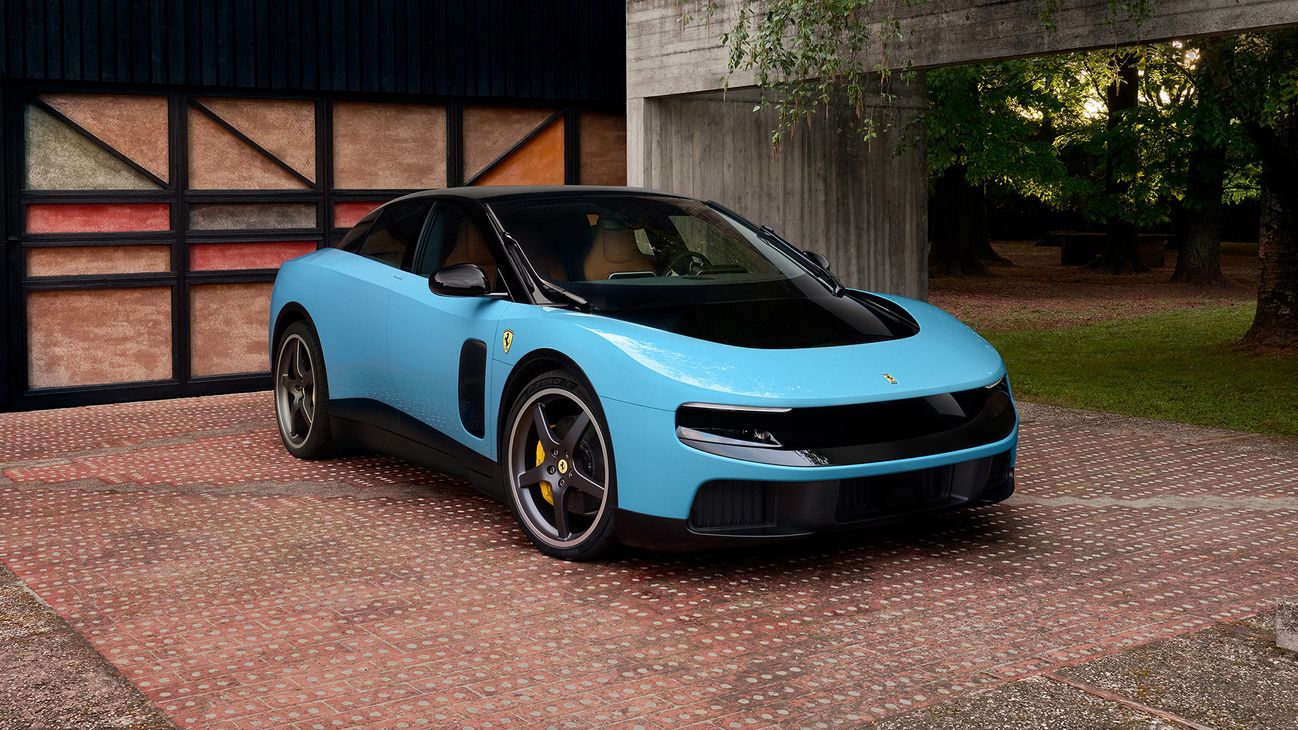
Ferrari Luce
"...entro de las cuartas de manufactura japonés, las luces están aún en la noche, después de que las oficina..."
I can’t confidently identify which Ferrari model “Luce” refers to from the information provided. Ferrari has many special and limited models, and the exact name matters. If you share more details from the podcast (like the year or what it’s described as), I can explain what it is.
“Ferrari Luce” refers to a Ferrari model name mentioned in the podcast, but it’s not a widely recognized Ferrari production model by that exact name in common references. Because the transcript doesn’t provide more detail (such as model year, engine, or whether it’s a concept or special), it’s hard to accurately describe its role or significance. If you can share the exact context around “Luce” (year or what the host says it is), I can tailor the explanation precisely.
Golden Age of JDM
"We are now officially in the Golden Age. This is the stuff that games like Gran Turismo really celebrate here. We are now talking about the cars that you probably imagine when you hear the term, the Golden Age of JDM."
“Golden Age of JDM” is a nickname fans use for the time when Japanese race cars and street cars were at their most exciting and influential. It’s basically the era people think of when they say “Japanese performance was on top.”
“Golden Age of JDM” refers to a peak era of Japanese Domestic Market performance and motorsport influence, when Japanese brands were especially dominant or innovative in racing. It’s a fan term that usually points to the late 1980s into the 1990s, when many iconic cars and technologies became widely celebrated.
Formula One grid
"It's fitting that the opening shot was fired, not on a dirt rally stage in Finland, or a banked oval at Daytona, but on the Formula One grid."
The “Formula One grid” is the starting lineup for an F1 race, where cars are positioned before the start based on qualifying results. It’s a recognizable visual cue that immediately signals top-level open-wheel racing.
engine manufacturer
"They re-entered Formula One in 1983 as an engine manufacturer, and by 1987 they had secured back-to-back Constructors' Championships with Williams."
In F1, an “engine manufacturer” is the company that builds the engines used by racing teams. Teams then install that engine into their cars, and the engine can make a big difference in how fast they are.
In Formula One, an “engine manufacturer” supplies the power unit to one or more teams rather than running a full works team. This distinction matters because the engine’s design and integration with the chassis can be a major factor in race performance.
Constructors' Championships
"and by 1987 they had secured back-to-back Constructors' Championships with Williams."
The Constructors’ Championship is the “best team overall” award in Formula 1. It’s based on points from the team’s cars across the whole season.
The Constructors’ Championship is the season-long points title awarded to the team (constructor) based on the combined results of its cars. It’s different from the Drivers’ Championship, which is awarded to individual drivers.
McLaren
"But it was their 1988 partnership with McLaren that marked a peak. McLaren, under Ron Dennis, was seeking to regain a technical edge"
McLaren is a top Formula 1 team. The episode is saying that Honda teaming up with McLaren in 1988 was when things really clicked and produced their best results.
McLaren is mentioned as Honda’s 1988 partnership, which the hosts describe as a peak moment. McLaren is one of F1’s most prominent teams, and partnerships with engine suppliers can strongly influence competitiveness through the whole car package.
Ron Dennis
"But it was their 1988 partnership with McLaren that marked a peak. McLaren, under Ron Dennis, was seeking to regain a technical edge"
Ron Dennis is a well-known figure in Formula 1 who led McLaren. The episode is using him to set the context for McLaren’s push to improve.
Ron Dennis is referenced as McLaren’s leadership figure (“under Ron Dennis”). In F1 history, his tenure is often associated with major organizational and technical efforts to regain competitiveness.
Williams
"after falling behind Williams in the Turbo era. When Honda and Williams fell out due to competitive decisions, McLaren saw an opportunity."
Williams is a racing team that competes in Formula One. Here it’s mentioned because teams were fighting for performance during the turbocharged years.
Williams is a Formula One team. In this segment, it’s referenced in the context of the “Turbo era” and competitive dynamics between teams.
Turbo era
"after falling behind Williams in the Turbo era."
The “turbo era” means the years when Formula One cars mainly used turbocharged engines. That technology changed how teams competed and developed their cars.
“Turbo era” refers to the period in Formula One when turbocharged engines were dominant. The segment uses it as a backdrop for why teams like Williams and Honda were competing differently.
Honda
"When Honda and Williams fell out due to competitive decisions, McLaren saw an opportunity. ... The McLaren-Honda partnership was formalized in 1988"
Honda is a car company that has been involved in Formula One, especially by providing engines. In this story, Honda’s team-up decisions affected which racing teams gained advantages.
Honda is an automaker that also supplies engines and technical support to Formula One teams. The segment discusses Honda’s relationship with Williams and later its partnership with McLaren.
power dynamics within the sport
"It also marked a shift in power dynamics within the sport, as the most advanced engine supplier moved from one British elite to another, effectively transferring competitive supremacy with it."
This phrase is about which teams are “in control” competitively. In racing, that usually comes from having the best technology and partnerships at the right time.
“Power dynamics” here means how competitive influence shifts between teams and countries in Formula 1. It’s about who has the best technology, resources, and partnerships at a given time, which then affects race results.
engine supplier
"as the most advanced engine supplier moved from one British elite to another, effectively transferring competitive supremacy with it."
In F1, some teams don’t build their own engines—they buy them from an engine supplier. If the best supplier switches teams, that team often gets a big advantage.
In Formula 1, an engine supplier provides the power unit to a team, even if the team builds its own chassis and aerodynamics. When the “most advanced engine supplier” moves between teams, it can shift who has the best overall package and therefore who dominates.

McLaren MP4-4
"The McLaren MP4-4, maybe the most recognizable F1 car in history, draped in the iconic Marlboro livery and powered by Honda's RA168E engine, won 15 out of 16 races in 1988."
The McLaren MP4-4 is a specific Formula 1 race car from McLaren. It’s remembered as one of the most dominant F1 cars of its time because it worked extremely well with Honda’s engine.
The McLaren MP4-4 was a Formula 1 car raced by McLaren in the late 1980s. In this era, it became famous for combining McLaren’s chassis/operations with Honda’s engine program, leading to dominant results.
Marlboro livery
"The McLaren MP4-4, maybe the most recognizable F1 car in history, draped in the iconic Marlboro livery and powered by Honda's RA168E engine, won 15 out of 16 races in 1988."
A livery is the car’s visual design—paint and decals. “Marlboro livery” means the famous Marlboro-branded look that was used on the car.
A livery is the car’s paint scheme and graphics, including sponsor branding. “Marlboro livery” refers to the distinctive Marlboro cigarette brand styling that McLaren used on its cars during that period.
97% of all laps raced
"They also led over 97% of all laps raced that season. And with Honda logos on the car, the world was also being reminded of Japan's role and the whole thing."
In F1, “laps led” means how long a car was in the lead during races. If it leads almost all laps, it shows the car was clearly the fastest and most in control.
“Laps led” is a common F1 dominance metric: it measures how much of the race the car was in front. Leading 97% of laps indicates overwhelming control of pace and strategy across the season.
preferred driver
"Prost had begun to suspect McLaren was treating Senna as their preferred driver, in violation of the team's promise to treat both drivers equally."
A “preferred driver” is when a racing team quietly supports one driver more than the other. That can lead to tension if the drivers feel the team isn’t being fair.
A “preferred driver” situation in F1 is when a team effectively prioritizes one driver over another for strategy, development focus, or race calls. This can create internal conflict, especially when the team previously promised equal treatment.
Imola in 1989
"Then came Imola in 1989. Ahead of the race, the two drivers had agreed that whoever led into the first corner would be allowed to win without any fuss."
Imola is a famous Formula 1 race track in Italy. “Imola in 1989” means this happened during the 1989 race weekend at that track.
Imola refers to the Autodromo Internazionale Enzo e Dino Ferrari circuit in Italy, and “Imola in 1989” anchors this story to a specific Formula 1 race weekend. This is the context for the Prost–Senna incident described in the segment.
red flag
"Then, a serious crash brought out the red flag, and at the restart, Senna passed Prost."
A red flag is the signal to stop the race right away because something unsafe happened on track. After the race is stopped, officials restart it, and that restart can change what’s considered “fair” or allowed.
In Formula 1, a red flag means the race is stopped immediately for safety (typically due to a serious crash or hazard). When the race restarts, the rules and restart procedure can change how drivers interpret prior agreements or track position.
Japanese Grand Prix
"But going into the Japanese Grand Prix, they absolutely despised each other. Lap 47 at Suzuka is where it all boiled over."
The Japanese Grand Prix is a Formula 1 race in Japan. It’s one of the big races on the F1 calendar, and the result can strongly affect who wins the championship.
The Japanese Grand Prix is a Formula 1 race held in Japan, typically at Suzuka Circuit. In F1, the Grand Prix is the main event format, with qualifying and a points-scoring race that can decide championships.
dive bombing
"Senna lunged inside of Prost, dive bombing him at the final pass through the Casio Triangle. Prost, but publicly declared that he would no longer leave the door open, closed it."
“Dive bombing” means braking very late and turning into a corner hard, trying to get past quickly. It can be risky because the other driver may not expect it.
“Dive bombing” is a racing term for an extremely aggressive late braking move into a corner, often with the car turning in very abruptly. It’s usually used to describe a move that surprises the other driver and can lead to contact if the timing is off.
Casio Triangle
"Senna lunged inside of Prost, dive bombing him at the final pass through the Casio Triangle. Prost, but publicly declared that he would no longer leave the door open, closed it."
“Casio Triangle” is a specific part of the Suzuka track. When commentators say it, they’re pointing to the exact corner/section where something happened.
The “Casio Triangle” is a named section of Suzuka Circuit used in lap-by-lap race commentary. It helps fans and teams identify where a specific move or incident happened, like Senna’s aggressive pass attempt on Prost.

McLarens
"The two McLarens collided and slid to a halt. Prost walked away from his car, but Senna urged the marshals to push him back onto the track."
“McLarens” refers to the McLaren Formula 1 cars driven by Ayrton Senna and Alain Prost in this era. In the transcript, the collision between the two McLarens is a key moment that leads to Senna’s later disqualification.
marshals
"Prost walked away from his car, but Senna urged the marshals to push him back onto the track. They did, and Senna rejoined the race and eventually crossed the finish line in first place."
Marshals are the people working around the track to keep things safe and handle crashes. They can help move cars back so racing can restart if it’s allowed.
In motorsport, marshals are track officials who manage safety and incidents, such as helping recover a car or controlling access to the racing surface. The transcript notes that Senna urged marshals to push Prost’s car back onto the track so the race could continue.
chicane
"Senna was later disqualified for skipping the chicane where he and Prost initially collided, and Prost walked away with the championship."
A chicane is a sequence of alternating turns designed to slow cars down and control speed through a section of track. In this incident, Senna is disqualified for skipping the chicane, meaning he didn’t follow the required route through that speed-control section.
disqualified
"Senna was later disqualified for skipping the chicane where he and Prost initially collided, and Prost walked away with the championship."
In Formula 1, disqualification is a race result penalty where a driver is removed from the official classification. It typically happens when rules are broken—here, skipping the chicane—so the driver’s finishing position doesn’t count for points.
racista 40 años atrás
"por qué todavía se arruinaron por un racista 40 años atrás. Los fans japonés fueron devastados."
This phrase refers to a historical racism-related event affecting the sport’s reputation and fanbase. While not a technical automotive term, it’s a contextual driver for why the episode discusses the incident’s legacy.
disqualificara
"Senna fue un fan favorito y miró que él se disqualificara en la torre de Janda en una forma que fue más allá del sport."
Disqualification means the driver is taken out of the official race results. It usually happens when something breaks the rules, and it can hurt their chances in the championship.
“Disqualificara” refers to a driver being removed from the official race results. In motorsport, disqualification can happen for rule violations or technical non-compliance, and it can dramatically change championship outcomes.
Sazuka
"La colisión en el circuito de Sazuka ha endurecido principalmente como un momento definido en la rivalidad entre Senna y Prost."
“Sazuka” likely means Suzuka, a well-known race track in Japan. The hosts are talking about a crash there that became a major moment in the Senna vs. Prost story.
“Sazuka” is almost certainly a mis-transcription of Suzuka, the famous Formula 1 circuit in Japan. The episode is referencing a collision at Suzuka that became a defining moment in the Senna–Prost rivalry.
Prost
"como un momento definido en la rivalidad entre Senna y Prost. Pero, visto en un contexto más grande, también reveló que la posición de Janda hubiera venido a ocupar el sport por la próxima década."
“Prost” is Alain Prost, a top Formula 1 driver from the same era as Senna. The hosts are saying this incident became a big turning point in their famous rivalry.
“Prost” refers to Alain Prost, another legendary Formula 1 driver. The episode frames the Sazuka/Suzuka collision as a defining moment in the Senna–Prost rivalry, which shaped F1’s modern era.
Formula 1
"Se convirtieron integrados en la jerarquía competitiva de Formula 1. En el año 1990, no era suficiente para los carros japonés para ser rápidos,"
Formula 1 is the highest level of open-wheel race car competition. Teams race across many events in a season, and the best overall team and driver win championships.
Formula 1 (F1) is the top tier of open-wheel racing, run under strict technical and sporting rules. Teams build and develop cars specifically for F1, and championships are decided over a season of races.
OEM
"Una de las mejores formas para un OEM para proveer que sus carros son no solo rápidos y competitivos, pero que estoutos y relajables es la racía de la endurance."
OEM means the original company that makes the car in the first place. The hosts are talking about how car makers use racing to show their vehicles are fast and competitive.
OEM stands for “Original Equipment Manufacturer.” In automotive and racing, it means the company that builds the car/vehicle (or the racing program) rather than an aftermarket supplier. The episode uses it to describe how manufacturers use racing to prove their cars’ competitiveness.
endurance
"pero que estoutos y relajables es la racía de la endurance. Es un tipo de sport de motor que puede hacer o romper la reputación de sus compañeros"
Endurance racing is about going for a long time, not just winning one sprint. Cars have to stay reliable and consistent, so it’s a strong way to prove engineering quality.
Endurance racing is motorsport focused on lasting a long time—often with multiple drivers, strict fuel/tires management, and durability as much as speed. Success in endurance can boost a manufacturer’s reputation for engineering reliability and consistency.
Mazda
"Pero eso no se sentó en Mazda. A este punto, eres familiar con Mazda, el motocicleta, y, por supuesto, el criticismo sobrelojando. Era demasiado triste, demasiado frágil, demasiado convencional."
They’re talking about Mazda, the car and engine brand. The point here is that Mazda tried racing, learned from it, and kept pushing results.
The speaker is discussing Mazda’s motorsport efforts and how the brand approached racing. In this segment, Mazda is framed as learning through competition and improving over time.
sport de motor
"Pero de esto, fue una de las historias más competidas en el sport de motor. Mazda fue primero entrado en La Maw en 1974, y lo que seguía fue una educación."
This phrase just means car racing as a sport. It’s the context for the discussion about Mazda’s competition.
“Sport de motor” refers to motor racing as a competitive sport. The speaker is using it to set context for Mazda’s racing story and results.
La Maw
"Mazda fue primero entrado en La Maw en 1974, y lo que seguía fue una educación. Una bruta DNA en un momento."
This sounds like the name of a famous race event. The context says Mazda entered it in 1974, which points to the well-known 24-hour race at Le Mans.
“La Maw” appears to be a mis-transcription of a major endurance-racing event (likely “Le Mans”). The segment describes Mazda entering it in 1974, which aligns with Mazda’s well-known Le Mans participation.

787B
"...en el caro 767 ... antes de ser el caro que todos admiramos hoy ... en el ahora icono 787B. Pero, antes de ser el caro que todos admiramos hoy..."
Mazda 787B is a legendary race car. The episode is talking about how its engine and program evolved from earlier ideas before it became the famous car people remember.
The Mazda 787B is a famous Group C race car from the late 1980s, best known for its Le Mans success. In this segment, the hosts connect it to an earlier engine development path and explain why Mazda’s naming/series of entries matters to the story.
quadrotor engine
"Ahora empatada por el R26B quadrotor engine con 700 HP con una transmisión porcia"
A quadrotor engine is a special kind of Mazda rotary engine with four working rotors. Instead of pistons moving up and down, it uses spinning parts—this layout is built for strong racing power.
“Quadrotor engine” describes a Mazda rotary engine configuration with four rotors. Rotary engines use spinning rotors instead of pistons, and a quad-rotor setup is a high-output racing layout.
transmisión porcia
"...quadrotor engine con 700 HP con una transmisión porcia"
They’re talking about the transmission—the gearbox that sends engine power to the wheels. The exact wording here is unclear, but the point is that the gearbox is part of how the race car performs.
“Transmisión” means transmission, and “porcia” appears to be a transcription error for a specific racing gearbox type. The segment is likely discussing the car’s gearbox choice alongside the engine output, which matters for how power is delivered on track.
cualificando
"En cualificando, el 787 fue haciendo lapses en La Sartre 6 segundos más rápido que el 767"
“Qualifying” is when race teams try to set their fastest lap to decide where they start the race. Even if you’re quick in qualifying, you still have to finish the whole endurance race.
“Cualificando” means qualifying—sessions where teams set their best lap times to determine starting positions. In endurance racing, qualifying pace can signal whether a car is competitive, but reliability over the full race still matters.
lapses
"En cualificando, el 787 fue haciendo lapses en La Sartre 6 segundos más rápido que el 767"
A lap is one full trip around the race track. They’re comparing how quickly the cars could complete laps.
“Lapses” here refers to laps—complete circuits around the track. The hosts are using lap-time comparisons to describe raw speed during qualifying at Le Mans.
La Sartre
"En cualificando, el 787 fue haciendo lapses en La Sartre 6 segundos más rápido que el 767"
This is referring to the Le Mans area in France, where the big endurance race happens. The hosts are talking about how the cars were doing laps there.
“La Sartre” is a mishearing/translation of “Le Sarthe,” the French region/area associated with the Circuit de la Sarthe, where the 24 Hours of Le Mans is held. The segment is describing qualifying and race events at that endurance venue.
pasar la línea de fina
"Todo lo que tenían que hacer fue pasar la línea de fina"
This means crossing the finish line. In long races, it’s not just about being fast—you have to keep the car running long enough to finish.
“Pasar la línea de fina” is a garbled reference to crossing the finish line. In endurance racing, the key outcome is often simply finishing (and finishing in class), because mechanical failures can eliminate cars even if they’re fast early.
100 hp
"La directora de desarrollo de la Mazda demandó otro 100 hp"
“HP” (horsepower) is how much power the engine makes. Asking for “another 100 hp” means they wanted a big boost in how strongly the car can accelerate.
“hp” means horsepower, a measure of engine power output. The speaker says Mazda’s development director demanded another 100 hp, implying a push for a major performance increase.
economía de fuel
"Además, un 10% a 15% mejoramiento en la economía de fuel. Estos eran no pequeños preguntos."
Fuel economy is how far the car can go on a given amount of gas. Improving it means using less fuel to do the same driving.
Fuel economy is how efficiently an engine converts fuel into motion, typically measured as distance per unit of fuel. When engineers talk about improving fuel economy by a percentage, they mean reducing fuel consumption for the same performance or workload.
overhaul
"Pero a través de un gran overhaul produciendo más de 80 mejoramientos individuos en el vehículo, incluyendo telescopas de motocicleta y 3 puestos en el rotor"
An overhaul means a big, thorough upgrade. Instead of fixing one small thing, engineers change a lot of parts and settings to make the whole system work better.
An overhaul is a major redesign or refresh of a system—often involving multiple changes rather than a small tweak. In an engine context, it usually means reworking components and calibration to improve output, efficiency, or durability.
hp
"lograron encontrar otro 70 hp en la trama de la endurance y con lo que podría ser la curva más límica"
HP is a way to measure how strong the engine is. If they say “another 70 hp,” they mean the engine can produce more power than before.
HP (horsepower) is a measure of engine power—how much work the engine can do over time. In racing discussions, “another 70 hp” usually refers to increased peak power or improved power output in the relevant operating range.
curva
"y con lo que podría ser la curva más límica y el racismo. De anywhere de 6,000 a 9,000 rpm"
A “curve” here means how the engine’s strength changes as you rev it higher. A better curve usually means the car feels strong across more of the RPM range.
In automotive talk, “curva” usually means the torque or power curve—how torque/power changes as RPM rises. When speakers say the “curve” is especially good, they’re praising how usable the power delivery is across the rev range.
rpm
"De anywhere de 6,000 a 9,000 rpm y tuvieron al menos 95% de torques de pie disponibles."
RPM tells you how fast the engine is spinning. A rev range like “6,000 to 9,000 rpm” means the engine is making its best power while it’s spinning in that window.
RPM (revolutions per minute) is how fast the engine’s crankshaft spins. Saying an engine makes power “from 6,000 to 9,000 rpm” describes the rev range where it performs strongly.
torques de pie
"y tuvieron al menos 95% de torques de pie disponibles. Es increíble. Mucha de los V8 Ingenios"
Torque is the force that helps the car pull and accelerate. “95% of torque available” means the engine is strong over a big range of engine speeds, not just at one RPM.
“Torque” is the twisting force an engine produces, and “foot-pounds” (often abbreviated lb-ft) is a common unit for it. The claim of “at least 95% of torque available” means the engine delivers near-maximum twisting force across a wide RPM range.
900 hp
"Deslizado, el enginio podría producir 900 hp y revivir a 10,000 rpm que resultó"
Horsepower is a way to describe how strong the engine is. More horsepower generally helps the car accelerate harder, especially at higher speeds.
“hp” means horsepower, a measure of engine power output. The speaker is describing how much power the engine could make when built/tuned for high-rev racing use.
suspensión rework
"El carro tiene grandes puestos, una suspensión rework, una base más larga y una testa de ventana"
They’re saying the suspension was modified. That’s the system that keeps the tires planted, and changing it can make the car handle better on track.
“Suspensión rework” means the suspension was redesigned or reworked. In racing, that usually involves changing geometry, mounting points, and components to improve handling and tire contact as the car’s setup evolves.
base más larga
"una suspensión rework, una base más larga y una testa de ventana que reshapó el cuerpo"
A “longer base” means the distance between the front and rear wheels is increased. That often makes the car feel more stable at speed, but it can change how quickly it turns.
“Base más larga” indicates a longer wheelbase. A longer wheelbase generally improves high-speed stability, while also affecting turning feel and weight distribution.
testa de ventana
"y una testa de ventana que reshapó el cuerpo con grandes puestos para desplazar los nuevos brazos de carbón."
They’re describing a change to the car’s body shape—something like a reshaped section of the bodywork. Bodywork changes can help with airflow and how the car fits its new parts.
“Testa de ventana” looks like a mis-transcription of a bodywork/engine-cover term describing a reshaped “window” section. The context says it “reshapó el cuerpo,” meaning the car’s body shape was altered for packaging/aerodynamics.
brazos de carbón
"con grandes puestos para desplazar los nuevos brazos de carbón. El V787B fue todo botonado"
They mention “carbon” arms, meaning parts made from carbon fiber. Carbon fiber is light and stiff, so it can help the car respond more quickly.
“Brazos de carbón” likely refers to carbon-fiber arms/links used in the suspension or drivetrain. Carbon-fiber components are used to reduce weight and improve stiffness, which can sharpen handling response.
libro de reglas
"[945.1s] Ingeniería [945.6s] el libro de reglas. [947.7s] Percibió el cuerpo de manejo"
Es el reglamento de la carrera. Dice qué cosas están permitidas y cuáles no, y eso obliga a los equipos a diseñar el coche de cierta manera.
“Libro de reglas” se refiere al conjunto de normas que rigen la competición. En carreras, esas reglas determinan qué se permite (y qué no) en el diseño del coche, como peso mínimo, aerodinámica y qué motores/tecnologías pueden usarse.
830 kg
"[949.1s] para dar el V787B [950.9s] a 830 kg [952.8s] en vez de los 1,000 kg"
Es el peso del coche (830 kg) que estaban intentando lograr. En carreras, el peso afecta cómo acelera, frena y se comporta en las curvas.
El “830 kg” es el peso objetivo del coche según el reglamento. En automovilismo, el peso mínimo o permitido influye directamente en la aceleración, el frenado y el equilibrio del coche en pista.
375 lb
"[958.5s] Hey, sí, vamos a hacerle [959.7s] 175 kilos más ligeramente, [961.6s] eso es como 375 lb."
Es la misma cantidad de peso, pero en libras en vez de kilos. Lo usan para que sea más fácil entender cuánto es en el contexto de la carrera.
“375 lb” es la conversión de libras del peso adicional que mencionan (175 kg). Este tipo de conversión se usa para que el público entienda mejor magnitudes que el reglamento o el equipo discuten en unidades distintas.
cambio de regulación
"[978.9s] Además, un cambio de regulación [980.4s] meant que el motor de rota [982.1s] hubiera sido banado de competición"
Es cuando cambian las reglas de la carrera. Eso puede obligar a los equipos a ajustar el coche (por ejemplo, el motor) para que siga siendo legal y competitivo.
Un “cambio de regulación” es una modificación del reglamento de la competición. En el automovilismo, esto puede obligar a los equipos a cambiar motores, sistemas permitidos o incluso el enfoque de diseño para seguir siendo elegibles y competitivos.
motor de rota
"[980.4s] meant que el motor de rota [982.1s] hubiera sido banado de competición [983.6s] el próximo año."
Se refieren a un tipo de motor rotativo. Dicen que, por un cambio de reglas, ese motor ya no se podría usar en la carrera del año siguiente.
“Motor de rota” parece referirse a un motor rotativo (asociado a la tecnología Wankel, muy ligada a Mazda en el imaginario de carreras). El episodio dice que con el cambio de reglas ese tipo de motor quedaría prohibido para la competición del año siguiente.
gearbox
"“Schumacher apagó el piso hasta que su carro hubiera sido comprometido por problemas de gearbox.”"
A gearbox is the set of gears that helps the engine deliver power efficiently. If it breaks or starts malfunctioning, the car may not accelerate or shift correctly, which can force it to stop racing.
A gearbox is the transmission system that changes gear ratios so the engine can stay in its best operating range. In racing, gearbox problems can quickly end a car’s chances because they affect acceleration, drivability, and sometimes force retirement.
debris
"“Otra de las Mercedes fue atracada por el debris de la traca.”"
Debris is broken stuff left on the race track, usually from crashes. Hitting it can damage a race car and sometimes makes it unsafe or impossible to keep going.
Debris refers to loose parts or wreckage on the track, often from crashes. In endurance racing, debris can damage cars’ underbodies, radiators, tires, or aerodynamics, and it can also trigger additional accidents.
temperaturas
"“...vieron con temperaturas y no regresaron.”"
In long races, keeping the car’s temperatures under control matters a lot. If things get too hot (or sometimes too cold), the car can lose grip or even break down.
In endurance racing, temperature management is critical because components like brakes, tires, and engine cooling systems must stay within safe ranges for hours. When temperatures run too high or too low, performance drops and mechanical failures become more likely.
inspección post-race
"y en una inspección post-race los ingenieros determinaron que el r26B engine no tenía suficiente condición para hacer otro 24 horas."
After the race, the team inspects the car and engine to see what’s worn out or damaged. For long races, that check helps decide if the car can keep going safely.
A post-race inspection is the technical teardown/check teams do after an endurance event to assess wear, damage, and remaining component life. In racing, that assessment determines whether the car can safely continue for another stint or another day.
r26B engine
"en una inspección post-race los ingenieros determinaron que el r26B engine no tenía suficiente condición para hacer otro 24 horas."
“R26B” is the name of a specific Mazda race engine. After the race, the team checked it and decided it couldn’t reliably handle another full day of racing.
“R26B” refers to Mazda’s racing engine used in endurance racing. When the engineers say it “no tenía suficiente condición,” they mean the engine’s condition wasn’t good enough to safely run another 24 hours, based on post-race inspection.
24 horas
"para hacer otro 24 horas. Mazda finalmente hicieron un comentario."
This is talking about a race that lasts 24 hours. In these races, the car has to keep running reliably for a whole day, not just be fast for a short time.
“24 horas” points to a 24-hour endurance format, where cars run continuously (in stints) and reliability matters as much as speed. The discussion ties the engine’s condition directly to whether the team could attempt another full day.
manufactura japonés
"también fue la primera manufactura japonés para ganar el rato."
They’re highlighting that a Japanese company (Mazda) was able to win in the kind of racing event they’re talking about. It’s more about the achievement than a car-tech detail.
This phrase is used to emphasize that Mazda, as a Japanese manufacturer, achieved a notable win in the racing context being discussed. It’s not a technical term, but it’s part of the episode’s framing about Japan’s impact on racing.
margen que otros trataron como theoreticales
"[1133.3s] finalmente, para mantener el rato [1135.2s] dentro de margen que otros trataron [1136.9s] como theoreticales."
This describes designing a race car to operate within a tight performance or operating “margin” that other teams treated as unrealistic. In endurance racing, that often means staying within limits for reliability, fuel/engine management, and thermal control over long stints.

Hondas Nsx
"[1152.6s] para Toyota's TS-010 [1154.3s] y Honda's NSX. [1156.6s] Incluso cuando resultaron"
Honda’s NSX is a famous Honda sports car. In this discussion, it’s being mentioned as part of the broader story of Japanese manufacturers pushing hard in racing and engineering.
The Honda NSX is Honda’s flagship sports car name, but in this context it’s being referenced alongside prototype/endurance entries. The segment implies Honda also pushed engineering boundaries during the era when Japanese manufacturers were challenging top international racing teams.
non-stop test
"Se ganó el título después de ser subjuegados a un límite perdido con el non-stop test en Suzuka y el Nürburgring."
A “non-stop test” means the car is run for a long time without stopping. The goal is to find problems that only appear after the car has been working hard for hours.
A “non-stop test” implies extended, continuous running to stress the car’s systems—engine, cooling, brakes, tires, and electronics—without long breaks. In endurance development, this helps reveal weaknesses that only show up after long heat cycles and sustained loads.
sistema de comunicación
"es dedicado a Cuo, el sistema de comunicación del negocio para que no te pierdes un calle."
This part sounds like an advertisement about a business messaging/communication tool. It isn’t about car parts or driving tech.
This is a sponsor/ads segment about a “communication system” for the business, not an automotive technology. It’s included here only because it appears as a distinct segment topic in the transcript.

Nissan R32
"...se hubiera sido malo no a la fecha del GTR Nissan R32 Skyline GTR, como fue la opción obvias, alta tec..."
The Nissan Skyline is a sports car series from Nissan. It became well known for its faster, performance-focused versions, especially the ones from the early 1990s. The podcast connects it to the R32 GTR, which is a famous Skyline variant.
The Nissan Skyline is a Japanese sports car line that became especially famous for its performance versions. In the podcast, it’s tied to the GTR era, specifically the R32 generation, which helped establish the Skyline’s reputation for advanced engineering and racing credibility. That’s why the Skyline name shows up when discussing the “high-tech” path of performance cars.
ready to rip beast
"El R32 fue realizado como un completo, ready to rip beast, uno que había sido ingenierado para mostrar un nivel de performance..."
That phrase is basically saying the car is built to be driven aggressively right away. The speaker means it’s not just a “show” car—it’s set up to go fast.
“Ready to rip” is slang meaning the car is set up to be driven hard right away, without needing much modification. In enthusiast talk, it usually implies strong factory engineering—power, grip, and balance—so it can perform immediately.
Australia fue uno de los primeros lugares a poner esa opción al test
"Australia fue uno de los primeros lugares a poner esa opción al test. Por el final del 1980..."
They’re talking about how soon this car’s reputation was tested in Australia, not just in Japan. It’s part of the story of how people realized the car was truly fast.
This is a discussion beat about how quickly the Nissan R32 Skyline GT-R’s reputation spread beyond Japan—specifically to Australia. It sets up the idea that racing-world assumptions were challenged by real-world testing in another country.

Ford Sierra Cosworth
"Fords Sierra Cosworth, con sus ojos cerrados y una gran escala de hielo, había spentado años estableciendo como un punto de referencia para lo que una torre moderna podría y debería ser. Fueron turbos, bien entendidos, y conocidos por ser devastados en las manos correctas."
The Ford Sierra Cosworth is a special, faster version of the Ford Sierra that was built with help from Cosworth. It’s famous because it was used as a serious race car benchmark, not just a regular street model.
The Ford Sierra Cosworth is a performance-focused version of the Ford Sierra, built around the Cosworth-tuned turbocharged engine. In racing history, it became a benchmark for how well a production-based car could compete, especially in touring-car style events.

Fords Sierra
"...s eran altos, y el tarjeto estaba lleno y claro. Fords Sierra Cosworth, con sus ojos cerrados y una gran escala..."
The Ford Sierra 3-door is a Ford car with a sporty body and three doors. It’s often discussed because the Sierra line also had a high-performance Cosworth version used in racing. The three-door version is just the body style being referenced.
The Ford Sierra 3-door is a compact-to-mid-size hatchback/fastback-style car from Ford, offered in a shorter, three-door body configuration. It’s mentioned in the context of the Sierra Cosworth, a performance version that became well known in motorsport. The “3 doors” detail matters because it refers to the specific body style people associate with certain rally and track setups.
turbos
"Fueron turbos, bien entendidos, y conocidos por ser devastados en las manos correctas. Dick Johnson"
A turbocharger is a device that uses the car’s exhaust to spin a turbine and push more air into the engine. More air usually means more power, but it also makes the engine work harder.
“Turbo” refers to a turbocharger, which uses exhaust gas to spin a turbine and force more air into the engine. That extra air lets the engine make more power, but it also increases heat and stress, so setup and driving matter a lot.
homologation
"they understood that if they were going to beat the Cosworth consistently, the GTR would have to be something more than a clever homologation. It would need to be completely rethought at the most basic level."
Homologation is the rule that says a race car has to be tied to a real street car. Manufacturers may have to build and sell a certain number of road versions so the race version is allowed to compete.
Homologation is the process of meeting a racing series’ rules by producing a road-legal version (or meeting specific production requirements) so the race car is considered “based on” a real product. It’s why manufacturers often build special street cars to qualify their race entries.
Skyline GTR
"The Skyline GTR is a race car for the street. It's a race car that happens to be street legal and somewhat comfortable. That process saw race weekend sideline for dyno poles, a constant string of negotiations"
The Nissan Skyline GT-R is a famous Japanese car that was built to compete in racing while still being legal to drive on the street. The hosts are saying Nissan didn’t just tweak a normal car—they redesigned it with racing requirements in mind.
The Nissan Skyline GT-R is a legendary Japanese sports car that started as a street-legal model but was engineered with racing in mind. The key idea in the segment is that Nissan treated it as a true race platform that still had to meet homologation rules for road use.
dyno
"That process saw race weekend sideline for dyno poles, a constant string of negotiations with the confederation of Australian motorsport and the FIA."
A dyno is a machine that tests a car’s engine on the ground. It helps teams measure how much power the engine makes so they can compare setups more accurately.
A dyno (dynamometer) is a test stand that measures engine output—like power and torque—under controlled conditions. Teams use dynos to validate changes before (and sometimes instead of) relying only on track results.
FIA
"That process saw race weekend sideline for dyno poles, a constant string of negotiations with the confederation of Australian motorsport and the FIA. Every performance gain Nissan wanted on track had to survive scrutiny on paper first."
The FIA is the main organization that sets rules for a lot of international racing. The hosts mention it because teams have to prove their cars follow the rules.
The FIA (Fédération Internationale de l’Automobile) is the international governing body for many motorsport series and rule sets. In the segment, it represents the authority that scrutinizes whether cars and parts comply with regulations.
production number verified
"Every component was questioned. Every production number verified. If a part didn't officially exist on the road car, it didn't exist at all."
This means the team had to prove the required number of cars/parts were really made for the road. It’s basically about following the rules, not just building something for the track.
“Production number verified” refers to proving that the required number of parts or road cars actually exist, which is often tied to homologation rules. It’s a compliance step to prevent teams from using race-only parts that aren’t truly available on the street.
engine blocks
"It was to design and cast stronger engine blocks for the next time around, as things could always be improved no matter what."
The engine block is the big metal part inside the engine that holds the cylinders. Making it stronger means the engine can survive harder use, like racing.
An engine block is the main structural casting that houses the cylinders and forms the foundation for the engine’s internal components. “Design and cast stronger engine blocks” implies Nissan strengthened the core hardware to better handle stresses from racing use and repeated improvements.
next time around
"It was to design and cast stronger engine blocks for the next time around, as things could always be improved no matter what."
“Next time around” means they planned to improve after learning from what happened before. It’s like making a better version the next time they try.
“Next time around” here describes an iterative development cycle—fixing what failed or fell short, then returning with an improved solution. It’s a common racing mindset: treat setbacks as engineering feedback for the next iteration.
regulations
"Their battle to meet regulations needed to be worth it. Here is where Angus McKenzie and Phil Scott from Wheels Magazine return."
Regulations are the rules racing teams have to follow. Nissan is saying the effort and money had to be worth it because they couldn’t just ignore the rules.
In motorsport, regulations are the rule set that limits or defines what teams can do—often covering engine, weight, aerodynamics, and other technical areas. The segment frames Nissan’s spending as necessary to stay competitive while meeting those rules.
Wheels Magazine
"Here is where Angus McKenzie and Phil Scott from Wheels Magazine return. After Nissan basically asked for the Sierra Cosworth's head,"
Wheels Magazine is an auto magazine in Australia. In this story, it matters because the magazine cover helped define how people saw Nissan’s car.
Wheels Magazine is an Australian automotive publication. Here it’s important because it’s the media outlet that shaped public perception by putting the Skyline/GT-R on the cover and choosing how it looked.

Nissan GTR
"while their engineering team addressed finishing touches behind the scenes, the Australian public was encountering the GTR through a very different lens."
The Nissan GT-R is Nissan’s supercar. It’s the kind of car that’s built to win races and impress people, and here the discussion is about how it was shown to the public in magazines.
The Nissan GT-R is Nissan’s flagship high-performance sports car, known for strong acceleration and advanced engineering. In this segment, the hosts connect how the car was presented to the public (via magazine coverage) with Nissan’s broader racing-and-regulation strategy.
numbers that made its nickname almost seem like an undersell
"What Mackenzie and Scott didn't realize, though I'm sure they hoped for, is that the Skyline GT-R would put up numbers that made its nickname almost seem like an undersell."
They’re saying the car’s performance was so strong that the nickname they gave it didn’t feel like hype anymore—it felt accurate.
This is a reference to how the car’s real-world performance “backed up” its marketing nickname. The idea is that the nickname (like “monster”) sounded exaggerated until the results proved it wasn’t.
AT-CC
"Pilotado por Jim Richards, el GT-R entró en su primera sesión AT-CC en 1990 y inmediatamente hizo su presencia."
AT-CC is the name of a racing competition. In this segment, they’re saying the GT-R started competing in it in 1990 and immediately made an impact.
AT-CC is used here as the name of a racing series/event. The context (“first session… in 1990”) suggests it’s a touring-car style competition where the Skyline GT-R competed.
Rally
"“Rally fue un lugar donde la pasión era desgraciada... Con Rally raciéndose, todo lo que importa es si un carro puede sobrevivir...”"
Rally is a type of racing where cars drive timed sections on rough roads, often changing surfaces. The speaker’s point is that it’s brutal because the car has to keep working day after day.
Rally (as a motorsport) is a competition where cars drive on timed stages across roads that can include gravel, dirt, and sometimes pavement. The speaker frames rally as especially punishing—cars must survive repeated days and surface changes, not just be fast for one run.
tarmac
"“...viajar al próximo, y tarmacar el día después.”"
Tarmac just means regular paved road surface (asphalt). The point is that rally-style racing can switch between different surfaces, so the car has to work well on each.
Tarmac means paved asphalt. In rally terms, the speaker is describing a sequence of driving on one surface type, then moving to the next, and then ending up on pavement—highlighting how cars must adapt to changing grip.
tráiler
"“Y si no llevaste el carro en un tráiler cuando lo hicieras, tuve que llevarlo a la próxima...”"
A trailer is how you tow a car instead of driving it under its own power. The speaker is saying rally can be so hard that you sometimes have to transport the car to the next place.
A trailer is a towable vehicle used to transport a car. The speaker is emphasizing that in rally, if you can’t drive the car to the next event/stage, you may have to haul it—underscoring how brutal the conditions can be on the car.
Baja
"“...entre esa experiencia y lo de Baja, imaginando los dos juntos al mismo tiempo...”"
“Baja” is shorthand for tough off-road desert races where you drive long distances over rough terrain. The speaker is basically saying those two kinds of racing feel very different, even if both are off-road.
“Baja” here refers to off-road desert racing events (most famously the Baja 1000 in Mexico) that test endurance over long distances. The speaker is comparing the mindset and difficulty of Baja-style off-road racing with rallycross.
Toyota
"y el 47º lugar en todo, [1912.5s] que hizo Toyota la primera manufactura del carro japonés para competir en el motor internacional."
Toyota is the company behind the cars being discussed. Here, they’re credited with making an early move to build Japanese cars for international competition.
Toyota is described as building the first Japanese car manufacturing effort to compete internationally. In this context, it’s about the company’s early push into global motorsport and production for racing programs.
Datsun 1000
"[1917.8s] Nissan también apareció, [1920.4s] entrando en el tráiler en Australia en un Datsun 1000. [1924.1s] Desde ahí, Nissan se quedó en paz."
The Datsun 1000 is a small Japanese car model. The point here is that Nissan/Datsun brought it to an international event in Australia.
The Datsun 1000 is the specific car Nissan is said to have entered in Australia. It’s an early example of Japanese-brand participation in international rally-style competition.

Nissan Bluebird
"Desde ahí, Nissan se quedó en paz. Su Nissan Bluebird 1600SS ganó la Rally East African Safari en 1970..."
The Nissan Bluebird Sedan is a regular passenger sedan made by Nissan. The podcast mentions a performance version called the Bluebird 1600SS that won the East African Safari Rally in 1970. That rally win is what makes this car notable.
The Nissan Bluebird Sedan is a family-oriented sedan that, in the 1970s, also gained motorsport credibility. The podcast highlights the Nissan Bluebird 1600SS winning the Rally East African Safari in 1970, which is a major reason it’s remembered. That kind of success helped show how production-based cars could be adapted for demanding rally conditions.
Nissan Bluebird SSSR
"[1942.9s] ya que su primera Safari fue en 1963, [1946.0s] el Bluebird SSSR continuó a ser constante en programas de rally, [1950.9s] y en los años 80,"
This is another Nissan Bluebird rally version (SSSR). The hosts are saying it kept doing well in rally events for years.
The Nissan Bluebird SSSR is described as continuing to be competitive in rally programs after the first Safari entry. The segment uses it to show Nissan’s sustained rally development rather than a one-off win.

Toyota Celica
"...aprendiendo cómo construir una rally propera. La Celica tomó tres fuertes safarias de 1984 a 1986, antes..."
The Toyota Celica is a sporty car made by Toyota. It’s remembered for doing very well in rally races in the 1980s, including the Safari Rally. That’s why people bring it up when talking about rally car development.
The Toyota Celica is a compact sports coupe that became especially famous in rallying during the 1980s. In the mid-1980s, it won multiple strong Safari Rally results, which is why it often comes up when discussing how rally cars were built and developed for long-distance events. It’s a key example of how Toyota translated production-car platforms into competitive motorsport packages.
WRC
"[1968.6s] y se convirtieron en la legendary Celica GT4, [1971.6s] el primer carro turbochargo japonés en el que entró en el WRC. [1976.1s] ¿Y qué fue Suberu?"
WRC means World Rally Championship. It’s the biggest international rally competition, so getting a car into it is a big deal.
WRC stands for World Rally Championship, the top-level international rally series run by the FIA. Entering the WRC is treated as a major step up because it pits cars against the world’s best rally teams and drivers.
turbochargo
"[1968.6s] y se convirtieron en la legendary Celica GT4, [1971.6s] el primer carro turbochargo japonés en el que entró en el WRC. [1976.1s] ¿Y qué fue Suberu?"
“Turbochargo” means the engine is turbocharged. A turbo helps the engine make more power by pushing extra air into it.
“Turbochargo” here refers to a turbocharged engine—an engine boosted by a turbocharger that forces more air into the cylinders. That typically helps produce more power than a naturally aspirated engine of the same size.
Group B
"comparado con las caras de homologación de Group B [1997.5s] que dominó la rally de hace un décimo. [2001.8s] Por referencia,"
Group B was a rally racing rule set that let teams build very extreme, high-powered cars. It got famous for being fast and dangerous, and that’s part of why it didn’t last.
Group B was a rally racing category (popular in the 1980s) that allowed very high-performance, highly engineered cars. It became known for extreme power, aggressive aero, and a high-risk environment that ultimately led to the category being shut down.
Request an Explanation
Heard something you'd like explained? We'll add it to this episode.
Sign in to request explanations for terms you heard.
Want to learn more?
Browse our glossary for plain-English explanations of automotive terms, jargon, and concepts.
Help improve this episode
See something that's not quite right? Our annotations are AI-generated and can sometimes miss the mark. Click the flag icon on any annotation to suggest a correction.
3 community members have helped improve this episode.